Plant profile
Noble dendrobium
Dendrobium nobile
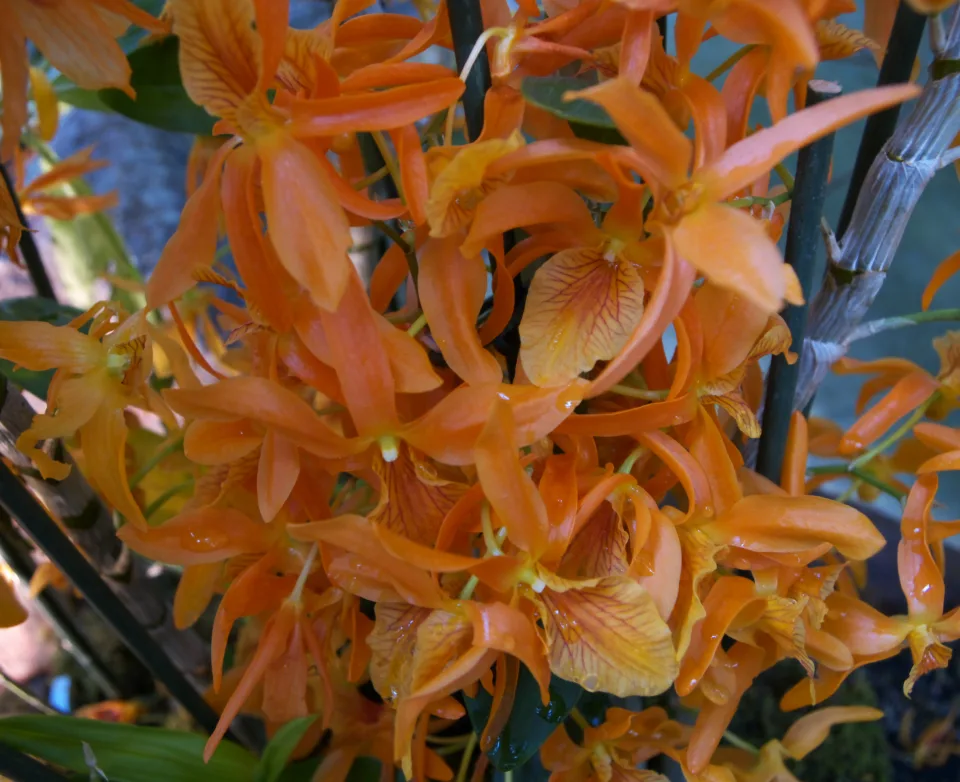
Photo : Dinkum — CC0 — source

🌱 Growing conditions
☀️ Light
Bright indirect light; gentle morning or late-afternoon sun is suitable.
💧 Watering
Water freely during active growth, then reduce markedly during the autumn and winter rest.
🌡️ Temperature
15–27 °C. Cooler nights in autumn help initiate flowering.
💦 Humidity
Average to high with good ventilation
🪴 Potting mix
Very airy orchid mix, mainly bark-based.
⭐ Difficulty
Moderate to demanding
🌱 Growth
Moderate
📏 Mature size
40–90 cm
🌿 Habit
Upright, formed by canes
📝 About Noble dendrobium
Description
A sympodial orchid that produces fleshy cane-like pseudobulbs used for water and nutrient storage. Flowers appear directly along mature canes, often after a bright, cooler and drier autumn rest. Old living canes should not be removed unnecessarily.
The elongated canes are storage organs for water and reserves. Mature canes should not be removed while they remain alive because they can continue to feed the plant, flower again or produce keikis. Flowering is closely linked to the seasonal maturation of these canes.
Care
In spring and summer, give plenty of light, water thoroughly when the bark begins to dry and fertilize lightly but regularly. Always let the substrate drain completely.
When the new canes have finished growing in autumn, gradually reduce watering and stop fertilizing. Cooler nights, often around 10–15 °C depending on conditions, help trigger flower buds.
Gradually resume more generous watering when the buds or new shoots become active.
Repotting
Repot only when the bark breaks down or the plant truly outgrows the pot, ideally after flowering as new roots begin. Use a relatively small pot and fresh airy bark.
Repot only when the bark has broken down or the plant has truly outgrown the container, ideally as new roots start after flowering. Keep the pot fairly small, use fresh airy bark and do not bury the base of the canes.
Propagation
Divide large clumps, keeping several canes per division, or remove keikis once they have several roots a few centimetres long.
Large clumps can be divided, but each division should retain several canes so that it keeps enough stored reserves. Keikis can be removed once they carry several roots a few centimetres long.
🐱 Toxicity
Generally considered of low toxicity; ingestion is not recommended.
🩺 Common problems
Yellow leaves
Older leaves on mature canes may yellow and fall naturally during the rest period. Fast yellowing of young leaves warrants a check for excess water, cold shock or root damage.
Brown leaves
Strong sun, prolonged drought or fertiliser-salt build-up can brown leaves; damaged roots from overfeeding can produce similar symptoms.
Diseases
Root and cane rot in compact or constantly wet media. Good ventilation is especially important around new growth.
Pests
Watch for mealybugs, scale insects, thrips and spider mites, especially around cane nodes, leaf bases and new shoots. Isolate affected plants early because pests hide easily between canes.