Plant profile
Dumb cane
Dieffenbachia seguine
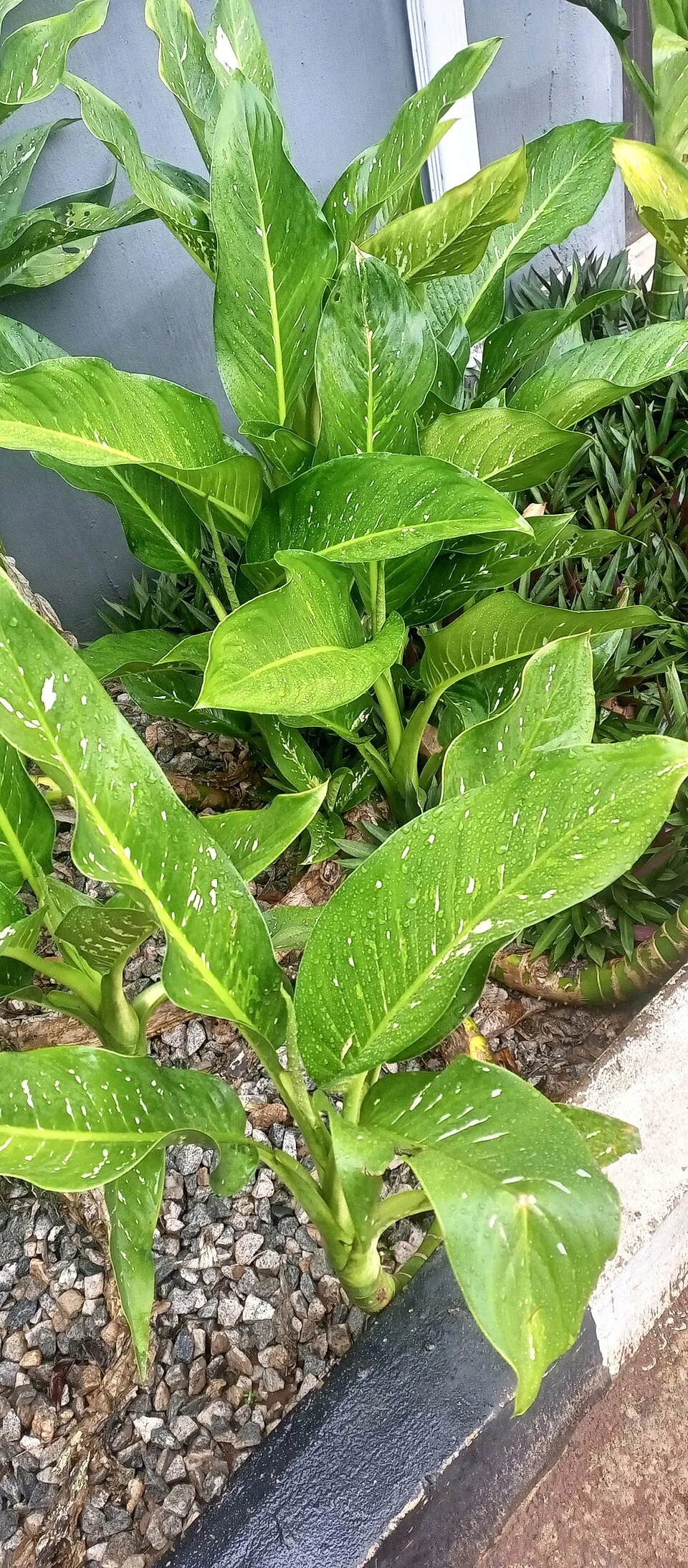
Photo : Draykaay — CC0 1.0 — source

🌱 Growing conditions
☀️ Light
Medium to bright indirect light
💧 Watering
Water when the top 2–3 cm of mix are dry, then drain thoroughly. Reduce watering when light or temperature falls; do not keep the root ball constantly wet.
🌡️ Temperature
18 to 27 °C
💦 Humidity
Medium to high
🪴 Potting mix
Rich and well-draining
⭐ Difficulty
Easy
🌱 Growth
Fast
📏 Mature size
1 to 2 m indoors
🌿 Habit
upright
📝 About Dumb cane
Description
Large tropical aroid with broad leaves, often variegated cream or yellow. Its upright growth makes it an imposing houseplant.
Care
Keep in bright indirect light; medium light is tolerated, but growth is slower and variegation may be less distinct. Water after the surface dries and empty the saucer. Avoid cold, drafts and scorching sun. Wear gloves when pruning because the sap is highly irritating.
Repotting
Repot in spring when roots become crowded, using a rich, well-draining mix. A container only slightly larger is enough.
Propagation
Top cuttings or stem sections; wear gloves because of the irritating sap. Take or separate a section with at least one viable growth point and, if possible, roots. Use a clean tool, let thick cuts callus if needed, and keep the mix lightly moist but never waterlogged until growth resumes.
🐱 Toxicity
Highly irritating if chewed: the sap contains calcium oxalate crystals. Keep away from children and pets.
🩺 Common problems
Yellow leaves
One older lower leaf yellowing on its own can be normal. If several leaves yellow while the mix stays wet, first check overwatering, drainage and root condition. If the mix is dry and leaves are limp, underwatering is more likely.
Brown leaves
Dry edges may result from very dry air, irregular watering or salt build-up; pale patches that turn brown on the window-facing side suggest excessive sun. Dark, soft areas with wet mix warrant checking the roots.
Diseases
The main risk is root or basal rot in persistently wet mix. Leaf spots can also develop when foliage stays wet with poor air circulation. If the base softens or the root ball smells abnormal, remove affected tissue and repot into an airy mix.
Pests
Watch especially for mealybugs, scale insects and spider mites, particularly under leaves and in leaf axils. Isolate an infested plant, remove visible colonies and recheck regularly.