Plant profile
Venus flytrap
Dionaea muscipula
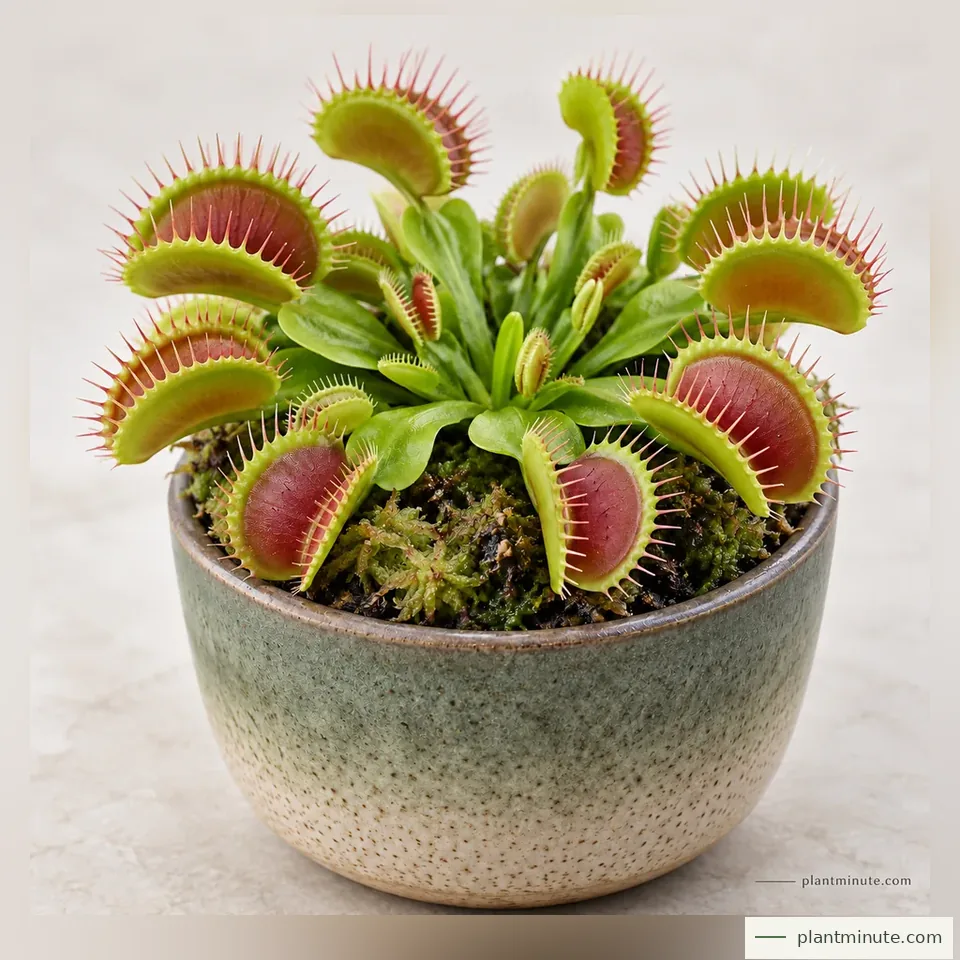
🌱 Growing conditions
☀️ Light
Plenty of direct sunlight, preferably outdoors after gradual acclimatisation; a dim window is not enough.
💧 Watering
Use clean rainwater, reverse-osmosis water or distilled water. During active growth, keep the growing medium moist with a shallow reservoir in the saucer. Reduce standing water during dormancy but never allow the medium to dry out completely.
🌡️ Temperature
A cool winter dormancy is essential, approximately 0–10 °C for several months; protect the pot from prolonged hard freezing.
💦 Humidity
Normal outdoor humidity; airflow matters more than high humidity.
🪴 Potting mix
Unfertilised sphagnum peat mixed with fertiliser-free perlite, or suitable sphagnum moss; never use ordinary potting compost.
⭐ Difficulty
Demanding indoors
🌱 Growth
Seasonal, with winter dormancy
📏 Mature size
10–20 cm across
🌿 Habit
Low rosette
📝 About Venus flytrap
Description
A temperate carnivorous plant whose traps close when their sensitive hairs are stimulated. Each trap can operate only a limited number of times. It cannot be kept in a warm living room throughout the year.
Each trap is a modified leaf and closes only when its trigger hairs receive the appropriate stimulation. This temperate plant normally becomes dormant in winter; old traps blacken even while the rhizome remains healthy.
Care
During its cool winter dormancy, growth slows and some traps naturally turn black. Remove only fully dried traps with clean scissors, without pulling on the rhizome. If most traps blacken during the growing season, check the light, water purity, growing medium and roots.
Never fertilise or put meat into the traps. Outdoors, the plant generally catches enough small insects on its own; do not trigger traps for amusement, as they can close only a limited number of times.
In spring, watch for new traps. On a young or weakened plant, removing the flower stalk can help direct energy towards fresh growth.
Repotting
Repot as growth resumes in late winter into a perforated plastic pot; avoid materials that leach minerals.
Choose a reasonably deep plastic pot with unfertilised sphagnum peat and additive-free perlite, or a reliable carnivorous-plant mix. Repot near the end of dormancy, keeping the rhizome firm; do not fertilise afterwards.
Propagation
Dividing established clumps is easiest: separate rooted crowns and replant without burying the growing point too deeply. Seeds are slower and require fresh seed and controlled conditions.
🐱 Toxicity
The traps are not considered a major poisoning risk to people or pets; nevertheless prevent chewing and never present the plant as edible.
🩺 Common problems
Yellow leaves
Old traps yellowing before turning black is normal. If all new leaves become pale, review light, water quality and growing medium. Reduced growth in winter is part of normal dormancy.
Brown leaves
A trap that turns black after several closures or prey captures has finished its life cycle; remove it once dry. Widespread scorching can follow a sudden move into strong sunlight.
Diseases
Rhizomes can rot if oxygen is lacking around the roots during dormancy: keep the medium damp, not continuously submerged, in winter. A firm, pale rhizome is more reassuring than one isolated black trap.
Pests
Aphids may attack new leaves; scale insects are also possible. Inspect the centre of the rosette and avoid randomly spraying products that may harm traps.