Plant profile
Shingle plant
Dischidia imbricata
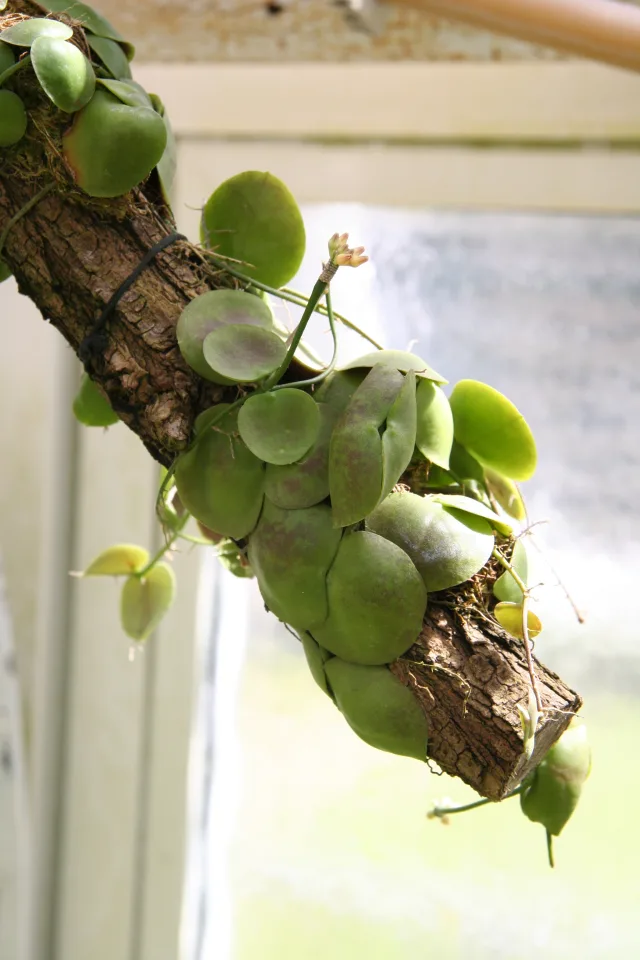
Photo : Michael Wolf (Webseite) — CC BY-SA 3.0 — source

🌱 Growing conditions
☀️ Light
Bright indirect light; avoid scorching sun.
💧 Watering
Water when the support is almost dry, then let it drain. Mounted plants need more frequent watering than potted ones.
🌡️ Temperature
20 to 28 °C.
💦 Humidity
Preferably high.
🪴 Potting mix
Very airy epiphytic medium: fine bark, sphagnum, coco fibre and perlite.
⭐ Difficulty
Moderate to difficult
🌱 Growth
Moderate
📏 Mature size
Stems 1 m or more
🌿 Habit
climbing tightly against a support
📝 About Shingle plant
Description
Dischidia imbricata is a remarkable epiphyte whose small leaves can press flat against a trunk, board or support, overlapping like roof tiles. This habit is most obvious when the plant can climb vertically.
It performs poorly in ordinary compact potting soil. Its roots need air, warmth and regular but never stagnant moisture.
Care
Grow it on cork, a branch or in a small pot filled with epiphytic mix. Provide bright filtered light and stable humidity.
Water when the support approaches dryness. Mounted plants may need watering several times a week in summer, while a pot retains moisture longer.
Repotting
Repot rarely. If potted, use a small highly perforated container and replace the medium when it decomposes.
Propagation
Take stem cuttings with several nodes and pin them against moist sphagnum or an epiphytic mix.
🐱 Toxicity
Specific toxicity is poorly documented. Dischidia sap may irritate some people; avoid ingestion and eye contact.
🩺 Common problems
Yellow leaves
Overwatering, lack of air around roots or insufficient light.
Brown leaves
Prolonged dryness, direct sun or low ambient humidity.
Diseases
Stem and root rot when the support stays constantly wet without ventilation.
Pests
Mealybugs and scale insects. Check nodes, stem junctions and areas pressed against the support, where scale insects hide easily. Remove small colonies early without soaking aerial roots.