Plant profile
String of nickels
Dischidia nummularia
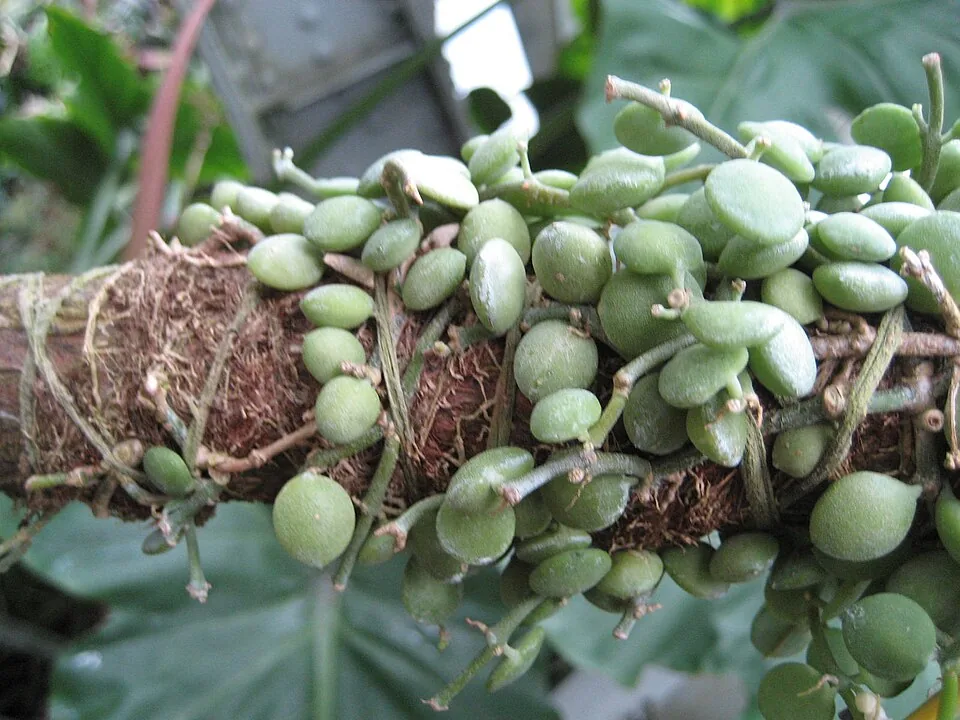
Photo : Christian Hummert (Ixitixel) — CC BY-SA 3.0 — source

🌱 Growing conditions
☀️ Light
Bright indirect light
💧 Watering
Let a good portion of the medium dry between waterings, then soak thoroughly and drain. In a small, very airy pot, check more often in warm weather; in low light or cool conditions, space waterings much further apart.
🌡️ Temperature
18 to 28 °C
💦 Humidity
High
🪴 Potting mix
Very airy epiphytic mix
⭐ Difficulty
Moderate
🌱 Growth
Moderate
📏 Mature size
trailing stems 60 cm to 1.5 m
🌿 Habit
trailing
📝 About String of nickels
Description
Trailing epiphyte with small round fleshy leaves arranged along slender stems. In nature it often grows on trees. Its small round fleshy leaves grow in pairs along fine trailing stems. It is an epiphyte suited to hanging baskets and prefers a very airy medium rather than dense potting soil.
Care
Grow it as an epiphyte: bright indirect light, warmth, a very airy medium and good air movement. Water according to drying rather than a fixed schedule. Avoid oversized pots and compact mixes that hold water around the fine roots.
Repotting
Repot infrequently into a small container with a very airy epiphytic mix based on bark and draining materials.
Propagation
Take stem cuttings with several nodes and pin them onto a very airy mix or moist sphagnum. Keep warm and lightly humid, but avoid enclosing them in stagnant, saturated conditions.
🐱 Toxicity
Sap from Apocynaceae may be irritating; avoid ingestion and eye contact.
🩺 Common problems
Yellow leaves
Diffuse yellowing while the medium is still wet often points to excess water or poorly aerated roots. If yellowing follows a sudden drop in temperature or light, stabilise conditions first. Always check the medium before adding more water.
Brown leaves
Wrinkled, dull leaves with a dry medium usually indicate dehydration; dry patches on the exposed side can result from overly strong direct sun. Soft brown areas while the medium is wet suggest developing rot instead.
Diseases
Root and stem rot are the main disease risks when the medium stays wet and poorly aerated. Remove soft or blackened tissue, allow slight drying and, if needed, replant into an open epiphytic mix.
Pests
Mealybugs and scale insects often hide at nodes and beneath the small leaves. Inspect stems closely, isolate an affected plant and remove colonies before they spread.