Plant profile
Corn plant
Dracaena fragrans
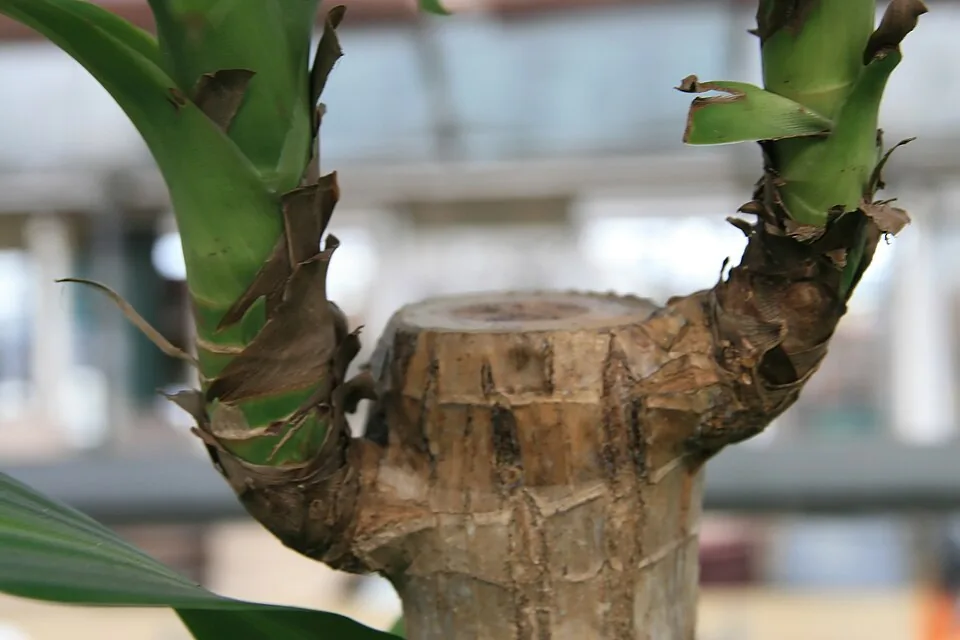
Photo : Photo by David J. Stang — CC BY-SA 4.0 — source

🌱 Growing conditions
☀️ Light
Bright indirect light; protect from scorching sun.
💧 Watering
Water when the first few centimeters of potting mix begin to dry, without leaving standing water.
🌡️ Temperature
18 to 27 °C
💦 Humidity
Medium to high
🪴 Potting mix
Rich, airy and well-draining.
⭐ Difficulty
Moderate
🌱 Growth
Moderate to fast
📏 Mature size
1.5 to 2.5 m indoors
🌿 Habit
upright
📝 About Corn plant
Description
Dracaena fragrans eventually forms one or more thick canes topped with rosettes of long, arching strap-like leaves. Lower leaves gradually fall and reveal the trunk. It tolerates moderate indoor light, but brighter light without harsh sun keeps growth steadier and the rosettes fuller.
Care
Bright indirect light; protect from scorching sun. Water when the first few centimeters of potting mix begin to dry, without leaving standing water. Above all, avoid abrupt changes in conditions and check the root ball before watering again.
Remove only lower leaves that have fully yellowed; gradual loss of old leaves is normal as the cane elongates.
Repotting
Repot when roots truly fill the container or the potting mix has degraded. Choose a pot with drainage holes only slightly larger and use a rich, airy, well-draining mix. An unnecessarily large pot retains moisture around the roots for longer.
With Dracaena fragrans, do not place the base of the cane deeper than before; burying the stem in damp compost encourages softening and rot.
Propagation
Stem or shoot cuttings, using a method suited to how woody the shoots are.
With Dracaena fragrans, a healthy cane section carrying at least one node can produce new shoots; let the cut dry briefly before placing it in an airy, lightly moist medium.
🐱 Toxicity
Toxic to dogs and cats if ingested. Dracaena contain saponins and may cause vomiting, drooling and loss of appetite.
🩺 Common problems
Yellow leaves
On Dracaena fragrans, several yellow leaves can indicate overly wet potting mix, especially if growth slows. The oldest lower leaves can nevertheless yellow naturally before falling.
Brown leaves
Brown tips on Dracaena fragrans may appear with dry air, irregular watering or salt buildup. Check the root ball before increasing watering frequency.
Diseases
Dracaena fragrans is especially vulnerable to root and basal deterioration if the pot stays constantly wet. Let the potting mix aerate according to the needs given in the profile.
Pests
On Dracaena fragrans, look for scale insects and spider mites at leaf bases and along the stems. Regular inspection allows intervention before new growth is affected.