Plant profile
Gold dust dracaena
Dracaena surculosa
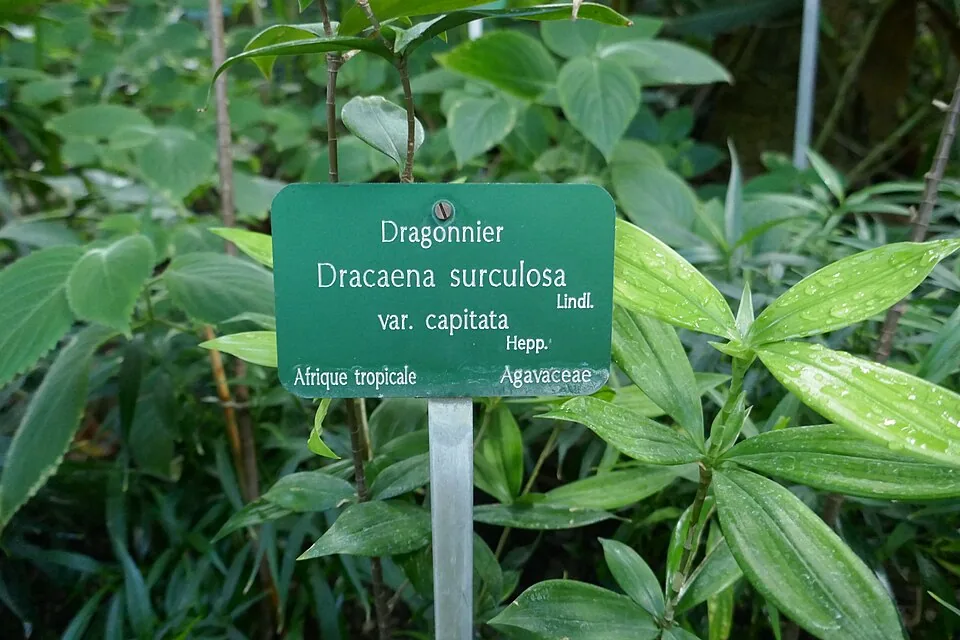
Photo : Ji-Elle — CC BY-SA 4.0 — source

🌱 Growing conditions
☀️ Light
Bright indirect light
💧 Watering
Water after partial drying of the substrate
🌡️ Temperature
18–27 °C
💦 Humidity
Medium
🪴 Potting mix
Rich, well-draining potting mix
⭐ Difficulty
Easy
🌱 Growth
Moderate
📏 Mature size
60–120 cm
🌿 Habit
bushy and upright
📝 About Gold dust dracaena
Description
Bushy Dracaena with slender bamboo-like stems and oval leaves often spotted cream or yellow, giving it a different look from strap-leaved Dracaena.
Care
Grow in bright filtered light with steady warmth and good humidity. Avoid scorching sun and cold drafts. Water when the top few centimetres of mix have dried, then drain well. If tap water is hard or high in fluoride, use rainwater or filtered water to reduce brown tips.
Repotting
Repot in spring when roots clearly fill the pot. Move up only one pot size and use a free-draining mix; an oversized container can keep the root ball wet for too long.
Propagation
Propagate in spring or early summer from semi-ripe stem cuttings with several nodes. Insert into a light, warm mix kept slightly moist. Seed can also be sown in spring at about 18–20 °C, but this is slower.
🐱 Toxicity
Toxic to cats and dogs if ingested.
🩺 Common problems
Yellow leaves
Several yellow leaves with wet mix mainly indicate overwatering or poorly aerated roots. Yellowing with limp growth may also follow chilling. If only older lower leaves yellow gradually, normal leaf replacement is more likely.
Brown leaves
Brown tips can result from dry air, water rich in salts or excessively strong direct sun. Move the plant away from heat sources and, if possible, use water with a lower mineral content.
Diseases
Dracaena surculosa is generally disease-resistant. Indoors, the main risk is root rot if the mix remains constantly wet. Reduce watering, improve drainage and remove soft or blackened roots if necessary.
Pests
Watch for scale insects, mealybugs, thrips and spider mites. Inspect young growth, leaf axils and undersides. Isolate affected plants quickly and keep checking for several weeks.