Plant profile
Sansevieria Moonshine
Dracaena trifasciata 'Moonshine'
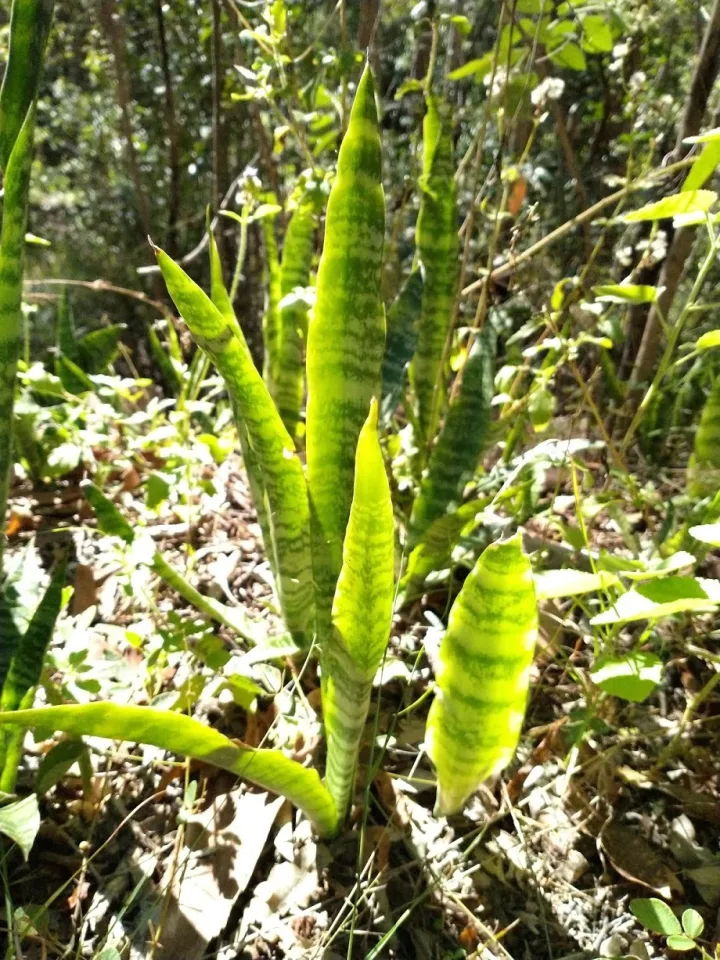
Photo : Tony van Kampen — CC BY 4.0 — source

🌱 Growing conditions
☀️ Light
Very adaptable: low to bright indirect light. Brighter conditions generally support stronger growth.
💧 Watering
Water sparingly and allow the potting mix to dry out completely or almost completely before watering again.
🌡️ Temperature
18–30 °C; avoid cold, damp conditions.
💦 Humidity
Low to medium
🪴 Potting mix
Very well-draining mix suitable for succulents
⭐ Difficulty
Very easy
🌱 Growth
Slow
📏 Mature size
About 50–100 cm
🌿 Habit
upright rosette
📝 About Sansevieria Moonshine
Description
Dracaena trifasciata 'Moonshine', still widely sold as Sansevieria Moonshine, forms broad upright leaves in silvery gray to very pale green. Young leaves are often the lightest.
In low light the foliage tends to become greener and the silver contrast fades. Stronger indirect light helps preserve the characteristic color while keeping the plant compact.
Like other snake plants, it stores water in its leaves and rhizomes. It tolerates missed waterings extremely well but is far less tolerant of potting mix that stays wet.
Care
Place it in a bright location if you want to preserve the silvery color. Water deeply, then wait until the potting mix is almost completely dry. In winter, the interval between waterings can become very long. Never leave water standing in the bottom of a cachepot.
Repotting
Repot when the rhizomes fill the pot or begin to distort it. A fairly heavy pot with drainage holes helps prevent tipping. Use a very mineral, free-draining substrate.
Propagation
Divide the rhizomes to preserve the cultivar's color reliably. Leaf cuttings can produce plants whose coloration differs or reverts toward the green type.
🐱 Toxicity
Toxic if ingested by pets and potentially irritating; contains saponins.
🩺 Common problems
Yellow leaves
Excess water and cold are the classic causes. A soft base requires an immediate check of the rhizomes.
Brown leaves
Dry tips after physical damage, very dry air or extreme lack of water; bleached patches after sudden direct sun.
Diseases
Crown, root and rhizome rot are the main risks in cold, persistently wet mix. If the base softens or smells sour, stop watering, inspect the rhizome and remove rotten tissue.
Pests
Watch for mealybugs and scale insects between the leaf bases and along the blades; spider mites may appear in very dry air. Wipe or isolate affected leaves early.