Plant profile
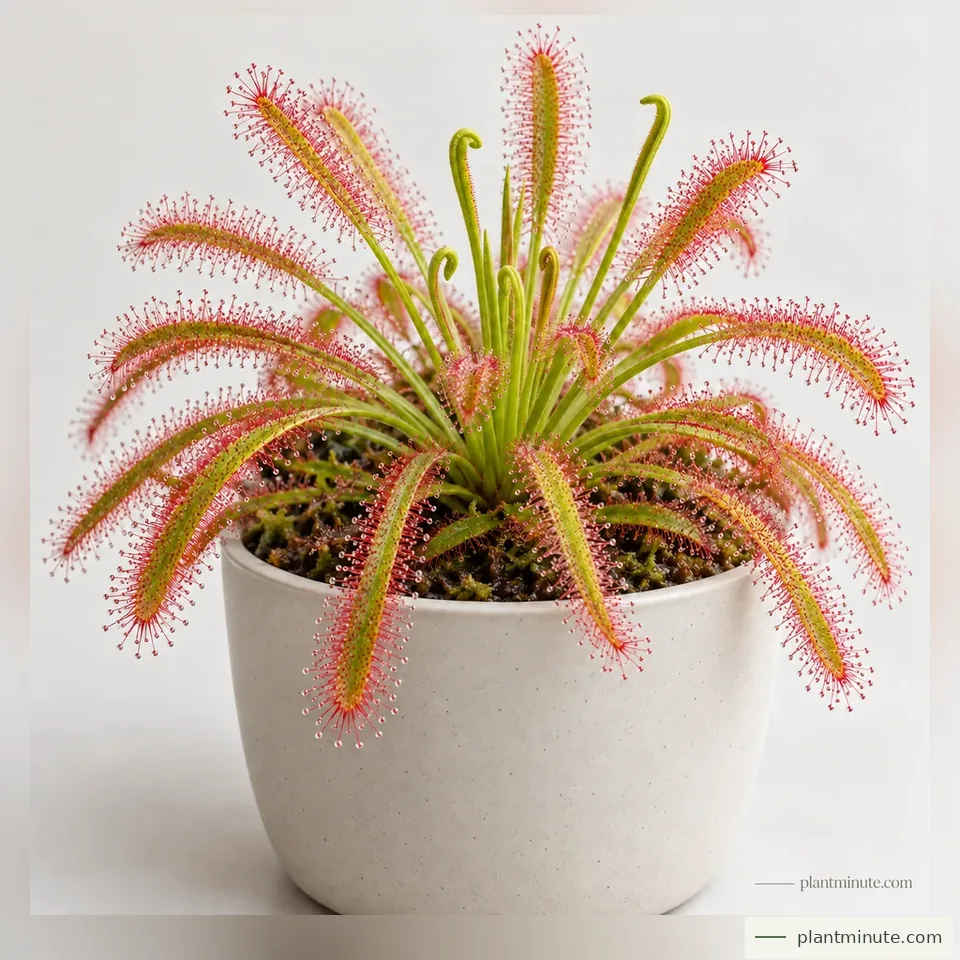
Cape sundew
Drosera capensis
🌱 Growing conditions
☀️ Light
Very bright light with several hours of gentle sun; acclimatise gradually to intense sunlight.
💧 Watering
Use rainwater, distilled water or reverse-osmosis water; keep a few millimetres to about one centimetre of water in the saucer during active growth, without letting the medium dry out.
🌡️ Temperature
Around 15–28°C in practice; protect from frost. Unlike Venus flytraps, this species does not require a cold winter dormancy.
💦 Humidity
Moderate; good light and a consistently moist potting medium matter more than misting.
🪴 Potting mix
Unfertilised sphagnum peat mixed with suitable perlite, or sphagnum moss; never use fertilised compost.
⭐ Difficulty
Moderate
🌱 Growth
Moderate to fast in warm weather
📏 Mature size
10–25 cm including flower stalks
🌿 Habit
Rosette of tentacled leaves
📝 About Cape sundew
Description
Its leaves bear sticky tentacles that trap small insects. A beaded appearance generally indicates good mucilage production; a lack of droplets often points to insufficient light or cultivation stress.
The shiny droplets are sticky mucilage, not dew. A healthy plant in good light produces it on its tentacles; its disappearance may reflect insufficient light, growing stress or acclimation.
Care
Do not fertilise the medium; occasional insects are sufficient. Leaves without droplets: first check light intensity and water quality. Leaves blackening after a change of location: monitor acclimatisation rather than adding fertiliser. Do not apply Venus flytrap dormancy rules to Drosera capensis.
Supply strong light and very low-mineral water. Unlike Venus flytraps, this species does not require cold winter dormancy. Do not automatically remove older leaves if parts are still active.
Repotting
Repot carefully if the medium breaks down or the pot becomes too small.
Use poor, unfertilised sundew media in a pot with drainage holes. Handle the root ball rather than the sticky leaves, then restore steady moisture.
Propagation
Sow the fine seeds on the surface without burying them; leaf cuttings are also possible.
Surface-sow the very fine seeds on already moist media without covering them. Provide ample light and constant moisture, protecting seedlings from scorching sunshine through glass.
🐱 Toxicity
No significant toxicity is generally reported in cultivation, but this is not an edible plant; prevent children and pets from swallowing it.
🩺 Common problems
Yellow leaves
Older leaves naturally brown at the base. If the plant pales and loses its sticky dew, give it more light and check whether mineral-rich water was used.
Brown leaves
Brown tips after the water tray dries out: restore steady moisture with rainwater or demineralised water. Do not wipe the sticky droplets off the leaves.
Diseases
If the growing point turns black and soft, check temperatures and roots. Cape sundew does not need the cold winter dormancy required by a Venus flytrap.
Pests
Aphids may settle on flower stalks and young growth; isolate the plant and remove small colonies by hand. Digested insects on leaves are not necessarily pests.