Plant profile
Pothos Manjula
Epipremnum aureum 'Manjula'
🌱 Growing conditions
☀️ Light
Medium to bright indirect light; variegated forms benefit from the brighter end of the range.
💧 Watering
Water after the top 3–5 cm are dry and let excess water escape.
🌡️ Temperature
18–28 °C.
💦 Humidity
Medium.
🪴 Potting mix
Light, airy and well-drained.
⭐ Difficulty
Easy to moderate
🌱 Growth
Moderate
📏 Mature size
1–2 m indoors
🌿 Habit
Climbing or trailing
📝 About Pothos Manjula
Description
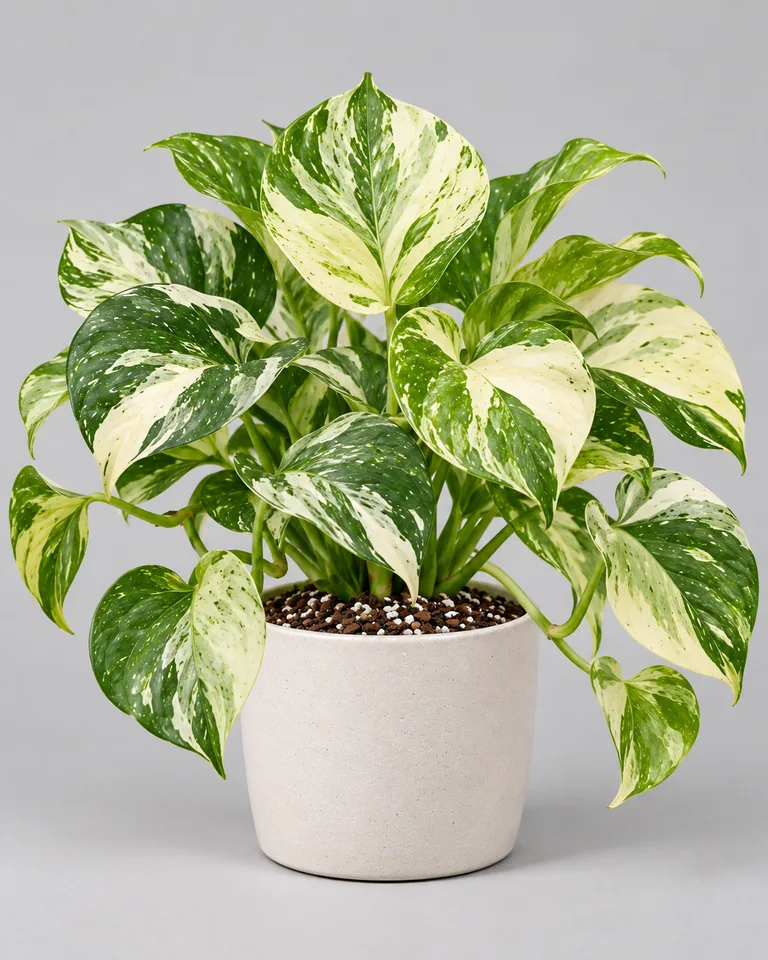
Pothos 'Manjula' is distinguished by broader, slightly wavy leaves that mix green, cream and white in highly variable patterns. It usually grows more slowly than green pothos because a large part of each leaf may contain little chlorophyll.
Its coloration remains sharpest in bright indirect light. Very pale leaves are more sensitive to scorching and to browning when conditions become dry or irregular.
It can trail from a hanging pot or climb a support, although its overall habit often remains more compact than that of ordinary golden pothos.
Care
Provide generous light without intense sun. Water after the mix has partially dried, then let it drain completely.
Do not keep the pot wet to “support” the white leaves: they need light, not extra water. Fertilize lightly during active growth.
Repotting
Repot only when the root ball is well rooted, using a pot only slightly larger and an airy mix.
Propagation
Take stem cuttings containing a node. The most balanced cuttings show both green tissue and variegation.
🐱 Toxicity
Toxic if ingested because the tissues contain irritating calcium oxalate crystals.
🩺 Common problems
Yellow leaves
Overwatering and insufficient light are the main causes.
Brown leaves
Pale areas can brown after direct sun, dry air, water stress or excess salts.
Diseases
Root rot if the potting mix remains saturated. A soft stem base, brown roots that fall apart or several leaves yellowing together means the root ball should be checked, damaged roots cut away and watering spaced out.
Pests
Thrips, scale insects and spider mites.