Plant profile
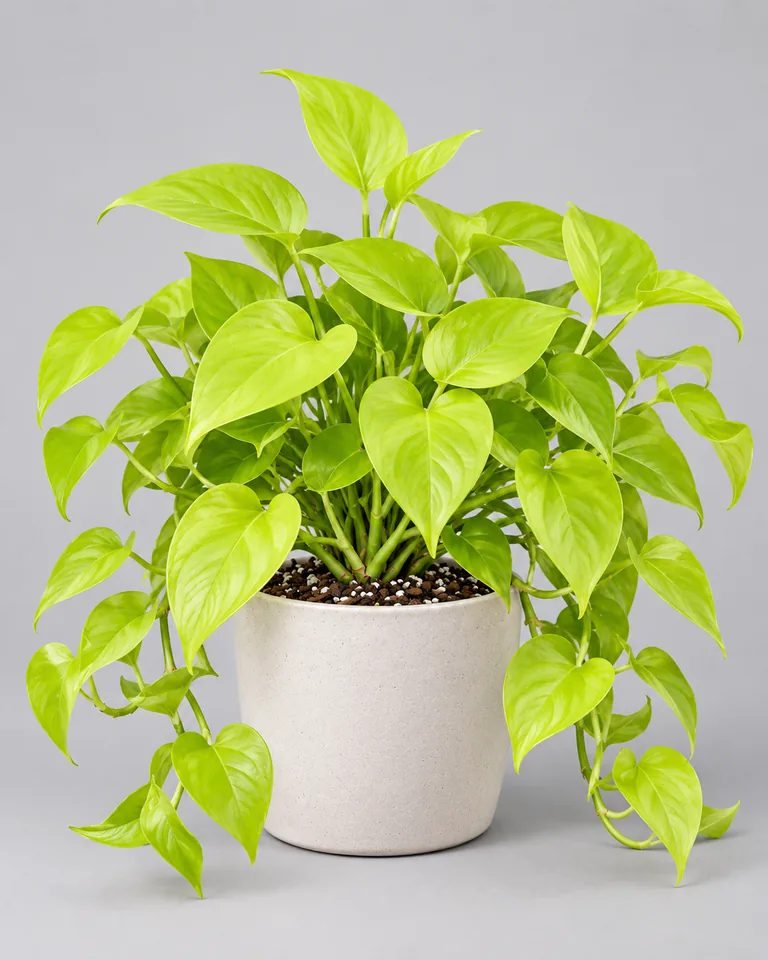
Pothos Neon
Epipremnum aureum 'Neon'
🌱 Growing conditions
☀️ Light
Medium to bright indirect light; brighter light keeps the chartreuse color vivid.
💧 Watering
Let the upper layer dry before watering.
🌡️ Temperature
18–28 °C.
💦 Humidity
Medium.
🪴 Potting mix
Light and well-drained.
⭐ Difficulty
Easy
🌱 Growth
Fast to moderate
📏 Mature size
1–3 m of stem indoors
🌿 Habit
Climbing or trailing
📝 About Pothos Neon
Description
Pothos 'Neon' is recognized by its uniformly chartreuse to lime-green leaves. The youngest leaves are often the brightest, then become slightly greener as they mature.
It retains the toughness of ordinary pothos and works well in hanging baskets or on shelves. If trained upward on a support, the leaves can become larger as the vine matures.
Foliage that becomes unusually dark can indicate insufficient light, while washed-out or scorched leaves close to a window may point to excessive direct sun.
Care
Give it medium to bright indirect light. Water when the top layer is dry, then empty any excess water.
Pinch or prune long stems to make the plant denser. Fertilize lightly during active growth and reduce feeding substantially in winter.
Repotting
Repot when the roots become crowded. Avoid oversized pots, which stay wet for too long.
Propagation
Take stem cuttings containing a node, rooting them in water or an airy medium. Several cuttings planted together quickly create a fuller pot.
🐱 Toxicity
Toxic if ingested because the tissues contain irritating calcium oxalate crystals.
🩺 Common problems
Yellow leaves
Overwatering is the most common cause, especially if the potting mix stays wet for a long time.
Brown leaves
Dry edges can follow underwatering, very dry air or excess salts; pale areas that later turn brown suggest overly strong sun.
Diseases
Root rot if the mix remains saturated.
Pests
Thrips, scale insects and spider mites. Inspect newly unfurling leaves, petioles and leaf undersides especially: silvery scars and distortion suggest thrips, fine stippling suggests mites, and fixed clusters or scales indicate scale insects.