Plant profile
Cebu Blue pothos
Epipremnum pinnatum 'Cebu Blue'
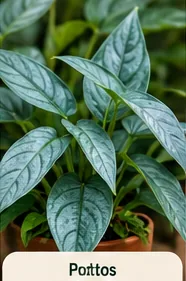
Photo : PlantMinute — Image générée
🌱 Growing conditions
☀️ Light
Bright indirect light; tolerates medium light
💧 Watering
Allow the top 3 to 5 cm of mix to dry before watering
🌡️ Temperature
18 to 30 °C
💦 Humidity
Medium to high
🪴 Potting mix
Airy, chunky and well-draining
⭐ Difficulty
Easy
🌱 Growth
Fast
📏 Mature size
2 to 4 m indoors long
🌿 Habit
climbing or trailing
📝 About Cebu Blue pothos
Description
Epipremnum pinnatum ‘Cebu Blue’ is distinguished by narrow blue-green leaves with a metallic sheen. When young and trailing, it produces unsplit, elongated leaves. When allowed to climb and mature, its leaves can become much larger and begin to split.
This transformation is one of its main attractions. A plant kept in a hanging pot will generally remain more juvenile; one trained upward on a tall, slightly moist support develops mature foliage more readily.
It is robust and fast-growing, but loses its compact appearance in insufficient light.
Care
Place ‘Cebu Blue’ in bright filtered light. Medium light is tolerated but often results in smaller leaves and longer internodes.
Water when the top few centimeters of mix are dry. Use a chunky medium that dries evenly.
For mature leaves, let the stems climb a support and tie them loosely. Pruning the tips encourages branching if you prefer a fuller plant.
Feed lightly during active growth.
Repotting
Repot when roots fill the pot. An aroid mix made from potting soil, bark, perlite or pumice works very well.
Install the climbing support at repotting if possible so that you do not have to push it through the root ball later.
Propagation
Use stem cuttings with one or several nodes. Sections root easily in water, sphagnum moss or an airy mix.
A leaf without a node cannot produce a new stem.
🐱 Toxicity
Toxic if swallowed because of calcium oxalate crystals.
🩺 Common problems
Yellow leaves
Overwatering, compact mix or low light are the main causes. An old lower leaf can yellow naturally.
Brown leaves
Dry tips can result from prolonged drought, very dry air or fertilizer salt buildup. Strong direct sun can create brown patches.
Diseases
Root rot if the mix remains saturated; leaf spots can occur in excessively humid, stagnant conditions.
Pests
Watch for thrips, mealybugs and spider mites, especially on young leaves and their undersides. Isolate the plant if new growth becomes distorted, silvery or finely stippled.