Plant profile
Crown of thorns
Euphorbia milii
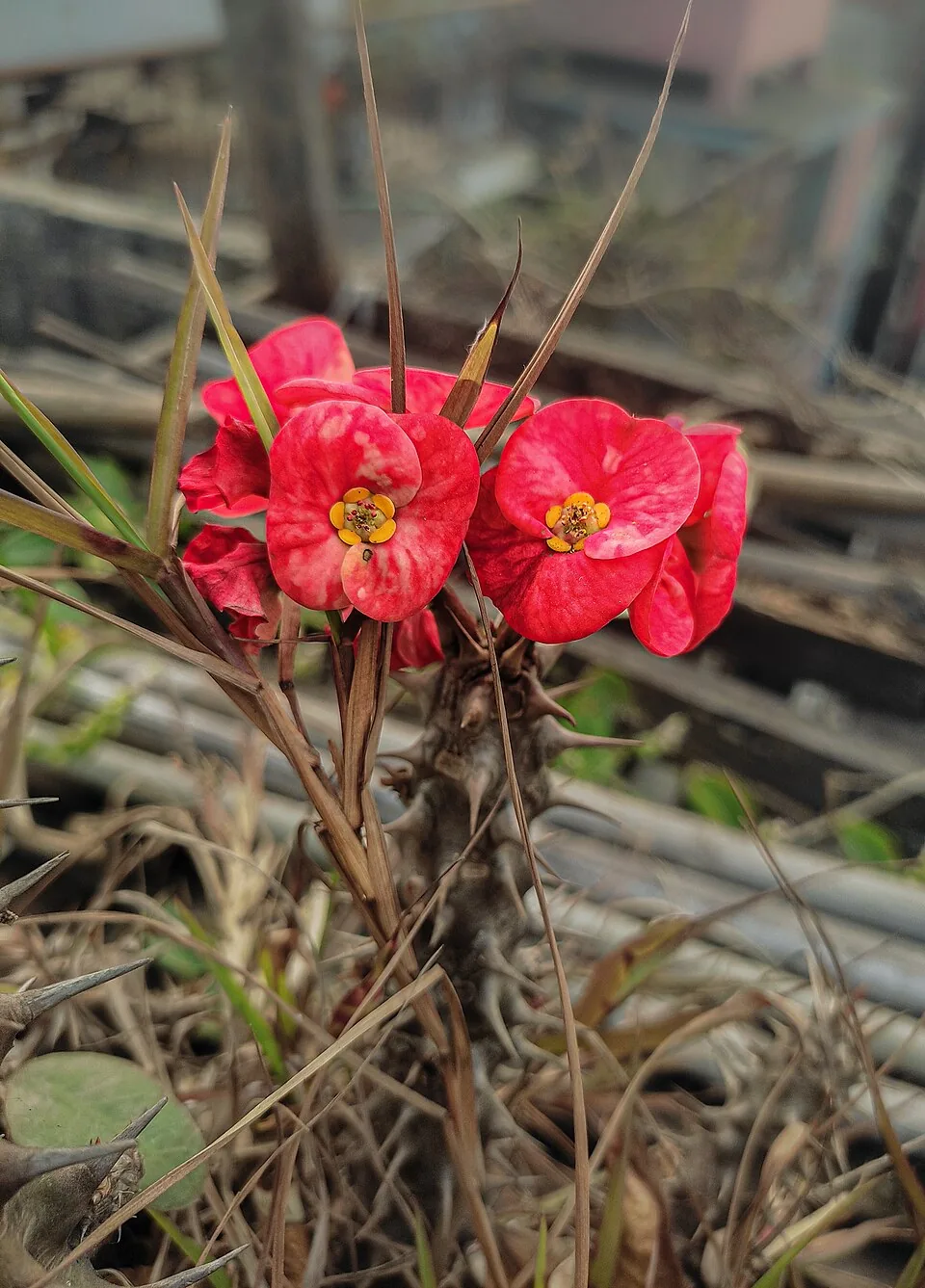
Photo : Tanvir Rahat — CC BY-SA 4.0 — source

🌱 Growing conditions
☀️ Light
Very bright light, with gentle sun after acclimation.
💧 Watering
Water thoroughly, then allow the potting mix to dry before watering again.
🌡️ Temperature
18 to 28 °C
💦 Humidity
Low to medium
🪴 Potting mix
Very well-draining, rich in mineral components.
⭐ Difficulty
Easy to moderate
🌱 Growth
Moderate
📏 Mature size
60 to 150 cm indoors
🌿 Habit
shrubby and thorny
📝 About Crown of thorns
Description
Euphorbia milii, the crown of thorns, forms woody stems armed with strong spines and carries small leaves mainly on young growth. The visible coloured “flowers” are mostly bracts surrounding tiny true flowers. Its white latex is irritating, so pruning should be done with gloves and away from the eyes.
Care
Very bright light, with gentle sun after acclimation. Water thoroughly, then allow the potting mix to dry before watering again. Above all, avoid abrupt changes in conditions and check the root ball before watering again.
For regular flowering, give Euphorbia milii the strongest light it can take after acclimation; insufficient light mainly produces long stems with few flowers.
Repotting
Repot when roots truly fill the container or the mix has degraded. Choose a pot with drainage holes only slightly larger and use a very well-draining mix rich in mineral components. An unnecessarily large pot keeps moisture around the roots for longer.
Repot Euphorbia milii with gloves and stabilise the plant before freeing the root ball; spines and latex make a fall or broken stem more troublesome than with an ordinary succulent.
Propagation
Propagate by cuttings or by separating offsets according to the species; allow cuts in succulent tissue to callus before planting.
🐱 Toxicity
Toxic to dogs and cats. Its latex can irritate the mouth, skin and eyes; ingestion may cause drooling, loss of appetite, vomiting or diarrhea.
🩺 Common problems
Yellow leaves
If several leaves of Euphorbia milii yellow together, first check the moisture of the potting mix, then light and temperature. A single old leaf may simply be reaching the end of its cycle.
Brown leaves
On Euphorbia milii, distinguish a dry tip from a soft area: the first often accompanies drying or overly strong sun, while the second points more toward excess moisture.
Diseases
Root problems in Euphorbia milii become more likely in constantly wet, poorly aerated potting mix. Rapid loss of vigor or a soft base justifies checking the roots.
Pests
Inspect leaf undersides, nodes and young shoots of Euphorbia milii. If you see stippling, distortion, cottony masses or visible insects, isolate the plant before treating.