Plant profile
Pencil cactus
Euphorbia tirucalli
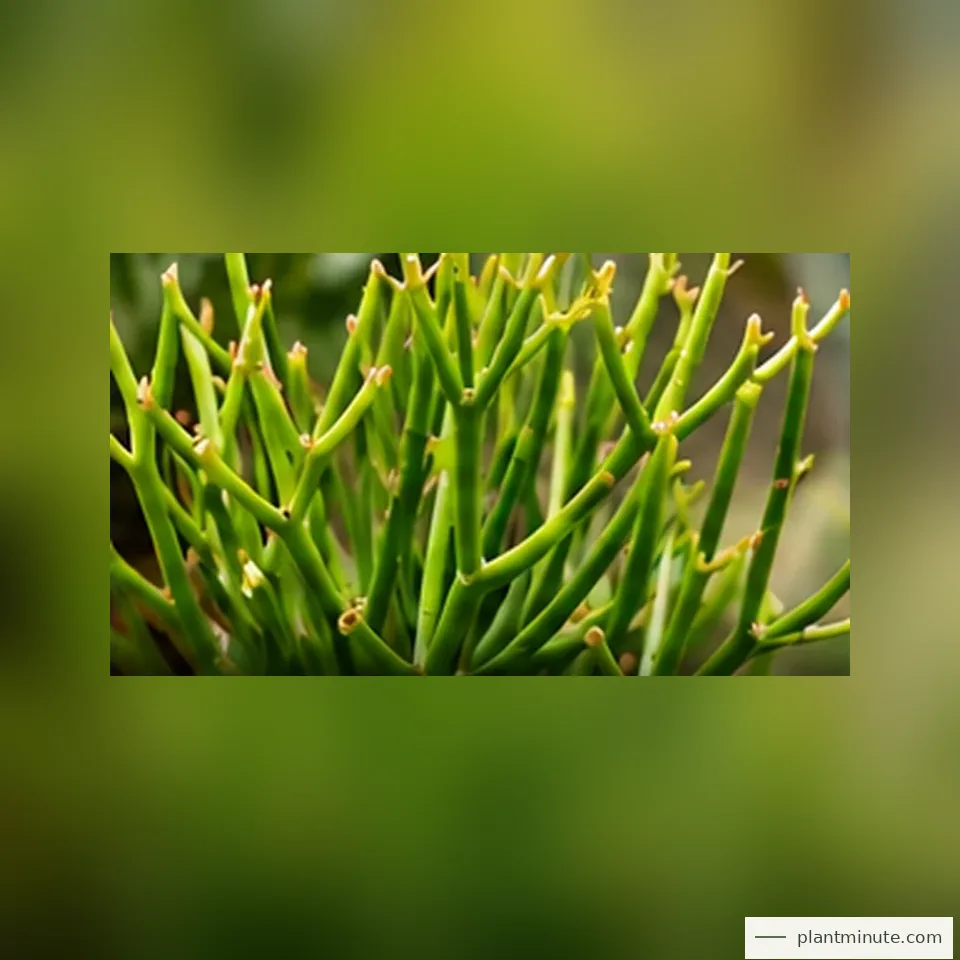
🌱 Growing conditions
☀️ Light
Plenty of sun after gradual acclimation; a bright position.
💧 Watering
Water, then allow the mix to dry completely; keep almost dry if growth stops in winter.
🌡️ Temperature
Warm and bright; protect from cold and frost.
💦 Humidity
Low to moderate; good ventilation is essential.
🪴 Potting mix
Very free-draining cactus mix in a stable pot with drainage holes.
⭐ Difficulty
Moderate (irritating latex)
🌱 Growth
Fast with warmth and light
📏 Mature size
1–2 m or more indoors
🌿 Habit
Shrubby, cylindrical stems
📝 About Pencil cactus
Description
A succulent shrub with green, cylindrical branches and short-lived tiny leaves. Its white milky sap is highly irritating, particularly to the eyes.
This euphorbia consists of green cylindrical branches that perform much of its photosynthesis. Cutting releases a strongly irritating white latex, demanding greater care than ordinary succulent pruning.
Care
Very little fertilizer in spring and summer. Dark, soft stems: likely rot. Shriveled stems: check whether the roots still function before adding water. The sap can seriously injure eyes and irritates skin; never handle it barehanded.
Wear gloves and eye protection when pruning. Keep branches away from children and pets; remove latex from skin promptly and avoid eye contact in particular. Provide very bright light and water only after the mix dries well.
Repotting
Work while the plant is fairly dry and avoid snapping branches. Protect hands and eyes from latex; use a sturdy pot with drainage and a very free-draining mineral mix, then wash thoroughly.
Propagation
Take stem cuttings only with protection, after the sap stops flowing and the cut heals; keep away from children and pets.
Cut stems with a clean tool while protecting yourself from latex. Let the sap stop flowing and the cut callus before planting in a freely draining, slightly moist mix; keep cuttings away from children and pets.
🐱 Toxicity
Highly irritating: white latex can cause dermatitis and severe eye injury. Wear gloves and eye protection when pruning; keep away from children and pets. If latex enters an eye, rinse immediately and seek urgent medical help.
🩺 Common problems
Yellow leaves
Yellowish stems may reflect light exposure, but yellow, soft stems in wet compost suggest damaged roots.
Brown leaves
Dry brown stem tips may follow dehydration or sunburn; a spreading black, soft section of stem suggests rot.
Diseases
Stems and roots rot when the root ball stays wet in cool conditions. Every cut releases latex: use protective equipment.
Pests
Check branch junctions regularly for scale insects and mealybugs.