Plant profile
Ficus Belize
Ficus elastica 'Belize'
🌱 Growing conditions
☀️ Light
Bright indirect light; a little gentle sun is possible after acclimation.
💧 Watering
Water when the upper 3–5 cm are dry, soaking the root ball and draining excess water.
🌡️ Temperature
18–27 °C.
💦 Humidity
Medium.
🪴 Potting mix
Rich, airy and well-drained.
⭐ Difficulty
Easy to moderate
🌱 Growth
Moderate
📏 Mature size
1.5–3 m indoors
🌿 Habit
Upright and shrub-like
📝 About Ficus Belize
Description
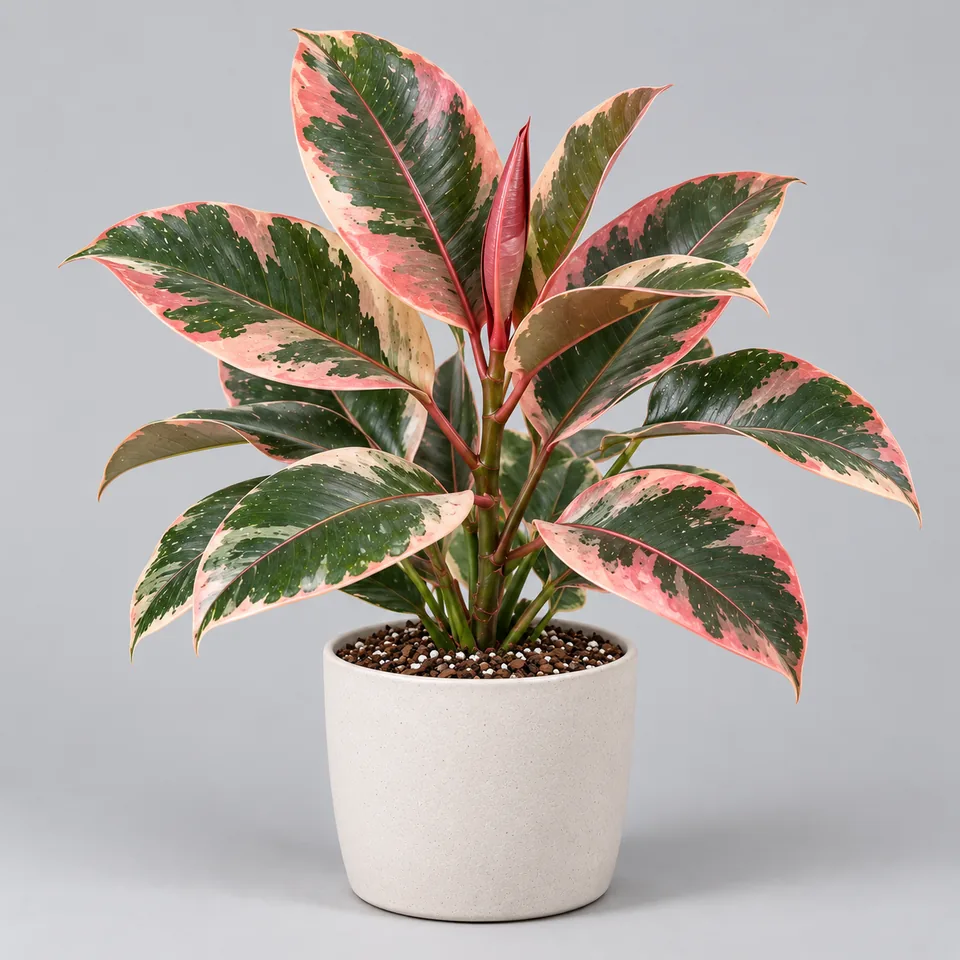
Ficus elastica 'Belize', often sold under the name 'Ruby', develops green leaves variegated with cream and pink. Newly emerging leaves may be especially red or rosy before gradually darkening as they mature.
Strong indirect light helps preserve the pink coloration. In a dark room, new growth tends to become greener and the plant may stretch as it searches for better light.
Despite the dramatic foliage, it remains a Ficus: keeping conditions regular and avoiding abrupt changes is more important than providing complicated care.
Care
Choose a bright, stable position. Avoid cold drafts and repeated changes of location.
Water when the top few centimeters of the mix are dry, then let it drain. Reduce watering frequency in winter. Wipe dusty leaves without using leaf-shine products.
Prune in spring if you want to encourage branching, wearing gloves because of the latex sap.
Repotting
Repot only when the plant is well rooted. Use an airy mix and a pot only slightly larger.
Propagation
Propagate by stem cutting or air layering; air layering reduces the risk of losing a long decorative stem.
🐱 Toxicity
The white latex can irritate skin and mucous membranes; ingestion can cause digestive upset in pets.
🩺 Common problems
Yellow leaves
Several yellow leaves often indicate overwatering or a sudden drop in light.
Brown leaves
Strong sun on the pale areas, prolonged drought or accumulated salts.
Diseases
Root rot caused by excess water. If several leaves yellow or soften while the mix remains wet, check roots and crown. Remove black or mushy tissue, improve drainage and resume watering only after the mix starts to dry.
Pests
Scale insects, mealybugs, spider mites and thrips.