Plant profile
Burgundy rubber plant
Ficus elastica 'Burgundy'
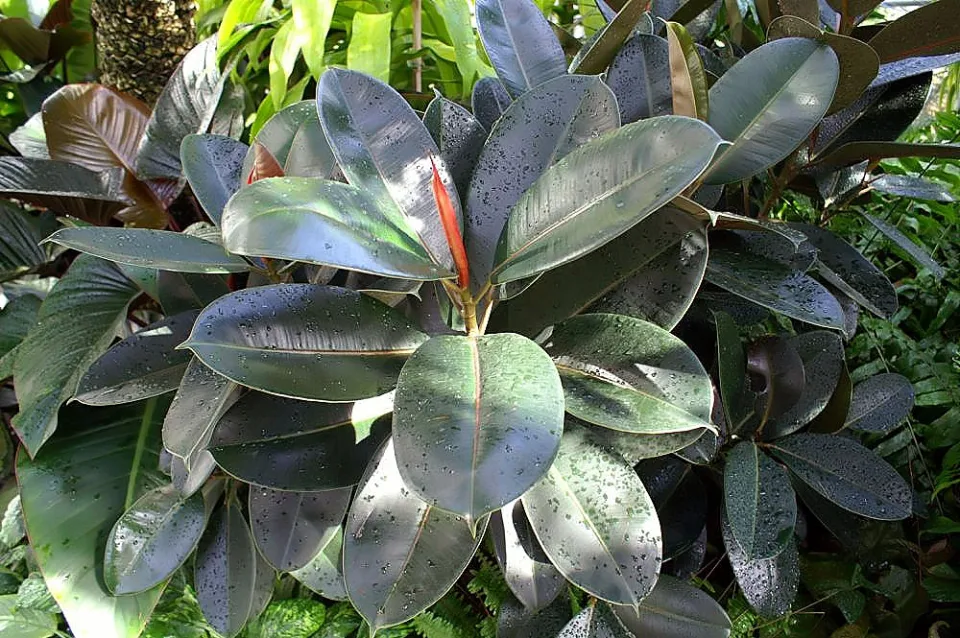
Photo : Photo by David J. Stang — CC BY-SA 4.0 — source

🌱 Growing conditions
☀️ Light
Bright indirect light; a few hours of gentle sun are possible
💧 Watering
Allow the top 3 to 5 cm of mix to dry before watering thoroughly
🌡️ Temperature
18 to 28 °C; avoid prolonged temperatures below 15 °C
💦 Humidity
Medium
🪴 Potting mix
Rich but airy and well-draining
⭐ Difficulty
Easy
🌱 Growth
Moderate to fast
📏 Mature size
1.5 to 2.5 m indoors
🌿 Habit
upright and tree-like
📝 About Burgundy rubber plant
Description
Ficus elastica ‘Burgundy’ is distinguished from the common rubber plant by its very dark leaves, ranging from deep green to almost burgundy, and by its reddish young sheaths. The color remains strongest when the plant receives plenty of light without being exposed abruptly to scorching sun.
It is a robust plant that can become a substantial indoor specimen over time. It first develops as a vertical stem, then branches after pruning or as it matures.
The main trap is watering too often. Thick, large leaves do not mean the soil should stay wet all the time. A cycle of thorough watering followed by partial drying of the mix produces better results.
Care
Place ‘Burgundy’ near a bright window. In a dark room, new leaves become smaller, internodes lengthen and the burgundy tone fades.
Water when the upper layer of the potting mix has dried well. Then soak the entire root ball until water drains from the bottom, and empty the saucer. In winter, let the actual drying speed determine the interval.
Wipe the large leaves regularly so they can photosynthesize efficiently. Rotate the pot gradually to maintain an even shape.
Pinching or pruning the growing tip in spring can encourage branching. Wear gloves because the latex is abundant.
Repotting
Repot every 1 to 3 years depending on growth, when roots circle the root ball heavily or emerge from the drainage holes. A pot only a few centimeters larger is best.
The mix should drain well while retaining enough moisture: quality potting soil with perlite or pumice and, optionally, some bark works well.
Propagation
Use stem cuttings that include at least one node, or air-layer a mature stem. A leaf by itself may sometimes form roots but will not produce a new plant without a piece of stem carrying a node.
After cutting, allow the latex to drain and then root the cutting in a light mix under warm conditions.
🐱 Toxicity
The white latex is irritating to the skin and mucous membranes. Ingestion is toxic to pets and may cause digestive upset.
🩺 Common problems
Yellow leaves
A single lower leaf may simply be aging. Several yellow leaves, especially if they are soft and the pot stays wet, usually point to overwatering or poor drainage.
Low light also lengthens the drying time and can indirectly create the same problem.
Brown leaves
Dry edges can follow prolonged drought, very dry air or salt buildup in the mix. Large pale areas that later turn brown may be sunburn.
Dark soft spots combined with brown roots and an unpleasant smell indicate rot.
Diseases
Root rot in waterlogged mix; leaf spotting can occur if foliage stays wet for long periods.
Pests
Scale insects, mealybugs, thrips and spider mites; inspect especially the undersides of leaves and the young sheaths.