Plant profile
Ficus Shivereana Moonshine
Ficus elastica 'Shivereana Moonshine'
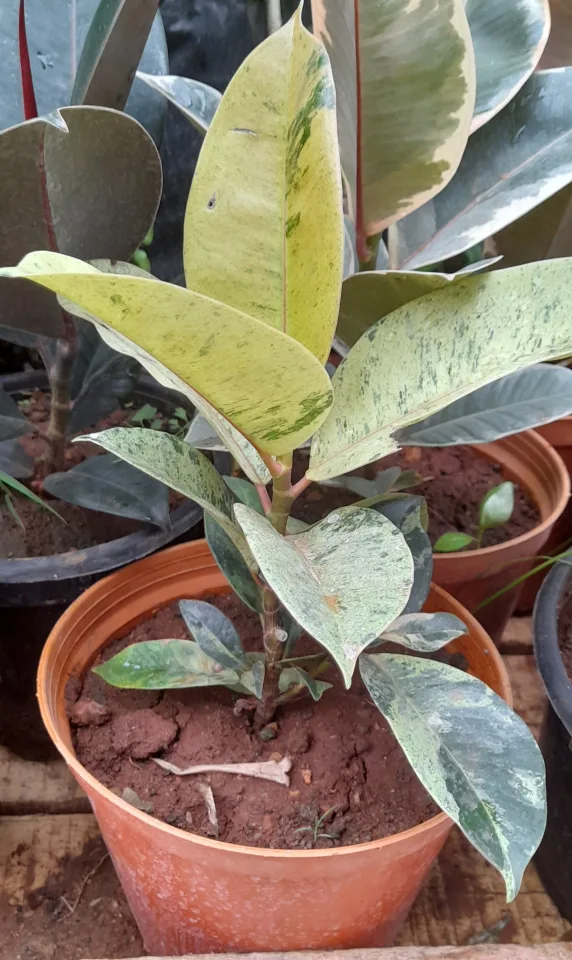
Photo : Yercaud-elango — CC BY-SA 4.0 — source

🌱 Growing conditions
☀️ Light
Bright indirect light; some gentle sun after acclimation.
💧 Watering
Let the top 3–5 cm dry, then water thoroughly.
🌡️ Temperature
18 to 28 °C
💦 Humidity
Medium
🪴 Potting mix
Rich, airy and free-draining.
⭐ Difficulty
Easy to moderate
🌱 Growth
Moderate
📏 Mature size
1.2 to 2 m indoors
🌿 Habit
upright and tree-like
📝 About Ficus Shivereana Moonshine
Description
Ficus elastica ‘Shivereana Moonshine’ is distinguished by leaves marbled in pale green, cream, soft yellow and sometimes small darker green speckles. The pattern is irregular and varies considerably from leaf to leaf.
The plant retains the upright habit and general robustness of Ficus elastica, but needs more light to maintain its variegation.
Like other rubber plants, it prefers a clear cycle: a thorough watering followed by partial drying. Potting mix that stays constantly wet is the main source of problems.
Care
Place it close to a very bright window. Insufficient light produces greener new leaves and longer internodes.
Water when the top few centimetres are dry, then let all excess water drain. Wipe the large leaves with a damp cloth.
Turn the pot gradually for balanced growth. Pinching or pruning the growing tip can encourage branching. Wear gloves because of the latex.
Repotting
Repot when the roots fill the pot well. Choose a pot only a few centimetres larger. Good-quality potting mix amended with perlite, pumice and optionally some bark works very well.
Propagation
Use stem cuttings with at least one node or air layering. A leaf alone may form roots but will not produce a new stem without a node.
🐱 Toxicity
The latex is irritating; toxic to pets if ingested.
🩺 Common problems
Yellow leaves
Several yellow leaves often indicate too much water or poor drainage. A lower, older leaf may yellow naturally.
Brown leaves
Cream areas are more sensitive to direct sun, drought and salt build-up. Soft spots together with wet soil call for a root check.
Diseases
Root rot develops in saturated mix, while leaf spotting is favoured by foliage staying wet with poor airflow. Improve drainage, let leaves dry promptly and remove badly affected tissue.
Pests
Watch for scale insects, thrips and spider mites, especially under leaves, along veins and on new growth. Isolate the plant if you see stippling, distortion or sticky deposits.