Plant profile
Rubber plant
Ficus elastica
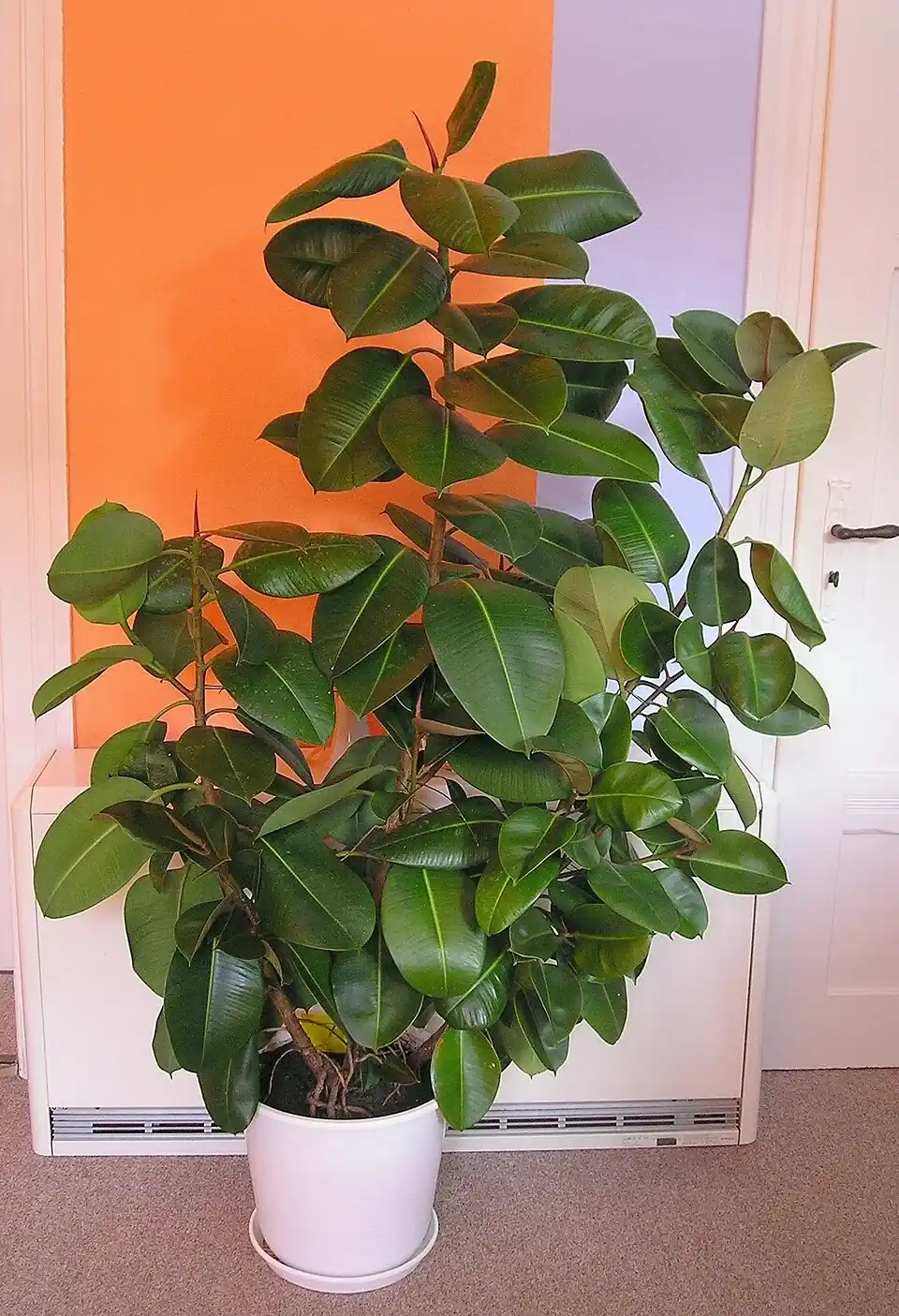
Photo : Maja Dumat — CC BY 2.0 — source

🌱 Growing conditions
☀️ Light
Bright indirect light; tolerates medium light
💧 Watering
Water when the top few centimeters of the potting mix are dry
🌡️ Temperature
18 to 27 °C
💦 Humidity
Medium
🪴 Potting mix
Rich, airy and well-draining
⭐ Difficulty
Easy
🌱 Growth
Moderate to fast
📏 Mature size
1.5 to 3 m indoors
🌿 Habit
upright
📝 About Rubber plant
Description
Ficus elastica, the rubber plant, is a tropical tree with large, thick, leathery, glossy leaves protected as they emerge by an often reddish stipule. Indoors it develops a straight trunk that branches mainly after pruning. Like other Ficus, the white latex is irritating and abrupt changes can trigger leaf drop.
Care
Adjust watering to the condition of the potting mix. Above all, avoid sudden changes in growing conditions and check the root ball before watering again.
Repotting
Repot when the roots genuinely fill the container or when the potting mix has deteriorated. Choose a pot with drainage holes only slightly larger than the previous one and use a suitable, well-draining mix. An unnecessarily large pot retains moisture around the roots for longer.
Propagation
Propagate from stem or shoot cuttings, using a method suited to how woody the stems have become.
A cutting of Ficus elastica must contain a genuine stem section with a node; wipe away flowing latex, then keep the cutting warm in bright indirect light and an airy rooting medium.
🐱 Toxicity
Toxic to dogs and cats. Ficus plants contain an irritating latex sap; ingestion may cause digestive upset and contact with the sap may irritate the skin.
🩺 Common problems
Yellow leaves
If several leaves turn yellow at the same time, first check the moisture level of the potting mix, then light and temperature. An isolated older leaf may simply be reaching the end of its natural life.
Brown leaves
On Ficus elastica, distinguish a dry brown tip from a soft brown area: the first is often associated with drying out or overly strong sun, while the second is more reason to check for excess moisture.
Diseases
Root problems become more likely in potting mix that stays constantly wet and poorly aerated. A sudden loss of vigor or a soft base warrants checking the roots.
Pests
Inspect leaf undersides, nodes and new growth. If you see stippling, distortion, cottony clusters or visible insects, isolate the plant before treating it.