Plant profile
Bambino fiddle-leaf fig
Ficus lyrata 'Bambino'
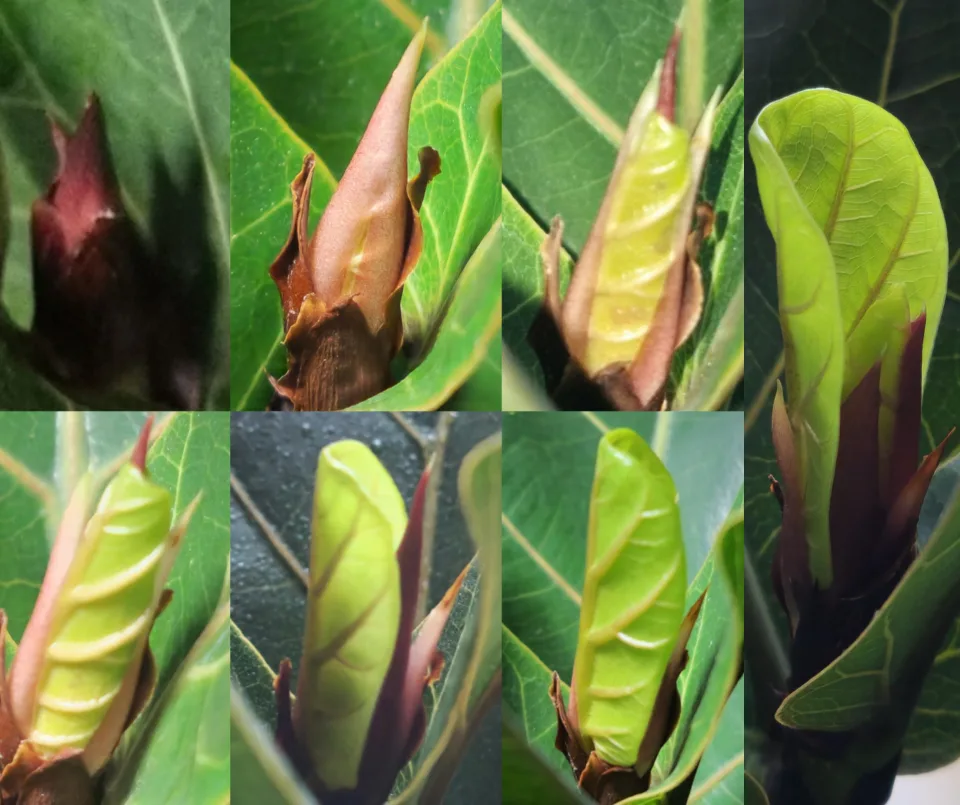
Photo : Kraskovskyi Tymofii — CC BY-SA 4.0 — source

🌱 Growing conditions
☀️ Light
Bright indirect light; gentle morning sun is possible after acclimation
💧 Watering
Water when the top 3 to 5 cm of mix are dry
🌡️ Temperature
18 to 27 °C
💦 Humidity
Medium to high
🪴 Potting mix
Rich, airy and very well-draining
⭐ Difficulty
Moderate
🌱 Growth
Moderate
📏 Mature size
80 cm to 1.5 m indoors
🌿 Habit
compact and upright
📝 About Bambino fiddle-leaf fig
Description
Ficus lyrata ‘Bambino’ is a compact form of the fiddle-leaf fig. Its leaves remain smaller and are usually spaced more closely along the stem than those of standard Ficus lyrata, giving the plant a dense silhouette suited to smaller interiors.
It is not a true dwarf plant: in good conditions it can still grow beyond one meter. It does, however, retain a tighter form that is easier to place in an apartment.
Like the standard fiddle-leaf fig, ‘Bambino’ prefers stability. Repeated moves, insufficient light and overwatering are the main causes of leaf drop.
Care
Place it very close to a bright window. Insufficient light slows growth sharply and encourages lower leaves to fall.
Water when the surface has clearly dried, then soak the entire root ball and allow it to drain. Do not follow a fixed schedule: frequency varies greatly with season, pot size and light.
Avoid cold drafts and abrupt changes of location. Wipe the leaves with a damp cloth and rotate the pot slightly from time to time.
Feed modestly in spring and summer, avoiding heavy doses that can burn roots.
Repotting
Repot in spring when roots fill the pot or when the original mix has become compact. A container only 2 to 4 cm wider is enough.
Use a houseplant mix amended with perlite, pumice or bark. An oversized pot greatly increases the risk that the root ball stays wet too long.
Propagation
Use stem cuttings containing at least one node, or air layering. A leaf with its petiole may develop roots but cannot produce a new stem if no node is attached.
Air layering is particularly useful for shortening an overly tall plant while keeping the top section.
🐱 Toxicity
The latex is irritating to skin and mucous membranes. Ingestion is toxic to pets; keep the plant out of reach of young children and animals.
🩺 Common problems
Yellow leaves
Yellowing of several leaves is often associated with overwatering or low light. Check the mix at depth and inspect the roots if needed.
A single older lower leaf may yellow naturally, especially during active growth.
Brown leaves
Dry brown margins commonly come from irregular watering or very dry air. Large light-brown patches can result from intense direct sun.
Dark, soft brown spots spreading from the leaf base or occurring together with very wet soil point more strongly toward root trouble.
Diseases
Root rot from excess water; bacterial or fungal leaf spots can occur when leaves remain wet.
Pests
Spider mites, scale insects and thrips. Watch the new leaves and the undersides of the large foliage.