Plant profile
Fiddle-leaf fig
Ficus lyrata
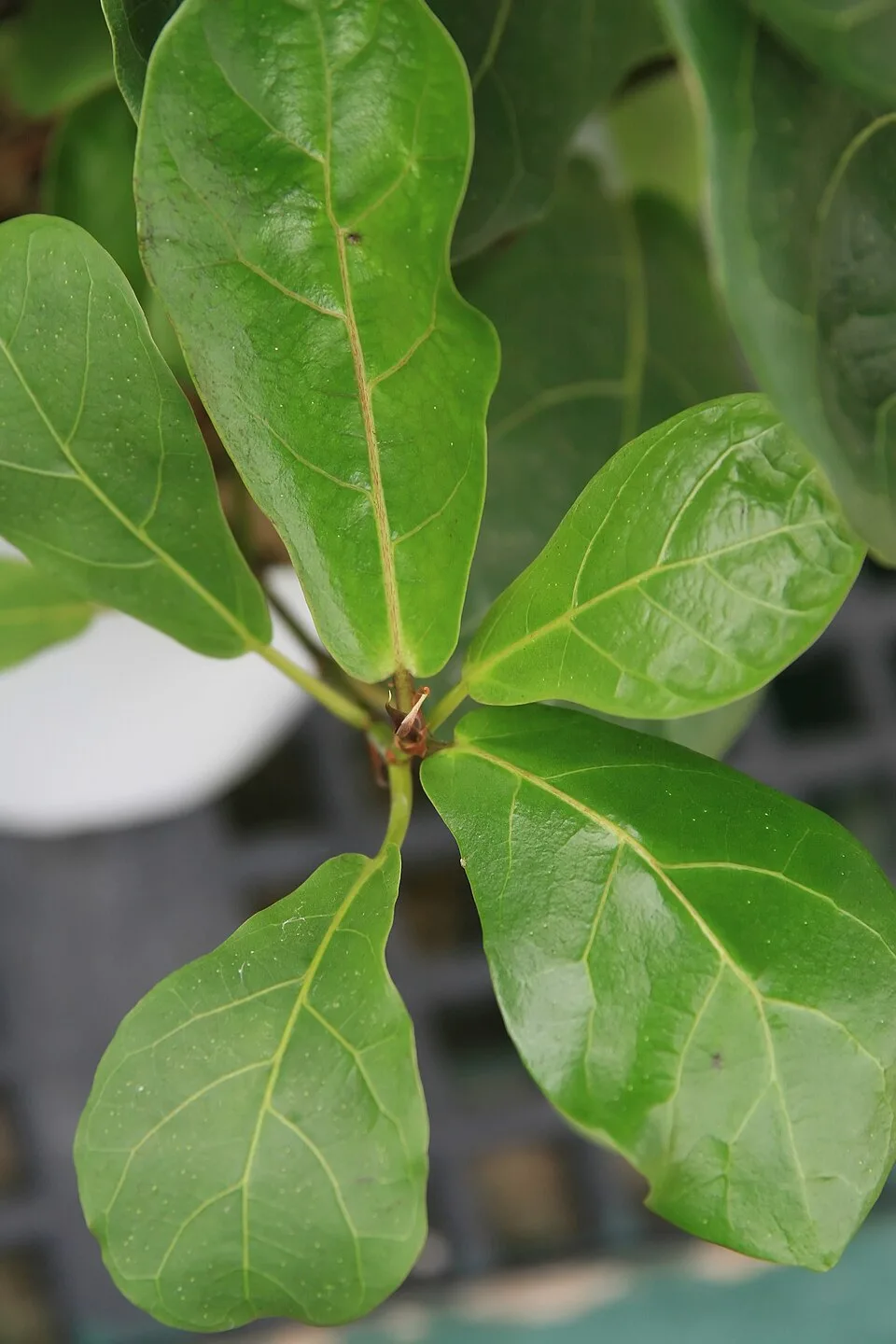
Photo : David J. Stang — CC BY-SA 4.0 — source

🌱 Growing conditions
☀️ Light
Bright indirect light
💧 Watering
Water after the top few centimeters have dried
🌡️ Temperature
18 to 27 °C
💦 Humidity
Medium
🪴 Potting mix
Rich and well-draining
⭐ Difficulty
Moderate
🌱 Growth
Moderate
📏 Mature size
1.5 to 3 m indoors
🌿 Habit
tree-like
📝 About Fiddle-leaf fig
Description
Striking Ficus with large leathery violin-shaped leaves. In a bright room it can develop into a sizeable upright indoor tree.
Care
Provide bright indirect light. Water after the top few centimeters dry. Keep conditions as stable as possible and adjust watering to the actual drying rate rather than a fixed schedule.
Repotting
Repot in spring when roots become crowded. Use an airy, well-draining mix and a stable pot only slightly larger.
Propagation
Stem cuttings or air layering; a single leaf usually does not form a complete new plant without a node.
🐱 Toxicity
The latex sap is irritating; keep the plant away from animals that may chew it.
🩺 Common problems
Yellow leaves
Excess water, low light or abrupt changes can yellow the leaves.
Brown leaves
Brown edges: lack of water or dry air; soft brown spots: check instead for excess water and root problems.
Diseases
Root rot and leaf spots can appear if conditions stay too wet.
Pests
Watch for scale insects and spider mites. Inspect leaf undersides, veins and petioles. Fixed brown scales or sticky honeydew often indicate scale insects, while fine stippling with delicate webbing suggests spider mites.