Plant profile
Ox tongue
Gasteria bicolor
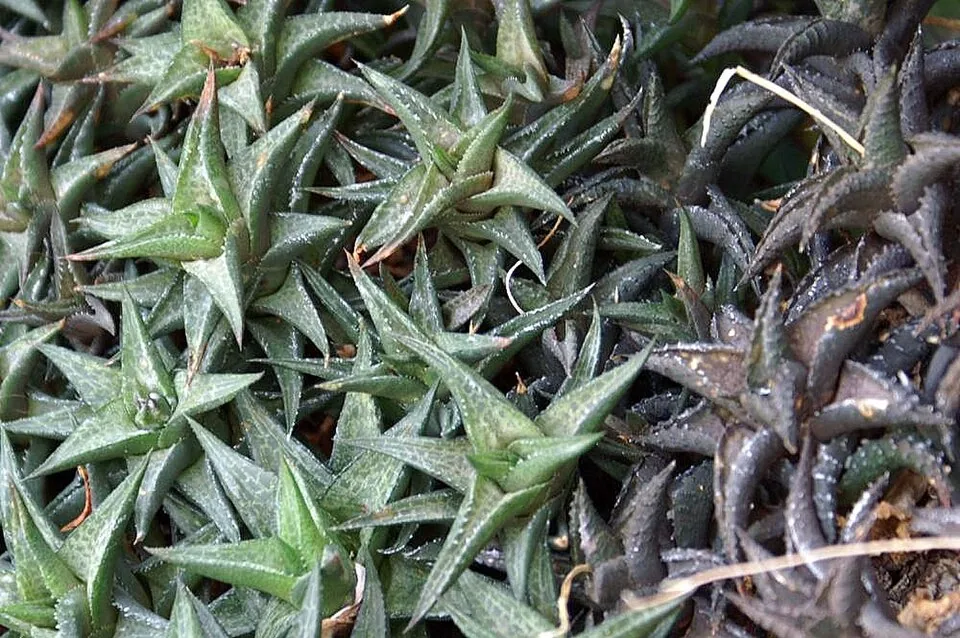
Photo : Photo by David J. Stang — CC BY-SA 4.0 — source

🌱 Growing conditions
☀️ Light
Very bright light, with gentle sun after acclimation.
💧 Watering
Water thoroughly, then allow the potting mix to dry before watering again.
🌡️ Temperature
18 to 28 °C
💦 Humidity
Low to medium
🪴 Potting mix
Very well-draining, rich in mineral components.
⭐ Difficulty
Easy to moderate
🌱 Growth
Moderate
📏 Mature size
15 to 30 cm
🌿 Habit
rosette
📝 About Ox tongue
Description
Gasteria bicolor is a small succulent with thick, tongue-shaped dark green leaves, often mottled with paler spots. Young plants may hold their leaves in two rows before developing a broader rosette. Its slow growth and fleshy roots make oversized pots and persistent moisture the main risks.
Care
Very bright light, with gentle sun after acclimation. Water thoroughly, then allow the potting mix to dry before watering again. Above all, avoid abrupt changes in conditions and check the root ball before watering again.
Water Gasteria bicolor at soil level rather than leaving water in the centre of the rosette; in cool conditions a wet rosette dries slowly and can rot.
Repotting
Repot when roots truly fill the container or the mix has degraded. Choose a pot with drainage holes only slightly larger and use a very well-draining mix rich in mineral components. An unnecessarily large pot keeps moisture around the roots for longer.
Its fleshy roots break easily when waterlogged; repot with the root ball slightly dry and allow any damaged areas to callus before heavy watering.
Propagation
Propagate by cuttings or by separating offsets according to the species; allow cuts in succulent tissue to callus before planting.
🐱 Toxicity
Considered non-toxic to dogs and cats. Ingesting plant material may nevertheless cause mild digestive discomfort.
🩺 Common problems
Yellow leaves
If several leaves of Gasteria bicolor yellow together, first check the moisture of the potting mix, then light and temperature. A single old leaf may simply be reaching the end of its cycle.
Brown leaves
On Gasteria bicolor, distinguish a dry tip from a soft area: the first often accompanies drying or overly strong sun, while the second points more toward excess moisture.
Diseases
Root problems in Gasteria bicolor become more likely in constantly wet, poorly aerated potting mix. Rapid loss of vigor or a soft base justifies checking the roots.
Pests
Inspect leaf undersides, nodes and young shoots of Gasteria bicolor. If you see stippling, distortion, cottony masses or visible insects, isolate the plant before treating.