Plant profile
Warty gasteria
Gasteria carinata var. verrucosa
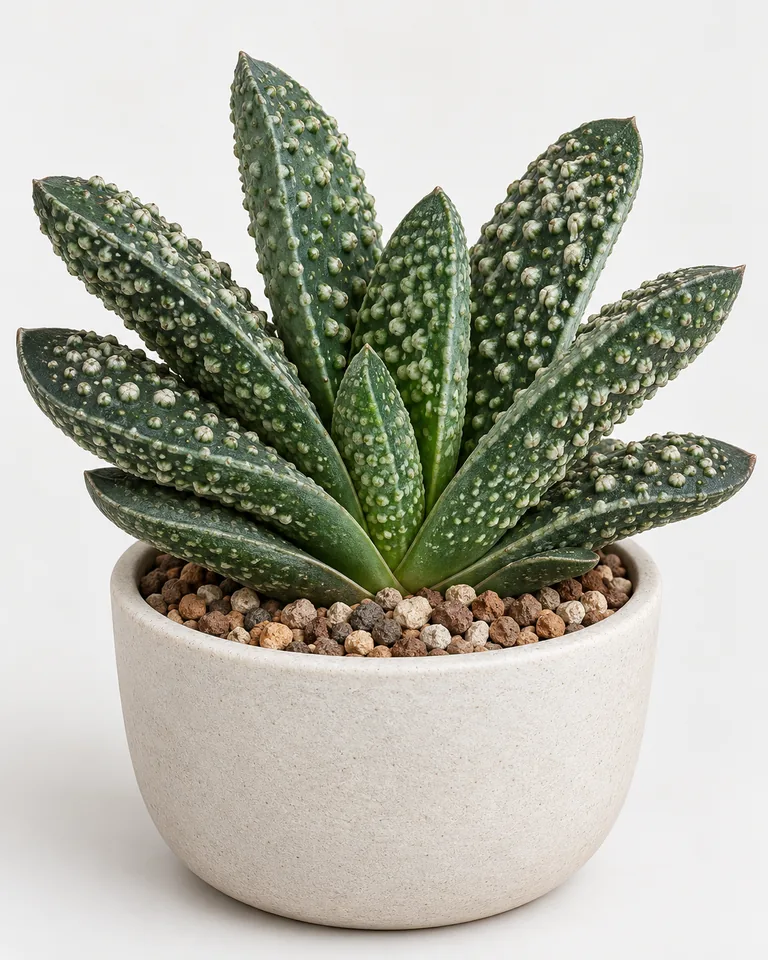
Photo : PlantMinute — Image générée
🌱 Growing conditions
☀️ Light
Bright indirect light to gentle sun.
💧 Watering
Allow the mix to dry completely or almost completely between waterings.
🌡️ Temperature
10 to 27 °C.
💦 Humidity
Low.
🪴 Potting mix
Very free-draining succulent mix rich in mineral material.
⭐ Difficulty
Very easy
🌱 Growth
Slow
📏 Mature size
15 to 25 cm
🌿 Habit
compact rosette
📝 About Warty gasteria
Description
This variety of Gasteria is distinguished by thick leaves covered with conspicuous whitish bumps. It remains compact and grows slowly, making it well suited to a bright windowsill.
It copes much better with slight underwatering than with excess water.
Care
Keep in bright filtered light, with some gentle sun after acclimation. Water thoroughly, then wait until the mix is nearly or completely dry before watering again. In cool periods when growth slows, water much less often. Above all, avoid standing moisture around the crown and roots.
Repotting
Repot every two or three years, or when roots fill the container, into a shallow pot with drainage holes. Use a very free-draining mineral mix and keep the crown at the same depth.
Propagation
Separate offsets or take leaf cuttings after allowing the cut surface to callus. The most reliable method is to separate rooted offsets at repotting. Leaf cuttings are possible, but the cut should dry for several days before being placed in a very mineral mix.
🐱 Toxicity
Specific household toxicity is poorly documented; avoid ingestion as a precaution.
🩺 Common problems
Yellow leaves
Yellow, soft leaves while the mix is still damp mainly indicate excess water or roots beginning to rot. An older lower leaf that slowly dries, however, can be part of normal rosette renewal.
Brown leaves
Dry, clearly bleached patches after sun exposure suggest scorch; leaves that hollow or wrinkle while the mix is very dry point instead to prolonged thirst. Acclimatise gradually to any increase in light.
Diseases
Root and crown rot are the main disease risks in overly wet mix. If the base becomes soft or dark, stop watering, remove affected tissue, allow wounds to callus and repot into a very free-draining mineral-rich mix.
Pests
Mealybugs can hide between leaves or on the roots. Inspect the crevices of the rosette and, when repotting, check the root system as well.