Plant profile
Dancing-bones cactus
Hatiora salicornioides
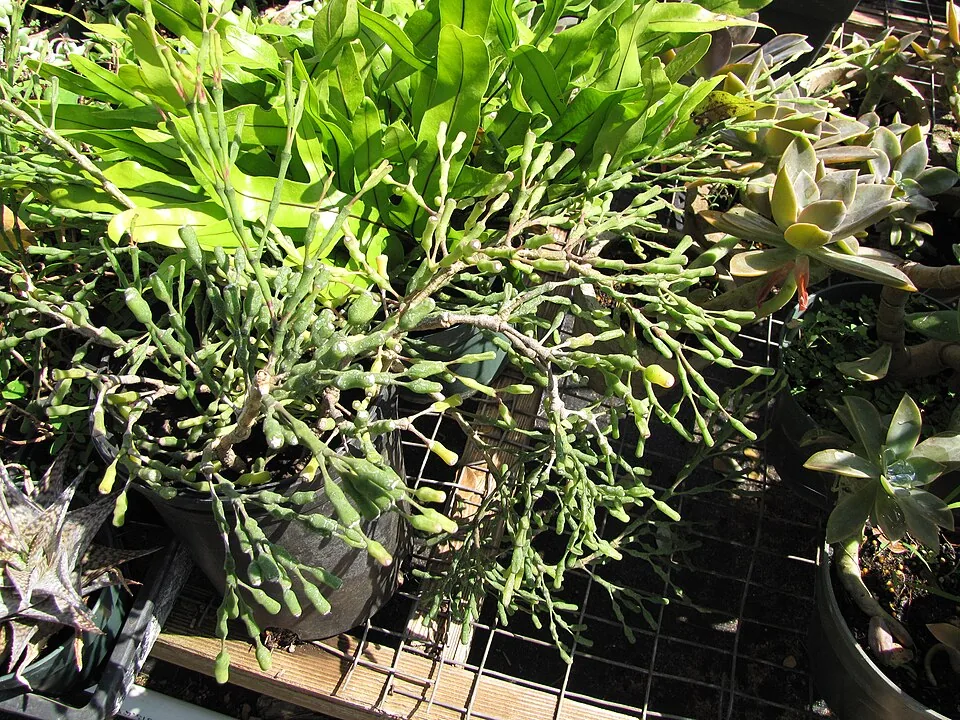
Photo : Forest and Kim Starr — CC BY 3.0 us — source

🌱 Growing conditions
☀️ Light
Bright light; gentle sun possible, avoiding scorching exposure behind glass
💧 Watering
Moderate during growth; let the mix dry slightly between waterings and reduce strongly in winter
🌡️ Temperature
15 to 27 °C indoors; protect from frost
💦 Humidity
Medium to high
🪴 Potting mix
Light, airy and well-draining mix for epiphytic cacti
⭐ Difficulty
Easy to moderate
🌱 Growth
Moderate
📏 Mature size
30 to 60 cm, stems arching with age
🌿 Habit
bushy and trailing
📝 About Dancing-bones cactus
Description
Hatiora salicornioides, commonly called dancing-bones cactus or bottle cactus, is a cactus native to eastern and southern Brazil. In its natural habitat it can grow as an epiphyte on trees or as a lithophyte on rocks.
The plant forms a small, highly branched bush made up of numerous narrow green segments whose shape resembles tiny bottles. This unusual silhouette gives it an appearance very different from that of classic desert cacti.
At maturity, Hatiora salicornioides can produce small yellow-orange flowers at the ends of its stems. Its epiphytic way of life also explains its needs: it prefers a very airy, free-draining mix, but somewhat less dry air and watering conditions than many desert cacti require.
Care
Provide bright filtered light, with gentle sun only where the source allows it. Water during growth when the substrate begins to dry, then let excess water drain completely. Reduce watering when growth slows and avoid both standing water and prolonged extreme drought.
Repotting
Repot when roots fill the container or the mix becomes compact. Use a pot with drainage holes only slightly larger and a light, airy, very well-draining mix suited to epiphytic cacti.
Propagation
Propagate by healthy stem cuttings with several segments. Let cut surfaces dry briefly if needed, then root in a light, airy medium kept only slightly moist.
🐱 Toxicity
Avoid ingestion; keep out of reach of children and animals until species-specific toxicity has been validated.
🩺 Common problems
Yellow leaves
These plants have reduced or no true leaves; yellowing of green stems or segments usually calls for checking excess water, drainage, root condition and light.
Brown leaves
Dry brown stem portions can follow excessive drought or overly strong sun. Brown soft tissue instead points toward excess moisture or developing rot.
Diseases
Hatiora salicornioides is generally not very prone to disease when the mix stays airy and well drained. Persistent excess moisture can nevertheless cause root or stem-base rot. Remove badly affected parts and correct drainage and watering.
Pests
Mealybugs and scale insects can hide among stem junctions; inspect regularly, and watch for spider mites or aphids where noted.