Plant profile
Chinese hibiscus
Hibiscus rosa-sinensis
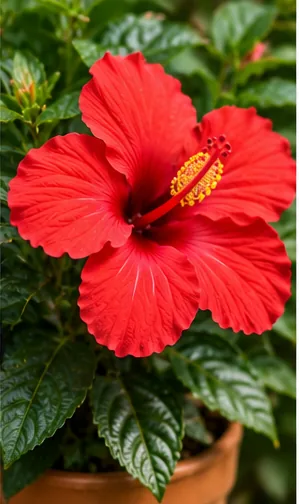
Photo : PlantMinute — Image générée
🌱 Growing conditions
☀️ Light
Very bright light, with several hours of gentle sun.
💧 Watering
During active growth and flowering, water when the top few centimetres of mix dry, then drain thoroughly. Avoid both waterlogging and complete drought, as either can trigger bud and leaf drop. In winter or low light, reduce watering markedly.
🌡️ Temperature
18 to 28 °C.
💦 Humidity
Medium to high.
🪴 Potting mix
Rich, humus-rich and well-drained mix.
⭐ Difficulty
Moderate
🌱 Growth
Fast
📏 Mature size
1 to 2 m in a pot
🌿 Habit
shrubby
📝 About Chinese hibiscus
Description
Chinese hibiscus is a classic conservatory and sunny-window plant. Its large flowers, often red, pink, orange or yellow, last only a short time but can be produced continuously for months.
It needs plenty of light, warmth and regular watering while actively growing.
Care
Provide abundant light, ideally near a very bright window with gentle sun after acclimation. Rotate the pot regularly for balanced growth. Feed during active growth, inspect young shoots closely for pests, and avoid abrupt changes in temperature or position, a common cause of bud drop.
Repotting
Repot in spring when roots fill the pot well or the mix has broken down. Choose a container only slightly larger, with drainage holes and a rich but free-draining mix. Oversized pots remain wet too long and increase the risk of root rot.
Propagation
In spring or summer, take healthy non-flowering stem cuttings with several nodes. Remove lower leaves and keep warm in filtered light in a light, moist medium. High humidity helps rooting, but the medium must not remain saturated.
🐱 Toxicity
Generally regarded as low in toxicity, but eating large amounts is not recommended.
🩺 Common problems
Yellow leaves
General yellowing can result from too much or too little water, a sudden drop in light or chilling. If the mix remains wet, inspect the roots first; if the root ball is dry and the plant is wilted, rehydrate gradually. Some yellowing in winter may follow a major reduction in light.
Brown leaves
Dry edges often indicate a dry root ball or very dry air; bleached patches that later brown on the exposed side suggest sun scorch. Dark expanding spots on wet foliage call for better ventilation and closer checking for leaf-spot disease.
Diseases
Root rot mainly develops when the mix stays saturated. Leaf spots are encouraged by wet foliage, poor air movement and mild temperatures. Water at soil level, remove badly affected leaves and correct the growing conditions before considering any treatment.
Pests
Aphids, whiteflies, spider mites and scale insects are common, especially on young shoots, buds and leaf undersides. Inspect weekly in warm weather, isolate an infested plant quickly and act early because populations can increase fast.