Plant profile
Kentia palm
Howea forsteriana
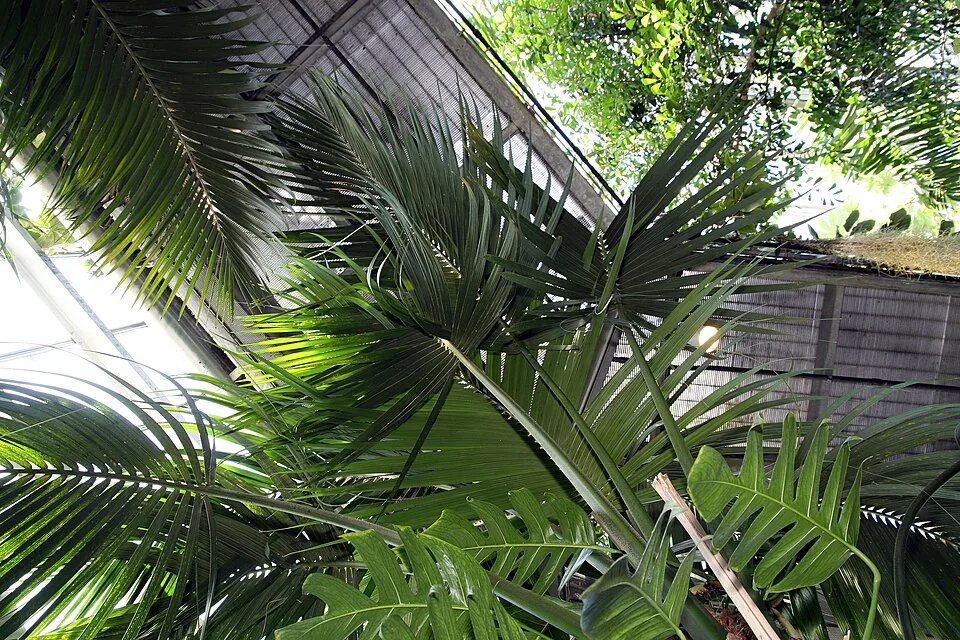
Photo : David J. Stang — CC BY-SA 4.0 — source

🌱 Growing conditions
☀️ Light
Bright to medium indirect light. It tolerates lower light better than many palms, but growth becomes slower. Avoid hot sun through glass.
💧 Watering
Water when the top 3–5 cm of mix are dry. Water thoroughly and let excess drain away; reduce clearly in winter.
🌡️ Temperature
16 to 27 °C
💦 Humidity
Medium
🪴 Potting mix
Rich, airy and well-draining.
⭐ Difficulty
Easy to moderate
🌱 Growth
Slow
📏 Mature size
1.5 to 3 m indoors
🌿 Habit
upright palm
📝 About Kentia palm
Description
Elegant palm with long, arching dark-green fronds, valued for its relative tolerance of indoor conditions. Its slow growth makes it a long-lived plant for large spaces.
Care
Avoid frequent repotting because the roots prefer minimal disturbance. Rinse dust from the fronds and keep the plant away from radiators and cold drafts.
Repotting
Repot infrequently and avoid breaking the root ball, as its roots dislike disturbance.
Propagation
Mainly by seed; it does not produce offsets that are easy to separate.
🐱 Toxicity
Generally considered non-toxic to cats and dogs.
🩺 Common problems
Yellow leaves
Excess water or cold.
Brown leaves
Brown tips usually mean dry air, hard water or salt buildup. A whole frond browning slowly may simply be ageing; rapid widespread browning calls for a watering check.
Diseases
Root rot in saturated soil.
Pests
Scale insects and spider mites.