Plant profile
Hoya callistophylla
Hoya callistophylla
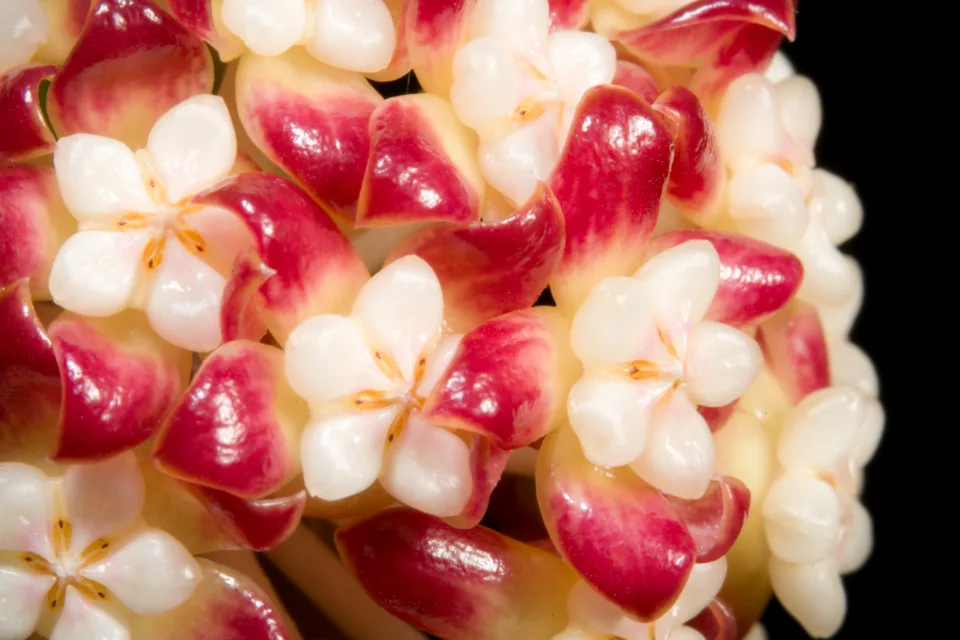
Photo : Motohiro Sunouchi — CC BY 4.0 — source

🌱 Growing conditions
☀️ Light
Bright indirect light; gentle morning sun is possible
💧 Watering
Allow a large part of the mix to dry between waterings
🌡️ Temperature
18 to 28 °C
💦 Humidity
Medium to high with good ventilation
🪴 Potting mix
Very airy, chunky and fast-draining
⭐ Difficulty
Moderate
🌱 Growth
Slow to moderate
📏 Mature size
1 to 2 m long
🌿 Habit
climbing or trailing
📝 About Hoya callistophylla
Description
Hoya callistophylla is prized mainly for its large leathery light-green leaves crossed by strongly marked dark-green veins. The pattern is spectacular even when the plant is not flowering.
It produces long stems that can be trained around a hoop or allowed to trail. Flowers appear in umbels on persistent spurs; these spurs should not be cut off after flowering because they can flower repeatedly.
Like many thick-leaved Hoya, this species prefers a very airy mix and tolerates slight dryness better than continuously wet soil.
Care
Place it in bright filtered light. A little gentle sun can encourage flowering, but avoid scorching rays on the leaves.
Water thoroughly and then allow much of the pot to dry. In winter or when growth slows, increase the interval between waterings.
Do not cut the flower spurs after blooms fall. Train long vines without forcing them, because new shoots may initially look bare before producing leaves.
Feed lightly during active growth and flowering.
Repotting
Hoyas often prefer to be slightly root-bound. Repot only when roots truly fill the pot or the mix has broken down.
Use a small pot with drainage holes and a very chunky mix of fine bark, perlite or pumice, coir and a small amount of potting soil.
Propagation
Take stem cuttings with at least two nodes. Root them in perlite, sphagnum moss, water or a light mix.
A leaf by itself can sometimes form roots but may never produce a new vine if no node is attached.
🐱 Toxicity
The milky sap can irritate sensitive skin; ingestion should be avoided.
🩺 Common problems
Yellow leaves
Yellowing often comes from overwatering or a mix that has become too compact. A plant in low light dries more slowly and should be watered less often.
Brown leaves
Dry spots can result from intense direct sun or prolonged drought. Black soft spots are more consistent with excess moisture or infected tissue.
Diseases
Root and stem rot in saturated conditions; fungal or bacterial spots can develop if leaves stay wet without ventilation.
Pests
Mealybugs, scale insects, spider mites and sometimes thrips. Inspect nodes, leaf undersides and flower peduncles, where mealybugs hide easily. Fine stippling and dull foliage can indicate spider mites.