Plant profile
Hoya Compacta
Hoya carnosa 'Compacta'
🌱 Growing conditions
☀️ Light
Bright indirect light; a few hours of gentle sun may help flowering after acclimation.
💧 Watering
Allow much of the mix to dry before watering again.
🌡️ Temperature
18–28 °C.
💦 Humidity
Medium.
🪴 Potting mix
Very airy and fast-draining, rich in bark and coarse material.
⭐ Difficulty
Easy to moderate
🌱 Growth
Slow
📏 Mature size
1–2 m trailing stems
🌿 Habit
Trailing and climbing
📝 About Hoya Compacta
Description
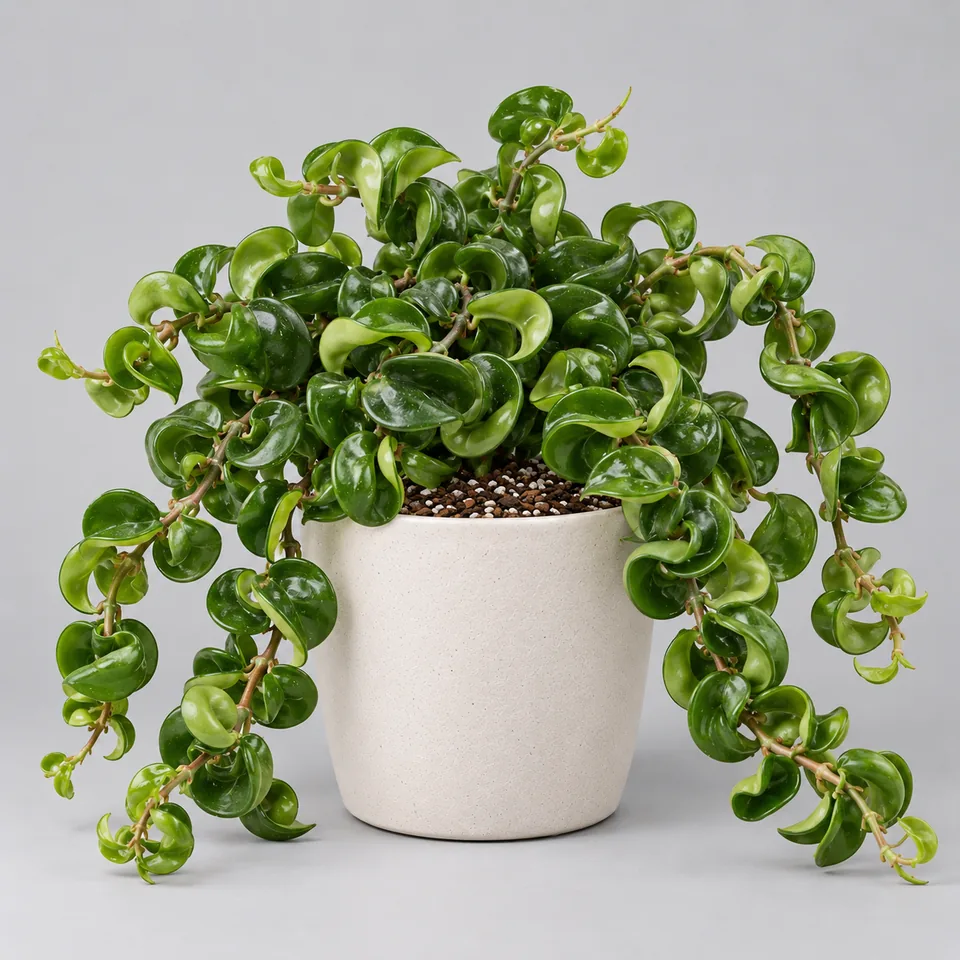
Hoya carnosa 'Compacta' produces thick stems covered with fleshy leaves that are strongly curled and twisted, creating the characteristic rope-like appearance. The folds between the leaves provide many hiding places for pests, so regular inspection is especially useful.
Its growth is slower than that of ordinary Hoya carnosa, but a mature specimen can produce rounded clusters of waxy, often fragrant flowers.
Like many Hoyas, it prefers well-aerated roots and tolerates slight drying much better than a heavy potting mix that remains continuously wet.
Care
Give it bright light; after acclimation, a few hours of gentle sun often encourage flowering.
Water thoroughly, then allow a large part of the pot to dry. The fleshy leaves store water. In winter or whenever growth slows, space waterings farther apart.
Do not cut off the old flower peduncles after blooming: Hoya can flower again from the same point.
Repotting
Repot infrequently. Hoya often flower well when slightly root-bound. Use a small pot with drainage holes and a very airy mix.
Propagation
Take stem cuttings containing at least one node. Individual leaves can sometimes form roots without regenerating a complete plant.
🐱 Toxicity
Generally regarded as non-toxic to dogs and cats, although sap can irritate sensitive skin.
🩺 Common problems
Yellow leaves
Excess water, overly compact potting mix or insufficient light. A single old leaf may yellow naturally.
Brown leaves
Harsh sun, extreme drought or damaged roots. Wrinkled leaves can also indicate a root problem even when the potting mix is wet.
Diseases
Root rot develops mainly when the mix stays wet for too long. Soft stems or an unusual smell should prompt a root check, removal of rotten tissue and longer drying between waterings.
Pests
Mealybugs and scale insects, which can be particularly difficult to spot among the curled leaves; spider mites can also occur.