Plant profile
Hoya Krimson Princess
Hoya carnosa 'Krimson Princess'
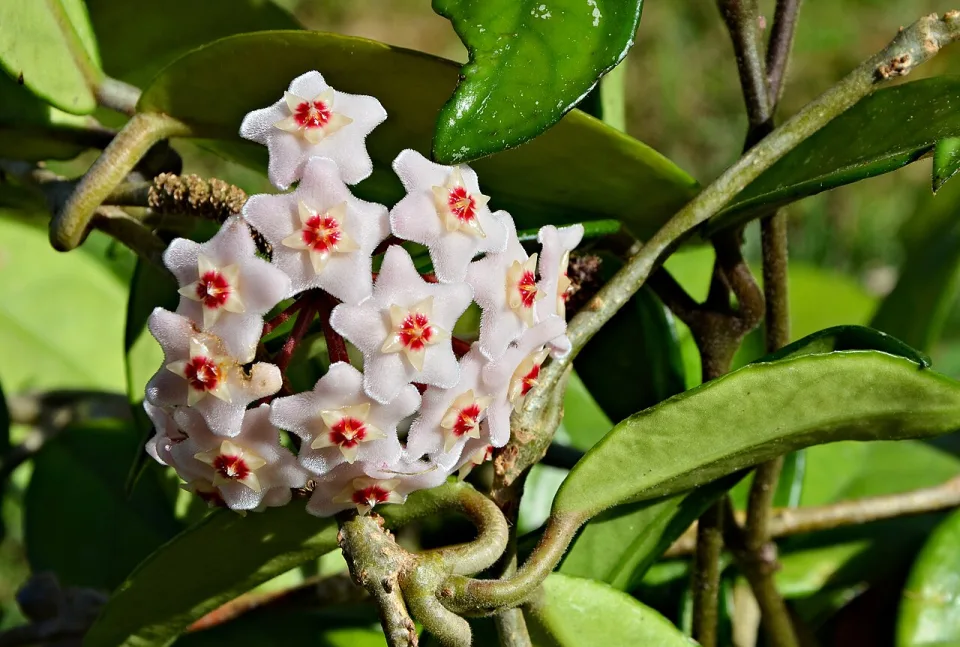
Photo : JLPC — CC BY-SA 3.0 — source

🌱 Growing conditions
☀️ Light
Bright indirect light; a few hours of gentle sun may help flowering after acclimation.
💧 Watering
Allow much of the mix to dry before watering again.
🌡️ Temperature
18–28 °C.
💦 Humidity
Medium.
🪴 Potting mix
Very airy and fast-draining, rich in bark and coarse material.
⭐ Difficulty
Easy to moderate
🌱 Growth
Slow
📏 Mature size
1–2 m trailing stems
🌿 Habit
Trailing and climbing
📝 About Hoya Krimson Princess
Description
Hoya carnosa 'Krimson Princess' has fleshy leaves with a cream to pale-yellow central area surrounded by a green margin. New shoots may be pink or reddish before their color settles.
This pattern is the reverse of 'Krimson Queen', which is mainly pale along the edges. The two cultivars are often confused in trade, but the distribution of the variegation usually makes them distinguishable.
The plant produces long flexible stems and, when mature, can form umbels of waxy, fragrant flowers if it receives sufficient light.
Care
Place it in bright indirect light and allow the potting mix to dry well between waterings. The fleshy leaves store water and tolerate a slight delay better than a pot that stays permanently wet. Keep the old flower peduncles.
Repotting
Repot infrequently into a pot only slightly larger. Use a mix of bark, perlite or pumice and light organic matter.
Propagation
Take stem cuttings containing at least one node. Several cuttings can be grouped together to create a denser plant.
🐱 Toxicity
Generally regarded as non-toxic to dogs and cats, although sap can irritate sensitive skin.
🩺 Common problems
Yellow leaves
Excess water and insufficient light are the most common causes.
Brown leaves
Direct sun, severe dehydration or root damage; the cream-colored sectors are more sensitive.
Diseases
Root rot in potting mix that stays too wet. If a stem blackens at the base or roots become soft, cut back to healthy tissue and save a healthy cutting if possible. Restart in a very airy mix after allowing cuts to dry.
Pests
Mealybugs, scale insects and sometimes spider mites.