Plant profile
Hoya Krohniana Super Silver
Hoya krohniana 'Super Silver'
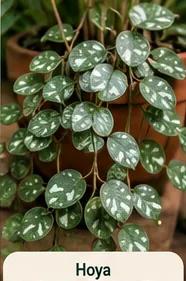
Photo : PlantMinute — Image générée
🌱 Growing conditions
☀️ Light
Bright indirect light.
💧 Watering
Allow most of the mix to dry before watering again.
🌡️ Temperature
18 to 28 °C
💦 Humidity
Medium to high
🪴 Potting mix
Very airy and free-draining, epiphytic type.
⭐ Difficulty
Moderate
🌱 Growth
Moderate
📏 Mature size
Stems 60 cm to 1.5 m
🌿 Habit
trailing or climbing
📝 About Hoya Krohniana Super Silver
Description
Hoya krohniana ‘Super Silver’ is a strongly silvered selection with small, thick leaves largely covered in silvery grey, leaving only limited green areas. Its slender stems can trail or climb a small support.
The cultivar remains compact but has strong visual impact because of its metallic foliage. Bright light is important for keeping growth dense and the colour attractive.
Like other epiphytic Hoyas, it prefers a small volume of very airy medium rather than a large pot filled with wet potting soil.
Care
Keep it in bright indirect light, with a little gentle sun if desired. Too dark a position produces looser growth.
Water thoroughly, then allow most of the pot to dry before watering again. In winter, extend the interval if growth slows.
Do not cut off flower peduncles after blooming. Feed lightly during active growth.
Repotting
Repot only when the root system truly fills the pot. Hoyas often prefer to remain slightly root-bound. Use a small pot with drainage holes and a coarse mix of bark, perlite or pumice, coco fibre and a small amount of potting mix.
Propagation
Take stem sections with at least two nodes. They root in perlite, sphagnum, water or a very light mix. A leaf may produce roots but will not necessarily make a new shoot without a node.
🐱 Toxicity
The milky sap may irritate sensitive skin; avoid ingestion.
🩺 Common problems
Yellow leaves
Overwatering or a compacted mix is the most common cause. Also check the light if the pot dries very slowly.
Brown leaves
Silver areas may mark after strong direct sun, prolonged drought or salt build-up.
Diseases
Root or stem rot in constantly wet conditions. If a stem blackens at the base or roots become soft, cut back to healthy tissue and save a healthy cutting if possible. Restart in a very airy mix after allowing cuts to dry.
Pests
Mealybugs, scale insects, spider mites and thrips.