Plant profile
Fishtail Hoya
Hoya polyneura
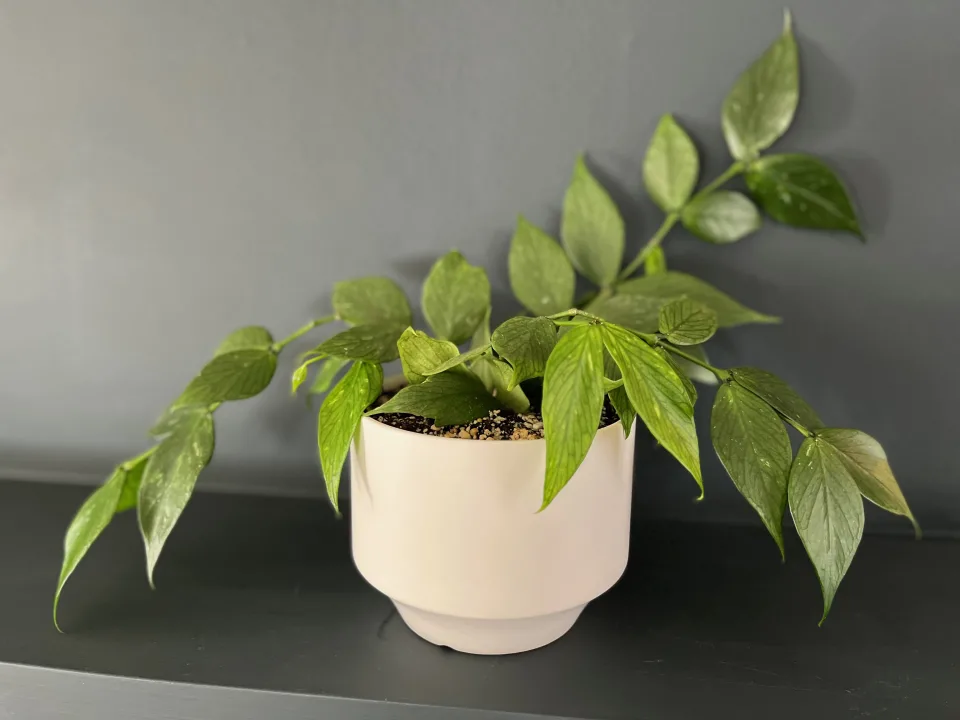
Photo : Steven Walling — CC BY-SA 4.0 — source

🌱 Growing conditions
☀️ Light
Bright indirect light; gentle morning sun is possible.
💧 Watering
Allow a good part of the mix to dry between waterings.
🌡️ Temperature
18 to 27 °C
💦 Humidity
Medium to high
🪴 Potting mix
Very airy, light and free-draining.
⭐ Difficulty
Moderate
🌱 Growth
Moderate
📏 Mature size
Trailing stems 60 cm to 1.5 m
🌿 Habit
trailing
📝 About Fishtail Hoya
Description
Hoya polyneura is known as the ‘Fishtail Hoya’ because its elongated leaves have a vein pattern reminiscent of a fish tail. The foliage is thinner and less succulent than that of many other Hoyas.
That difference slightly changes its care: it copes less well with prolonged drought than a fleshy Hoya carnosa, while still remaining sensitive to excess water.
Its naturally trailing habit makes it ideal for a hanging pot. In good conditions, it can also produce fragrant umbels of star-shaped flowers.
Care
Place it in bright filtered light. A little gentle morning sun may encourage flowering.
Water when the mix has clearly started to dry, but do not let it remain bone-dry for long periods. The mix must stay very airy.
Avoid prolonged hot, dry conditions: this species prefers slightly cooler conditions than some lowland tropical Hoyas. Keep the flower peduncles after blooming because they can flower again.
Repotting
Repot infrequently, only when the roots fill the pot or the mix has broken down. A small pot with drainage holes and a coarse blend of fine bark, perlite, coco fibre and a little potting mix is suitable.
Propagation
Take stem cuttings with at least two nodes. They can be rooted in perlite, sphagnum, water or a very light mix. A leaf alone may root but will not necessarily make a new shoot without a node.
🐱 Toxicity
The milky sap may be irritating; avoid ingestion.
🩺 Common problems
Yellow leaves
Yellowing is often associated with too much water or a compacted mix. In a dark position, the pot also dries more slowly.
Brown leaves
Dry tips appear in low humidity or after excessively prolonged drought. Strong direct sun can scorch the relatively thin leaves.
Diseases
Root and stem rot if the mix stays wet for too long.
Pests
Mealybugs, scale insects, spider mites and thrips. Inspect leaf undersides, nodes and young growth regularly. Silvery scarring, fine stippling, sticky honeydew or cottony clusters often reveal an infestation before it spreads.