Plant profile
Hoya sigillatis
Hoya sigillatis
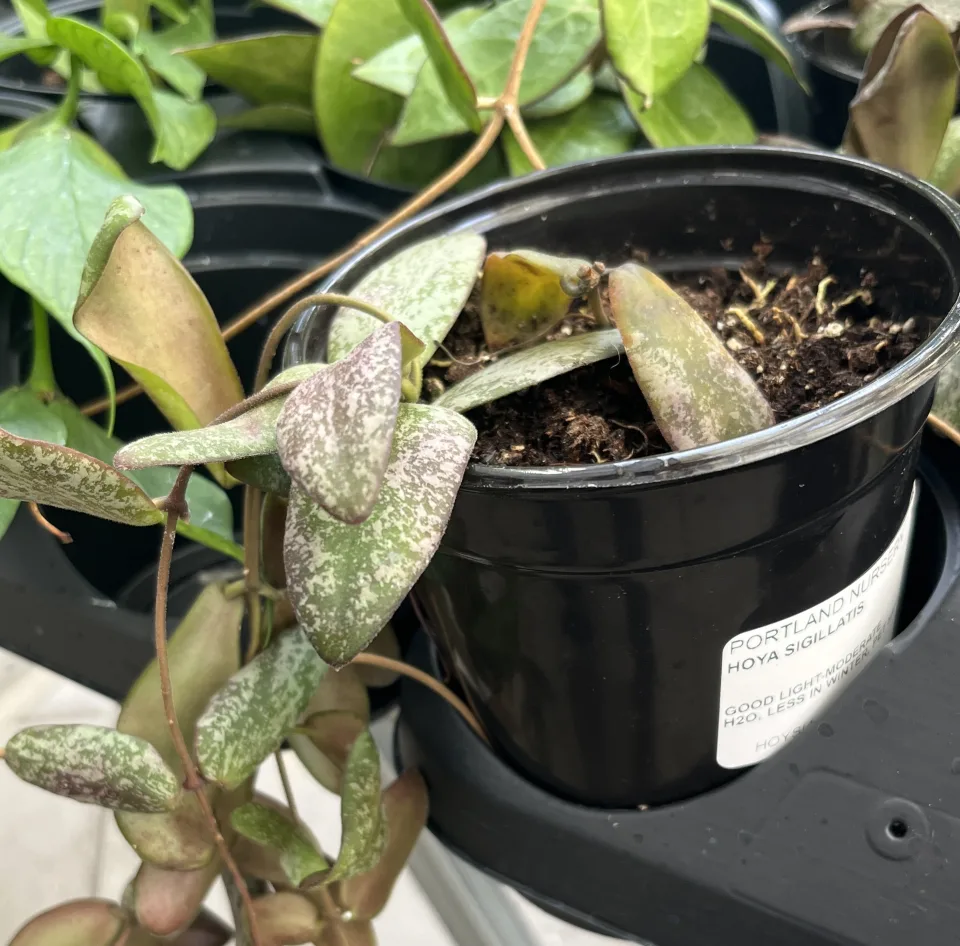
Photo : Another Believer — CC BY-SA 4.0 — source

🌱 Growing conditions
☀️ Light
Bright indirect light; a little gentle sun can intensify reddish tones in the leaves.
💧 Watering
Let much of the mix dry between waterings, then water thoroughly and let it drain.
🌡️ Temperature
18 to 28 °C.
💦 Humidity
Average to high.
🪴 Potting mix
Very airy, coarse and free-draining: bark, perlite or pumice, coco fibre or light potting mix.
⭐ Difficulty
Moderate
🌱 Growth
Moderate
📏 Mature size
Stems 1 to 2 m or more
🌿 Habit
climbing or trailing
📝 About Hoya sigillatis
Description
Hoya sigillatis has narrow leaves covered in small silver markings that look painted onto the surface. In bright light the foliage may develop bronze or reddish tones.
Like many Hoya, it prefers a small pot and an almost epiphytic mix. It copes with slight dryness better than with a cold, constantly wet root ball.
Care
Give it bright filtered light and a thin support or hanging position. Water when the mix is well dried, without waiting for the leaves to wrinkle badly.
Do not remove flower spurs after blooming because they can flower again. Weak, regular feeding during growth is better than heavy doses.
Repotting
Repot only when the mix has broken down or roots completely fill the pot. A container only slightly larger is best.
Propagation
Take stem cuttings with at least one or two nodes. Root in sphagnum, perlite, water or a very airy mix in warm conditions.
🐱 Toxicity
Hoya are not generally considered highly toxic, but their milky sap can irritate sensitive skin. Avoid ingestion.
🩺 Common problems
Yellow leaves
Overwatering, cold roots or insufficient light. If several leaves yellow while remaining thick and soft, check the roots before watering again. A single older lower leaf yellowing slowly can simply be natural turnover.
Brown leaves
Sunburn, prolonged drought or damaged roots. Even reddish colouring in strong light is not necessarily a problem.
Diseases
Root and stem rot in compact or saturated mix.
Pests
Mealybugs, scale insects and spider mites.