Plant profile
Panda plant
Kalanchoe tomentosa
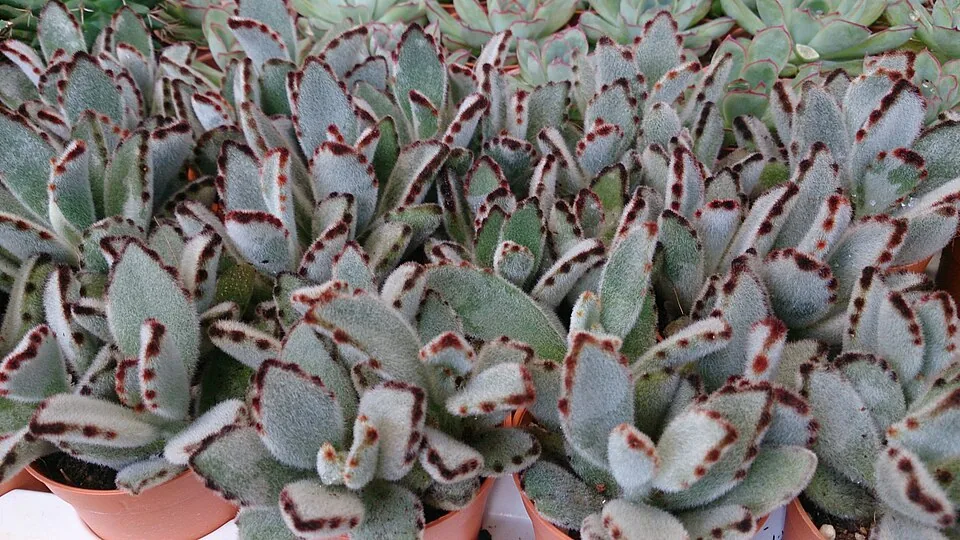
Photo : Mokkie — CC BY-SA 3.0 — source

🌱 Growing conditions
☀️ Light
Very bright light; gentle sun possible
💧 Watering
Let the substrate dry well between waterings
🌡️ Temperature
15–27 °C
💦 Humidity
Low
🪴 Potting mix
Very well-draining succulent mix
⭐ Difficulty
Easy
🌱 Growth
Slow to moderate
📏 Mature size
30–60 cm
🌿 Habit
upright and branched
📝 About Panda plant
Description
Succulent with thick leaves covered in silvery felt and edged with brownish markings; the felt naturally protects foliage from sun and water loss.
Care
Give very bright light with a few hours of gentle sun after acclimation and good ventilation. Water thoroughly, then let the mix dry well before watering again; reduce sharply in winter. Use a very free-draining mix and avoid needlessly wetting the felted leaves.
Repotting
Repot every two or three years, or when roots fill the container, into a pot with drainage holes. Use a very free-draining mineral mix and delay watering for a few days if roots were damaged.
Propagation
Propagate in spring from offsets or healthy stem cuttings. Let the cut surface dry briefly before inserting into barely moist succulent mix. Seed can be sown at about 19–21 °C, but it is slower.
🐱 Toxicity
Toxic to cats and dogs if ingested; keep out of reach.
🩺 Common problems
Yellow leaves
Yellow, soft or translucent leaves while the mix is still wet mainly indicate overwatering. If the plant becomes pale and stretched without softness, check for insufficient light instead. A few lower leaves may yellow naturally with age.
Brown leaves
Brown tips or patches commonly come from dry air, prolonged thirst or overly strong direct sun.
Diseases
This species is generally robust, but powdery mildew and rust can occur. Indoors, however, the commonest disease risk is root or basal rot in overly wet mix. Remove affected tissue and correct watering immediately.
Pests
Watch mainly for mealybugs and aphids. Inspect leaf axils and young shoots; sticky residue or cottony clusters often reveal an infestation. Isolate the plant and treat early.