Plant profile
Pfeiffera boliviana
Pfeiffera boliviana
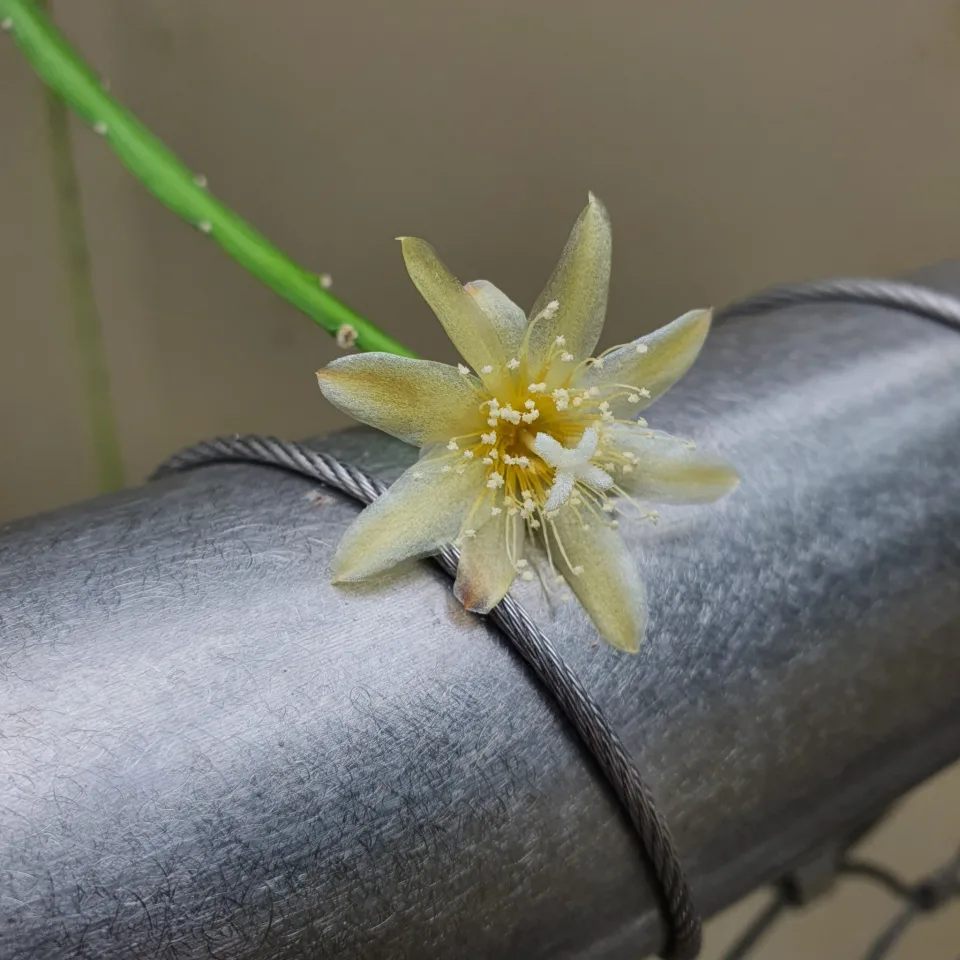
Photo : pbsg — CC BY 4.0 — source

🌱 Growing conditions
☀️ Light
Bright indirect light; a little gentle morning sun is acceptable.
💧 Watering
Water when the upper part of the mix starts to dry. Reduce in winter without leaving the plant dry for weeks.
🌡️ Temperature
15 to 27 °C.
💦 Humidity
Average to high.
🪴 Potting mix
Mix for epiphytic cacti: very airy, organic and free-draining, with bark and perlite.
⭐ Difficulty
Easy to moderate
🌱 Growth
Moderate
📏 Mature size
Trailing stems 60 cm to over 1 m
🌿 Habit
trailing epiphyte
📝 About Pfeiffera boliviana
Description
Pfeiffera boliviana, formerly widely listed as Lepismium bolivianum, is a Bolivian cactus with long segmented stems that can arch or trail attractively from a container.
For indoor cultivation, give it bright filtered light and a very airy, free-draining mix. Water thoroughly, then allow the upper part of the substrate to dry before watering again; persistent waterlogging is much more dangerous than a short dry spell.
Care
Give it bright light without scorching sun. Water thoroughly, then let the mix partly dry before watering again.
In spring and summer, a weak feed for flowering plants or epiphytic cacti every four weeks is enough. Keep away from cold draughts and radiators.
Repotting
Repot when roots fill the pot or when the mix has broken down. Shallow hanging pots work well.
Propagation
Take stem segments, let the cut dry for a day or two, then lay or plant them lightly in an airy, slightly moist mix.
🐱 Toxicity
No major toxicity is commonly reported, but specific data are limited. Avoid ingestion.
🩺 Common problems
Yellow leaves
On this cactus the segments, rather than leaves, pale or yellow. Check for excess water, low light or suffocated roots.
Brown leaves
Strong direct sun, prolonged dryness or cold can create dry brown areas.
Diseases
Stem and root rot if the mix stays saturated.
Pests
Mealybugs and scale insects. Check nodes, stem junctions and areas pressed against the support, where scale insects hide easily. Remove small colonies early without soaking aerial roots.