Plant profile
Leslie's living stone
Lithops lesliei
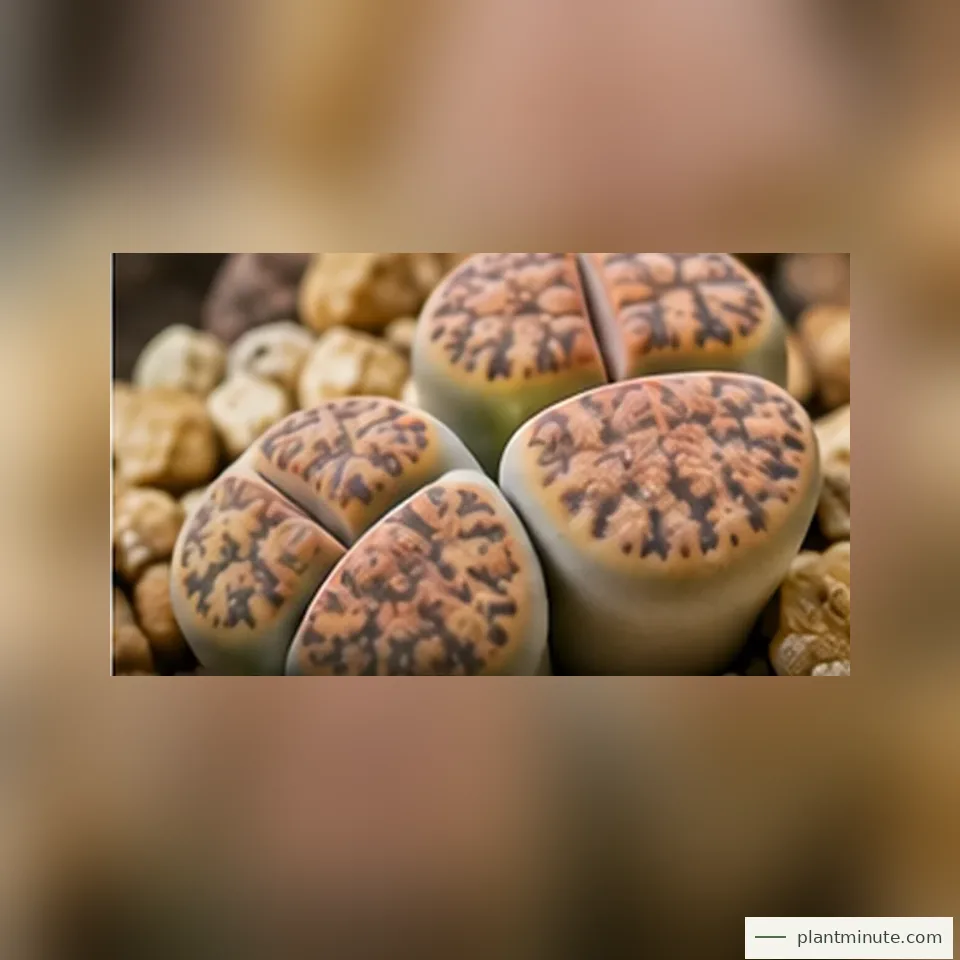
🌱 Growing conditions
☀️ Light
Extremely bright light, gradually increasing sun exposure and good ventilation.
💧 Watering
During leaf replacement, do not water until the old pair has mostly dried out. Resume cautiously during active growth, then reduce during rest.
🌡️ Temperature
Moderate warmth and dry air; protect from damp frost and stifling heat.
💦 Humidity
Low; dry air and good airflow are essential.
🪴 Potting mix
Mostly mineral, extremely free-draining mix in a deep pot suited to the roots.
⭐ Difficulty
Demanding (seasonal cycle)
🌱 Growth
Very slow
📏 Mature size
2–5 cm tall per head
🌿 Habit
Miniature succulent forming clumps
📝 About Leslie's living stone
Description
A succulent made of pairs of fleshy leaves resembling stones. Each year a new pair develops by drawing reserves from the old one: watering must follow this cycle, not a fixed schedule.
The two visible fleshy leaves form a nearly buried, pebble-like body. A new pair forms inside and gradually uses the old leaves as a water source; their shrivelling at this stage is normal.
Care
Usually unnecessary; avoid rich fertilizer. Translucent, soft body: warning of excess water. Old leaves wrinkling during replacement: normal. Do not water to 'plump up' the old leaves while the plant is renewing them.
Observe the leaf-replacement cycle rather than watering weekly. Keep the medium dry while the new pair absorbs the old; water cautiously again only once the old pair has dried and growth requires it.
Repotting
Repot infrequently, at a suitable stage of the cycle, protecting the taproot.
Use a pot deep enough for the taproot with a very mineral, free-draining mix. Avoid damaging the taproot and burying the body too deeply in moist medium.
Propagation
Sowing on a fine mineral mix produces new plants but requires patience. Division is possible only with a multi-headed clump whose heads are independent; never cut a single leaf pair in two.
🐱 Toxicity
Species-specific toxicity is poorly documented; prevent ingestion, especially by pets that might chew this stone-like plant.
🩺 Common problems
Yellow leaves
The old pair of leaves yellows and dries as the new pair absorbs it: this is normal. Do not water to 'save' the old leaves.
Brown leaves
Dry brown spots may be sunburn after sudden direct light. Brown, soft or split leaves suggest excess water, especially during leaf replacement.
Diseases
Rot develops quickly when watered while old leaves are being absorbed or in dense medium. Stop watering, assess firmness and avoid watering on a fixed calendar.
Pests
Root mealybugs and mealybugs in the fissure are possible; inspect during repotting when necessary.