Plant profile
Crocodile fern
Microsorum musifolium
🌱 Growing conditions
☀️ Light
Medium to bright indirect light.
💧 Watering
Water when the surface begins to dry, then drain thoroughly.
🌡️ Temperature
18–27°C; protect from cold drafts.
💦 Humidity
Moderate to high; protect from drying draughts.
🪴 Potting mix
Airy mix of fibrous potting compost, fine bark and perlite.
⭐ Difficulty
Moderate
🌱 Growth
Moderate
📏 Mature size
30–70 cm
🌿 Habit
Clumping, upright fronds
📝 About Crocodile fern
Description
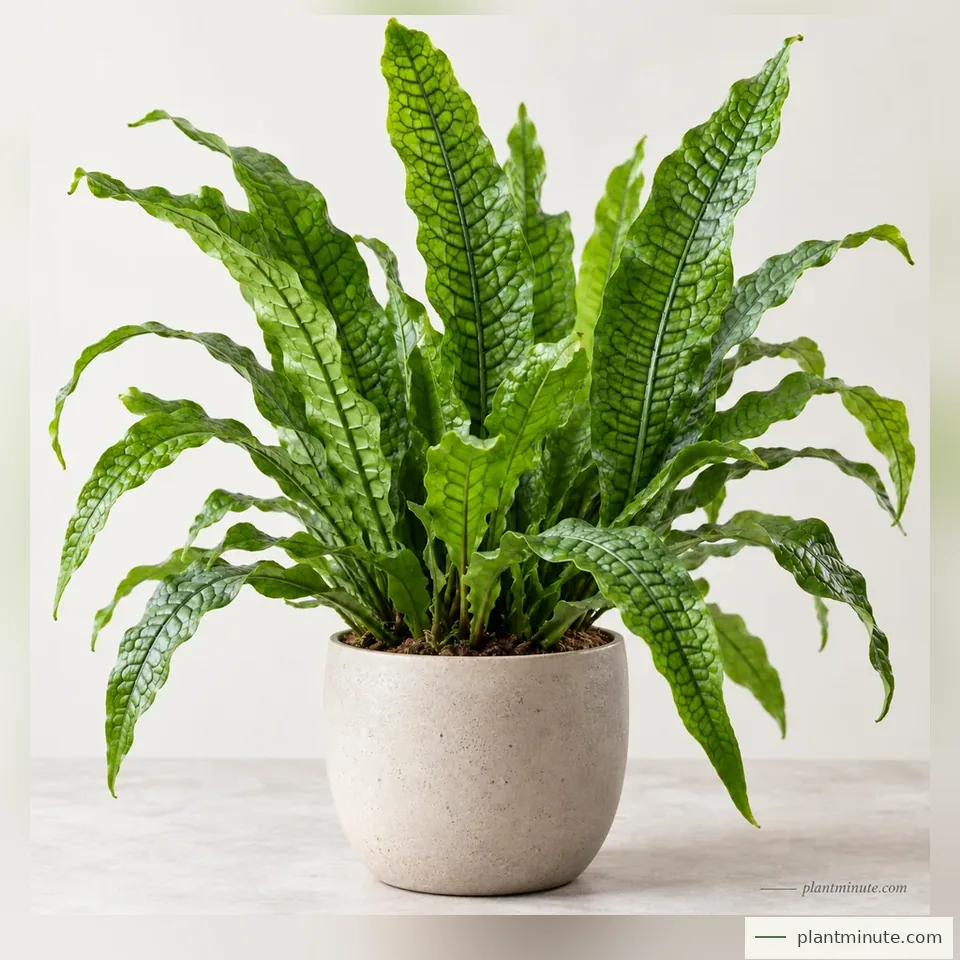
A fern with broad fronds patterned with a network of veins resembling crocodile skin. It likes consistent humidity, but its roots still need air.
The crocodile fern has leathery fronds with distinctive raised veins. Its rhizomes grow close to the surface and must not be buried deeply.
Care
Use a weak fertilizer in spring and summer. Brown tips: check humidity, mineral salt buildup and irregular watering. Soft base: look for compacted or waterlogged mix. Severely damaged fronds will not turn green again; judge recovery by new growth.
Remove dust without rubbing fronds hard. Water before the mix stays completely dry for long, but allow drainage; check for scale insects close to the rhizomes.
Repotting
Choose a draining pot and humus-rich mix with airy components. Set rhizomes on or only just under the surface; deep burial promotes rot.
Propagation
Cut rhizome sections that each carry roots and a developing frond. Place them on moist, airy medium without burying their upper surfaces.
🐱 Toxicity
Absolute safety for pets cannot be guaranteed; prevent them from chewing the fronds.
🩺 Common problems
Yellow leaves
A yellowing lower frond may simply be ageing. Widespread yellowing in heavy, wet medium requires checking roots and drainage.
Brown leaves
Brittle brown margins often indicate low humidity or watering too infrequently; soft dark patches point instead towards rot.
Diseases
Do not bury the rhizome deeply: it can rot under damp, compact compost. Maintain good airflow around the plant.
Pests
Scale insects along veins and mites in dry air are possible. Sori beneath mature fronds are not insect eggs.