Plant profile
Orange jasmine
Murraya paniculata
🌱 Growing conditions
☀️ Light
Very bright; several hours of gentle sun after acclimation.
💧 Watering
Water when the top layer dries; never leave the pot standing in water.
🌡️ Temperature
18–28°C; a bright, frost-free winter position.
💦 Humidity
Moderate; good light encourages flowering.
🪴 Potting mix
Fertile, well-drained substrate in a pot with drainage holes.
⭐ Difficulty
Moderate
🌱 Growth
Moderate
📏 Mature size
60 cm–2 m in a pot
🌿 Habit
Shrubby
📝 About Orange jasmine
Description
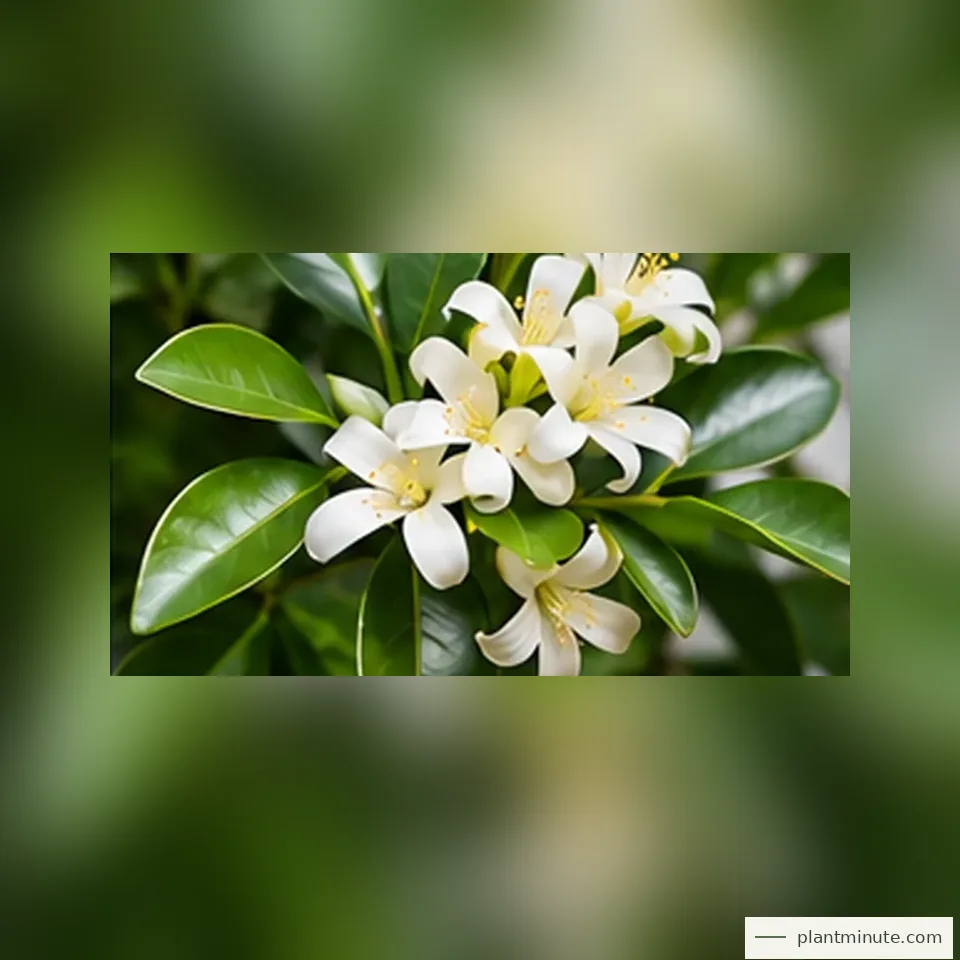
An evergreen shrub whose small white flowers have a pronounced fragrance. Often kept as bonsai or in a bright conservatory.
This evergreen member of the citrus family bears intensely fragrant white flowers, sometimes followed by small fruits. It needs abundant light to flower well, especially indoors in pots.
Care
Moderate fertilizer during growth and flowering. Yellow leaves: first check drainage, light and nutrition. No flowers: consider inadequate light or overly frequent pruning. A bright conservatory is often better than a dark living room.
Place by a very bright window or outside in mild weather after acclimation, protecting from cold. Prune lightly after a growth flush to encourage branching without constantly removing future flower buds.
Repotting
Repot in spring when roots fill the pot.
Use a pot with drainage and a sufficiently free-draining mix; repot only when roots are crowded. Avoid oversized pots that remain wet too long.
Propagation
Fresh seeds or semi-hardwood stem cuttings.
Sow fresh seeds promptly because viability declines in storage. Semi-hardwood cuttings are also possible in warm weather with gentle warmth and rooting humidity.
🐱 Toxicity
Do not assume fruits or leaves are edible; prevent ingestion by pets or young children without reliable species-specific advice.
🩺 Common problems
Yellow leaves
With yellow leaves, first check insufficient light, overwatering or nutrient imbalance. If young leaves have green veins and yellow tissue, consider chlorosis and assess water and medium.
Brown leaves
Brown tips can follow a dried root ball or hot indoor air; isolated brown patches may also be sun scorch.
Diseases
Roots rot in waterlogged soil; provide a draining pot and plenty of light. Flower drop after moving is often stress, not disease.
Pests
Look for scale insects, whiteflies and aphids on young shoots; check leaf undersides for sticky honeydew.