Plant profile
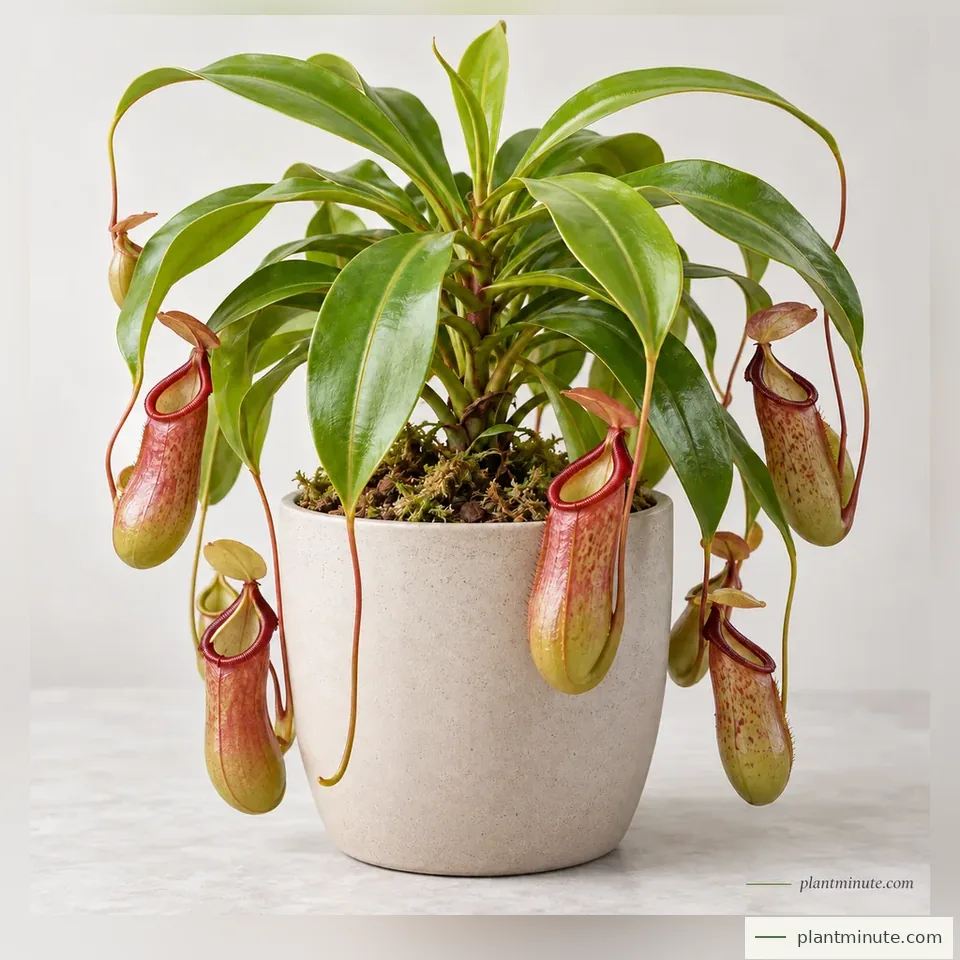
Nepenthes ventricosa
Nepenthes ventricosa
🌱 Growing conditions
☀️ Light
Bright filtered light; avoid intense midday sun through glass.
💧 Watering
Use rainwater or very low-mineral water; water thoroughly and let drain. Unlike a bog sundew, do not leave the pot permanently in a water-filled saucer.
🌡️ Temperature
Around 18–28 °C by day, preferably with cooler nights; avoid prolonged cold.
💦 Humidity
Preferably high, with fresh air and no stagnant, enclosed atmosphere.
🪴 Potting mix
Sphagnum moss with airy materials such as perlite or suitable bark; keep moist but never compacted.
⭐ Difficulty
Demanding
🌱 Growth
Moderate
📏 Mature size
30–90 cm or more with support
🌿 Habit
Climbing or trailing
📝 About Nepenthes ventricosa
Description
This tropical climber develops pitchers at the tips of its leaves; the pitchers are not flowers. New leaves without pitchers often indicate insufficient light or humidity.
Pitchers are traps formed at leaf tips; their development depends strongly on light and humidity. A healthy leaf may produce no pitcher during adaptation without indicating disease.
Care
Little or no fertilizer; if required, use only a very dilute feed with caution. Do not stuff food into the pitchers. Dry pitchers: check dry air, drying growing medium and recent relocation. New leaves without pitchers: gradually improve light and stabilize humidity. Never apply the permanently flooded saucer method recommended for Venus flytraps.
Use low-mineral water and water through a very airy mix; never keep the pot permanently standing in a full saucer. Avoid dry draughts and stagnant extreme heat: roots need oxygen.
Repotting
A coarse mix for epiphytic carnivorous plants, often based on sphagnum and aerating components, works better than dense potting soil. Repot only when the medium breaks down or compacts; handle fragile roots carefully.
Propagation
Root stem cuttings containing nodes in high humidity and filtered light.
Take stem cuttings with several nodes from an established plant, placing at least one node into clean, airy medium. Maintain high ambient humidity without trapping foliage in mould-prone, stagnant air.
🐱 Toxicity
Pitchers are not food; prevent ingestion and keep curious pets away. There is insufficient evidence to call this species edible or completely harmless.
🩺 Common problems
Yellow leaves
A few yellow lower leaves are normal. Widespread yellowing in wet medium calls for a root-aeration check; low light may produce leaves without pitchers.
Brown leaves
Old pitchers dry naturally, starting at the lid. If new pitchers all dry up, check humidity, temperature swings and watering; do not routinely fill pitchers with water.
Diseases
Roots suffer in dense, waterlogged medium. Use an airy mix that stays moist but drains well; unlike bog carnivores, do not keep its saucer permanently full.
Pests
Check leaf axils and pitchers for mealybugs and thrips. Clean infestations carefully without pouring insecticide into the pitchers.