Plant profile
Ponytail palm
Nolina recurvata
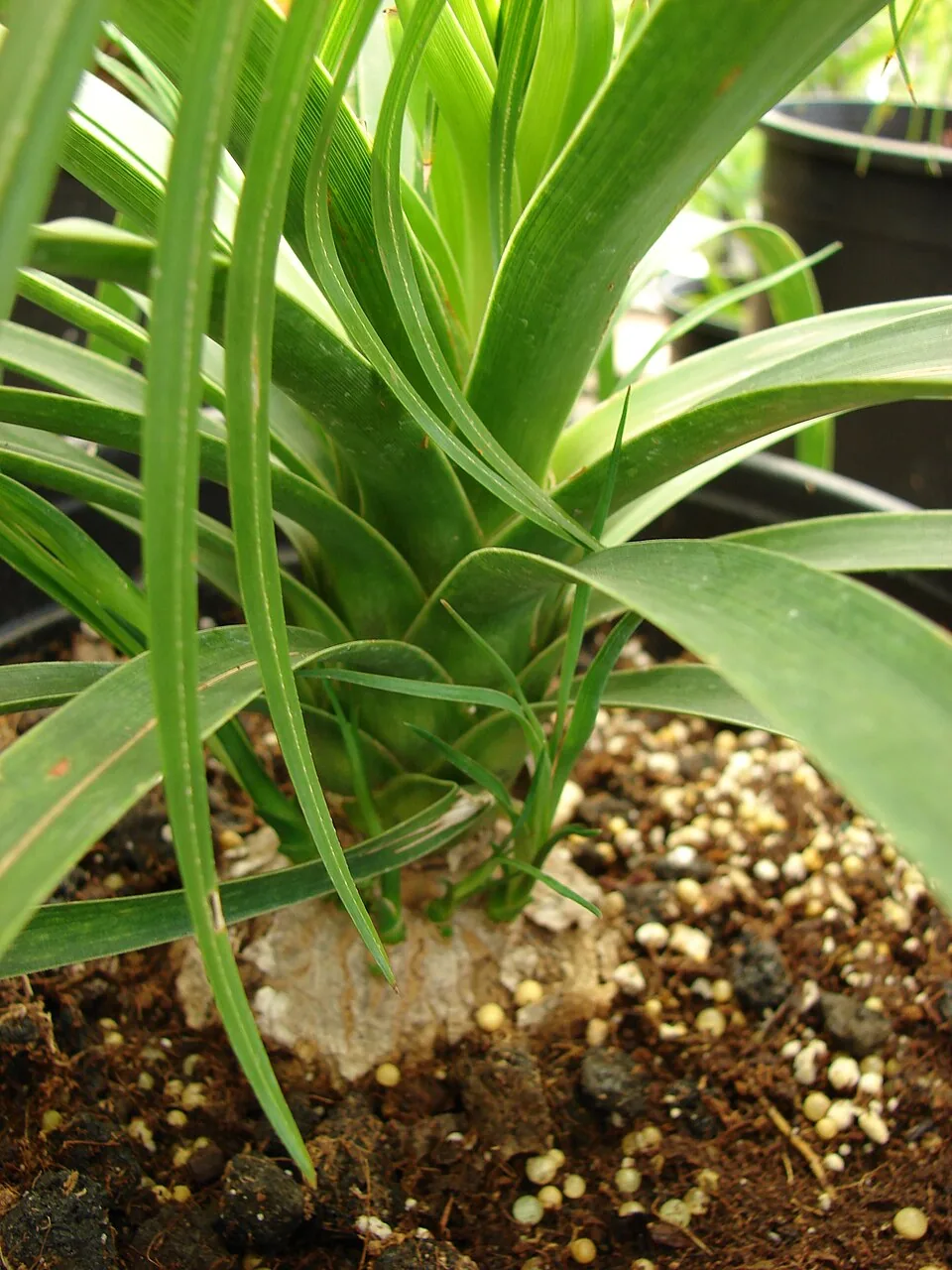
Photo : Forest & Kim Starr — CC BY 3.0 — source

🌱 Growing conditions
☀️ Light
Very bright light; gentle sun possible
💧 Watering
Water thoroughly, then allow the mix to dry very substantially, almost completely, before watering again. Never leave water in the saucer. In winter or low light the interval may become long; the caudex stores water and should not be kept constantly moist.
🌡️ Temperature
15–27 °C
💦 Humidity
Low
🪴 Potting mix
Very well-draining succulent mix
⭐ Difficulty
Easy
🌱 Growth
Slow
📏 Mature size
1–2 m indoors
🌿 Habit
tree-like and upright
📝 About Ponytail palm
Description
Beaucarnea recurvata, still often sold as Nolina recurvata, is a Mexican xerophyte with a swollen water-storing base and long arching leaves. It is not a palm. Its slow growth and water reserves explain why it tolerates missed waterings far better than constantly wet soil.
Care
Give the brightest light available, with gradually introduced direct sun once acclimated. The main risks are overwatering and oversized pots. Rotate the container occasionally for balanced growth and clean the long leaves without cutting into green tissue unless necessary.
Repotting
Repot infrequently, when roots truly fill the pot or the mix has compacted. Choose a heavy container with drainage holes only slightly larger, using a very mineral, free-draining mix. Keep the swollen base above soil level; burying it promotes rot.
Propagation
Seed is the most common and predictable method. Offsets sometimes appear at the base; separate them only when they have enough tissue and preferably their own roots. Removing them too early can weaken both offset and parent plant.
🐱 Toxicity
Listed by the ASPCA as non-toxic to dogs and cats.
🩺 Common problems
Yellow leaves
Several leaves yellowing while the mix remains wet often indicate overwatering. If the swollen base becomes soft, dark or foul-smelling, suspect rot immediately. A few older lower leaves yellowing gradually are normal.
Brown leaves
Brown tips are common and do not always signal a serious problem; very dry air, mineral salts or long dry periods can accentuate them. Trim only the dry tip, following the natural leaf shape. Pale patches that later brown after moving into sun suggest scorch.
Diseases
Caudex and root rot are the main dangers. A soft or blackened base requires unpotting, cutting away rotten tissue with a clean tool, allowing wounds to dry and repotting into a very free-draining mix. Resume watering cautiously only after drying.
Pests
Watch for mealybugs, scale insects and spider mites, especially at leaf bases and deep in the tuft. Spider mites are favoured by hot, dry air. Isolate affected plants and repeat inspections after cleaning.