Plant profile
Purple shamrock
Oxalis triangularis
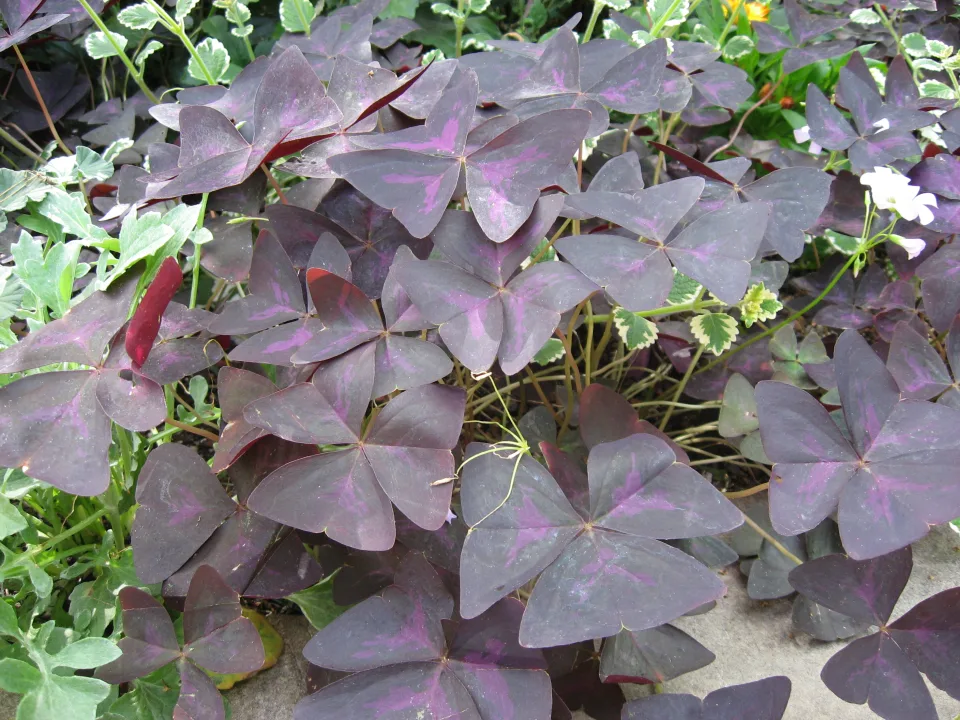
Photo : Chhe (talk) — Public domain — source

🌱 Growing conditions
☀️ Light
Bright light; gentle morning or late-afternoon sun is suitable.
💧 Watering
Moderate during active growth; keep only barely moist during dormancy.
🌡️ Temperature
15–25 °C
💦 Humidity
Average
🪴 Potting mix
Light, humus-rich and well-drained.
⭐ Difficulty
Easy
🌱 Growth
Fast during active growth
📏 Mature size
20–35 cm
🌿 Habit
Clumping and rhizomatous
📝 About Purple shamrock
Description
A rhizomatous perennial with three triangular leaflets, often deep purple. The leaflets naturally fold when light falls. The plant may enter a true dormancy and lose all top growth without being dead.
The triangular leaflets fold naturally when light levels fall. The plant can also enter a true dormancy in which all visible foliage disappears while the underground rhizomes remain alive. This seasonal rest should not automatically be mistaken for the death of the plant.
Care
Give bright light for dense, strongly coloured foliage. During growth, water when the surface begins to dry. If the plant naturally goes dormant, reduce watering sharply and keep the mix only barely moist until new growth appears.
Give it abundant light to maintain dense, strongly coloured foliage. During active growth, water after the surface begins to dry. If the foliage dies back as part of dormancy, reduce watering sharply and keep the mix only barely moist until new growth resumes. Feed lightly only during active growth.
Repotting
Repot at the start of a new growth cycle or when the clump becomes crowded. A wider, fairly shallow pot suits the small rhizomes well.
A relatively broad, shallow pot suits the small rhizomes. The beginning of a new growth cycle is a good time to renew the mix or divide crowded rhizomes. Use a light, humus-rich but freely draining compost.
Propagation
Divide the small rhizomes or corm-like structures during repotting and replant healthy pieces separately.
Separate healthy rhizomes or corm-like sections at repotting and replant them individually or in small groups. Warmth and increasing light usually bring a quick return to active growth.
🐱 Toxicity
Contains oxalates. Large amounts may be irritating or harmful, especially to pets.
🩺 Common problems
Yellow leaves
Yellowing can indicate a natural entry into dormancy, especially if several leaves decline progressively at the end of a growth cycle.
During active growth, check instead for excess water or insufficient light. A root ball that remains constantly wet can cause the rhizomes to rot.
Brown leaves
Strong sun through glass can dry and brown the leaflets. A long period without water can also brown the stems and leaves.
Just before dormancy, browning followed by the disappearance of the foliage can be completely normal.
Diseases
Rhizome rot in constantly wet mix; rust can occasionally occur in humid poorly ventilated conditions.
Pests
Aphids, spider mites and whiteflies indoors; slugs and snails mainly outdoors.