Plant profile
Moonstones
Pachyphytum oviferum
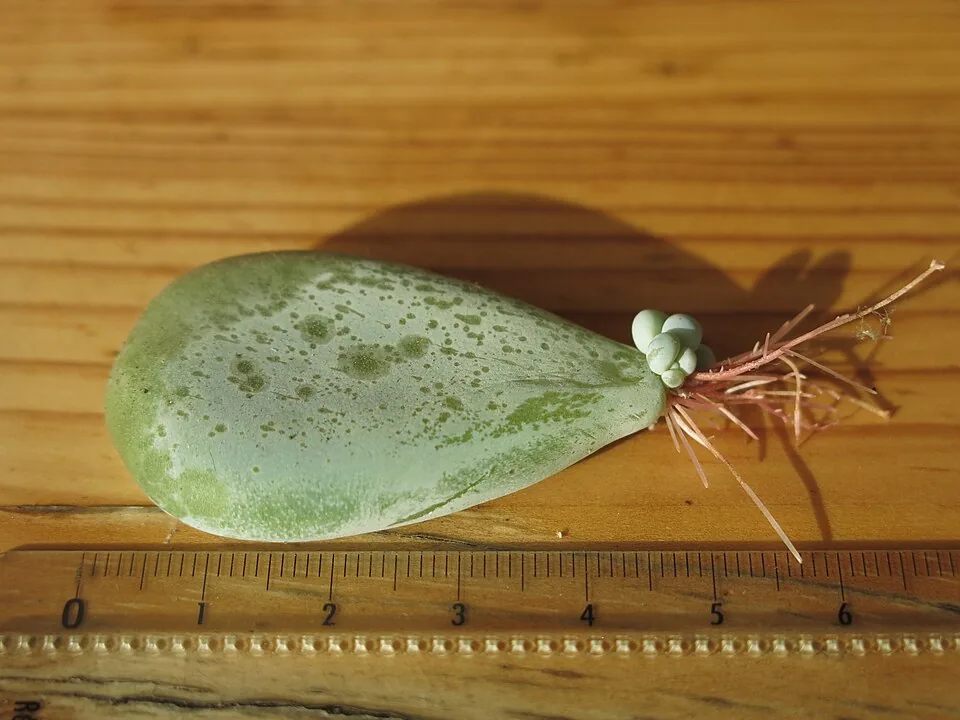
Photo : Tangopaso — Public domain — source

🌱 Growing conditions
☀️ Light
Very bright to sunny; acclimate gradually to direct sun
💧 Watering
Moderate: let the substrate dry well between waterings; keep almost dry during dormancy
🌡️ Temperature
15 to 27 °C indoors; protect from frost
💦 Humidity
Low
🪴 Potting mix
Very well-draining, mineral-rich cactus and succulent mix
⭐ Difficulty
Easy
🌱 Growth
Slow to moderate
📏 Mature size
10 to 20 cm, up to about 30 cm with age
🌿 Habit
rosette
📝 About Moonstones
Description
Pachyphytum oviferum, commonly called moonstones, is a succulent native to the state of San Luis Potosí in Mexico. It forms short stems bearing particularly thick, fleshy leaves grouped into compact rosettes.
The rounded to egg-shaped leaves are usually blue-green to grayish and covered with a whitish waxy coating called farina. This natural protection helps limit water loss and gives the plant its characteristic appearance of sugar-coated sweets or small pebbles.
In spring, a sufficiently mature plant can produce an arching flower stalk bearing colorful flowers. Thanks to the water reserves stored in its leaves, Pachyphytum oviferum tolerates drought well but is much more sensitive to overwatering.
Care
Provide bright light, introducing direct sun gradually when appropriate. Let the substrate dry well between waterings and reduce watering sharply in winter or during dormancy. Avoid abrupt changes and check the root ball before watering again.
Repotting
Repot when the roots occupy the pot well or when the mix has become compacted. Use a container with drainage holes only slightly larger and a very well-draining cactus and succulent mix. Handle the plant carefully so the leaves are not detached and their waxy coating is not damaged. If roots were injured during repotting, wait a few days before watering heavily.
Propagation
Pachyphytum oviferum is commonly propagated from leaf cuttings. Gently detach one complete healthy leaf, allow the wound to dry and callus, then place it on a very free-draining mix. New roots and then a young rosette can gradually develop at its base. Propagation from seed is also possible but takes considerably longer.
🐱 Toxicity
Avoid ingestion; keep out of reach of children and animals until species-specific toxicity has been validated.
🩺 Common problems
Yellow leaves
If several leaves of Pachyphytum oviferum turn yellow together, first check substrate moisture, then light and temperature. A single old leaf may simply be reaching the end of its cycle.
Brown leaves
On Pachyphytum oviferum, distinguish a dry tip from a soft area: the first often accompanies drying or overly strong sun, while the second points more toward excess moisture.
If the brown areas are soft rather than dry, first check for excess moisture and early rot at the roots or plant base.
Diseases
Root problems in Pachyphytum oviferum become more likely in constantly wet, poorly aerated substrate. Rapid loss of vigor or a soft base justifies checking the roots.
Remove badly damaged tissue, inspect the roots and repot into a drier, very free-draining mix. Wait until the plant is stable again before watering.
Pests
Inspect leaf undersides, nodes and young shoots of Pachyphytum oviferum. If you see stippling, distortion, cottony masses or visible insects, isolate the plant before treating.