Plant profile
Madagascar palm
Pachypodium lamerei
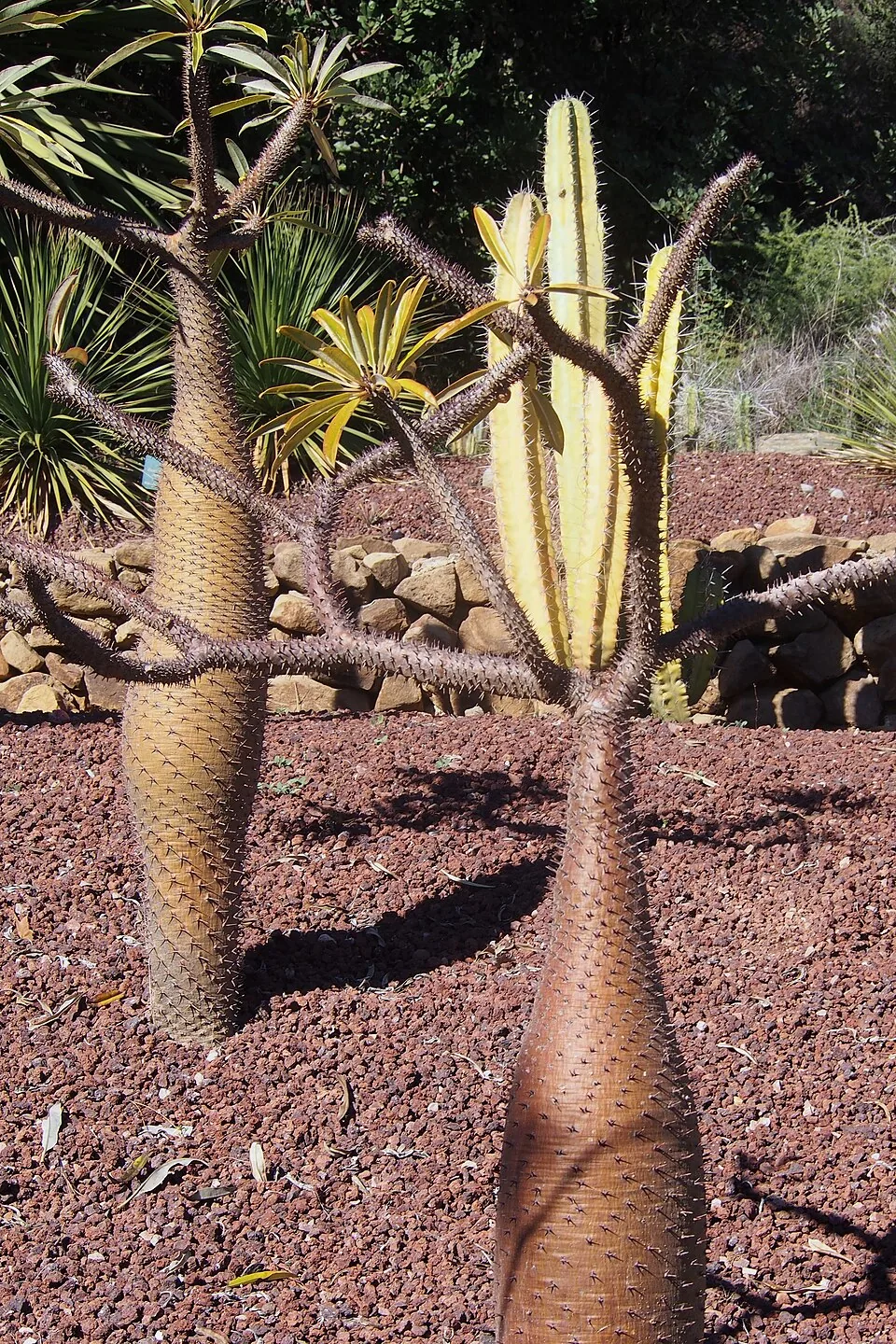
Photo : Agnieszka Kwiecień, Nova — CC BY-SA 4.0 — source

🌱 Growing conditions
☀️ Light
Very bright light, with gentle sun after acclimation.
💧 Watering
Water thoroughly, then allow the potting mix to dry before watering again.
🌡️ Temperature
18 to 28 °C
💦 Humidity
Low to medium
🪴 Potting mix
Very well-draining, rich in mineral components.
⭐ Difficulty
Easy to moderate
🌱 Growth
Moderate
📏 Mature size
1 to 2.5 m indoors
🌿 Habit
upright and tree-like
📝 About Madagascar palm
Description
Pachypodium lamerei, often called the “Madagascar palm”, is not a palm but a succulent with a thick, strongly spined trunk topped by a crown of long leaves. The trunk stores water and the plant may lose some foliage during cool or dry periods. It needs abundant light to maintain sturdy growth.
Care
Very bright light, with gentle sun after acclimation. Water thoroughly, then allow the potting mix to dry before watering again. Above all, avoid abrupt changes in conditions and check the root ball before watering again.
If Pachypodium lamerei loses its leaves as days shorten or temperatures fall, reduce watering sharply until active new growth resumes.
Repotting
Repot when roots truly fill the container or the mix has degraded. Choose a pot with drainage holes only slightly larger and use a very well-draining mix rich in mineral components. An unnecessarily large pot keeps moisture around the roots for longer.
Its spiny trunk becomes heavy; choose a very stable pot, handle the root ball with thick gloves and do not use an oversized container merely to prevent tipping.
Propagation
Propagate by cuttings or by separating offsets according to the species; allow cuts in succulent tissue to callus before planting.
🐱 Toxicity
Toxic to dogs and cats if ingested. The sap contains cardiotoxic compounds; the plant also has spines that can cause injury. Keep out of reach of children and animals.
🩺 Common problems
Yellow leaves
If several leaves of Pachypodium lamerei yellow together, first check the moisture of the potting mix, then light and temperature. A single old leaf may simply be reaching the end of its cycle.
Brown leaves
On Pachypodium lamerei, distinguish a dry tip from a soft area: the first often accompanies drying or overly strong sun, while the second points more toward excess moisture.
Diseases
Root problems in Pachypodium lamerei become more likely in constantly wet, poorly aerated potting mix. Rapid loss of vigor or a soft base justifies checking the roots.
Pests
Inspect leaf undersides, nodes and young shoots of Pachypodium lamerei. If you see stippling, distortion, cottony masses or visible insects, isolate the plant before treating.