Plant profile
Peperomia Rosso
Peperomia caperata 'Rosso'
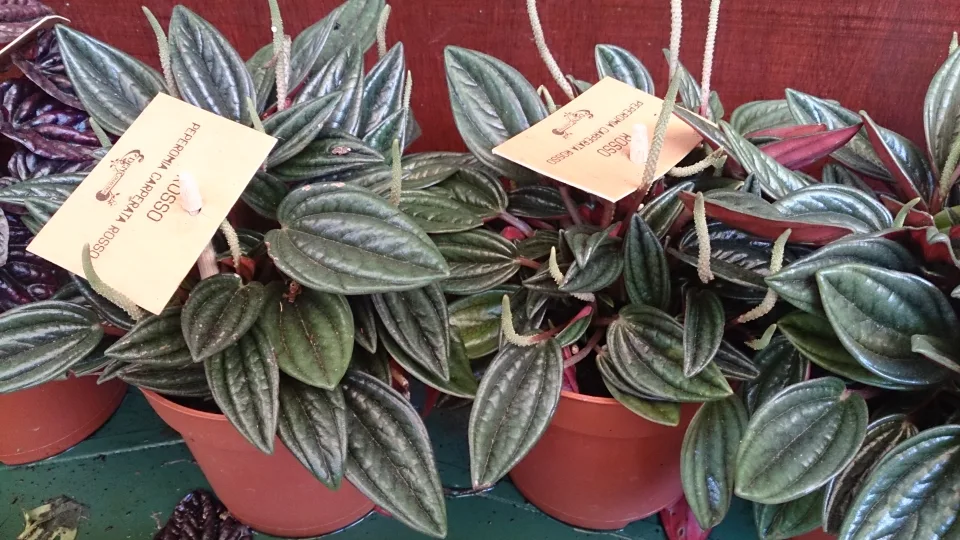
Photo : Mokkie — CC BY-SA 3.0 — source

🌱 Growing conditions
☀️ Light
Medium to bright indirect light; avoid intense direct sun, which marks the leaves quickly.
💧 Watering
Let roughly the upper third of the mix dry before watering. Never leave water standing in the saucer.
🌡️ Temperature
18 to 27 °C; avoid temperatures below 15 °C.
💦 Humidity
Average; good air movement matters more than very high humidity.
🪴 Potting mix
Very airy and free-draining: fine potting mix with perlite and a little bark.
⭐ Difficulty
Easy
🌱 Growth
Slow to moderate
📏 Mature size
15 to 25 cm
🌿 Habit
compact rosette
📝 About Peperomia Rosso
Description
Peperomia caperata ‘Rosso’ forms a dense clump of narrow, deeply rippled glossy leaves. Their upper surface is dark green while the undersides and petioles are strongly red, especially in generous light.
Its leaves and stems store some water. It therefore tolerates a slight delay in watering much better than permanently wet soil.
Care
Give it stable indirect light. Water only when the mix has started to dry well below the surface; the weight of the pot is a useful guide.
Avoid keeping the centre of the rosette wet and never let a cachepot hold water. A weak monthly feed in spring and summer is enough.
Repotting
Repot only when the roots really occupy the container. Peperomia often prefer to stay slightly pot-bound; an oversized pot increases the risk of overwatering.
Propagation
Propagate from leaf cuttings with petiole or from small rosettes. Root in a fine, light, barely moist mix at a stable warm temperature.
🐱 Toxicity
Peperomia are generally considered non-toxic to cats and dogs, although eating large amounts of plant material should still be discouraged.
🩺 Common problems
Yellow leaves
Most often caused by overwatering. If yellow leaves are also soft, inspect the roots and let the mix dry more between waterings.
Brown leaves
Direct sun, prolonged dryness, cold or salt build-up can cause dry or scorched patches.
Diseases
Crown and root rot if the mix remains saturated. Remove soft or translucent tissue.
Pests
Mealybugs, thrips and spider mites, often hidden in the crown or under the leaves.