Plant profile
Happy Bean peperomia
Peperomia ferreyrae
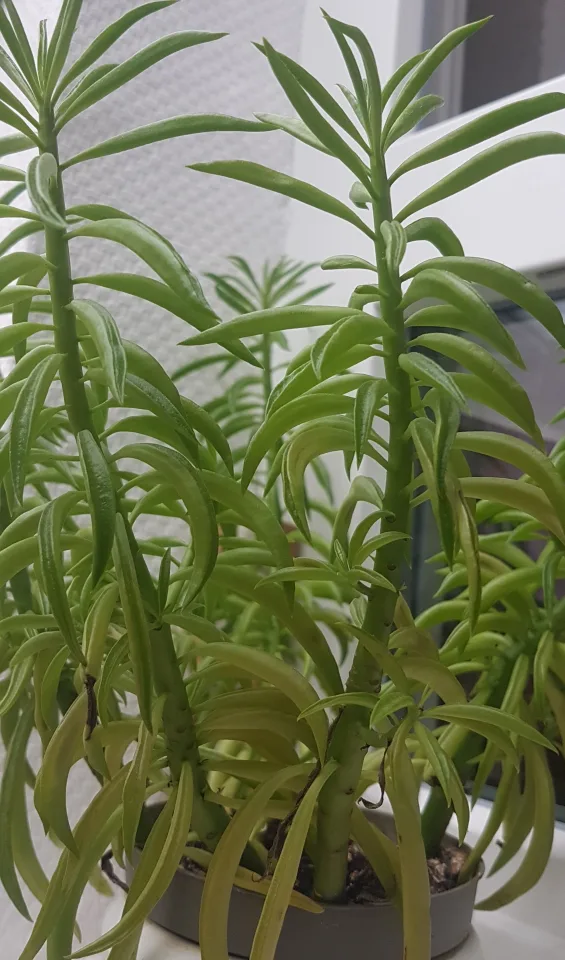
Photo : Kaster — CC BY-SA 4.0 — source

🌱 Growing conditions
☀️ Light
Bright to very bright indirect light; gentle sun is acceptable.
💧 Watering
Let at least half of the potting mix dry before watering again.
🌡️ Temperature
18–27 °C
💦 Humidity
Low to average
🪴 Potting mix
Very light and free-draining, with plenty of perlite, pumice or similar mineral material.
⭐ Difficulty
Easy
🌱 Growth
Moderate
📏 Mature size
20–30 cm
🌿 Habit
Upright and branching
📝 About Happy Bean peperomia
Description
A distinctive peperomia with narrow fleshy leaves that are slightly channelled on top, giving rise to the “Happy Bean” name. In strong filtered light it stays compact; in low light its stems stretch and weaken.
Its fine root system needs plenty of air around the roots. The fleshy leaves store water, so a short dry spell is usually less damaging than a pot that stays wet for days. In good light the plant stays compact; in insufficient light the stems or petioles lengthen and the plant loses its dense habit.
Care
Give abundant light without sudden exposure to harsh midday sun. Water only after the mix has dried markedly and always let excess water drain away. Pinch long stems if you want a bushier plant.
Judge watering by the moisture in the pot rather than by a fixed schedule. Water thoroughly, let the excess drain completely and never leave the pot standing in water. In winter or in lower light the mix dries more slowly, so watering should be spaced out further. Very dilute fertilizer every 4 to 6 weeks during active growth is sufficient.
Repotting
Repot infrequently into a small pot with drainage holes. A mineral, fast-draining mix is preferable to a heavy water-retentive one.
Do not move it into an oversized pot: unused compost stays wet around the roots for too long. A container only 2 to 3 cm wider than the previous one is usually enough. Use a light mix with a substantial proportion of drainage material and avoid compacting it around the roots.
Propagation
Take stem cuttings with at least one node. Let the cut dry briefly before inserting it into a lightly moist, airy mix.
Stem cuttings with at least one node are generally the quickest method; some species can also be propagated from a leaf with its petiole. Keep the rooting medium only slightly moist. Warmth and bright indirect light help, but constantly wet compost can rot a cutting before new roots form.
🐱 Toxicity
Generally considered non-toxic to cats and dogs.
🩺 Common problems
Yellow leaves
Soft yellow leaves usually indicate overwatering. Also check that the pot is not oversized and that the mix dries normally.
Brown leaves
Dry brown patches can result from harsh sun or prolonged drought; soft brown tissue near the leaf base can indicate rot.
Diseases
Root rot is the main problem and can spread into the stems if excess moisture continues.
Pests
Mealybugs and, occasionally, spider mites. Inspect leaf undersides, nodes and young growth regularly. Silvery scarring, fine stippling, sticky honeydew or cottony clusters often reveal an infestation before it spreads.