Plant profile
Ruby Glow peperomia
Peperomia graveolens
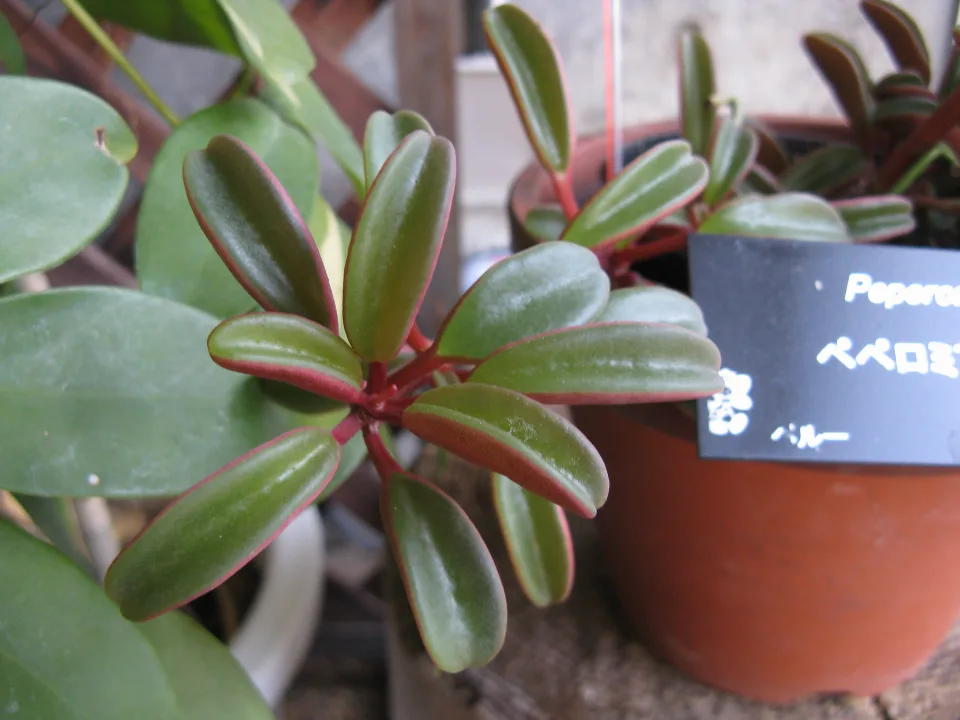
Photo : KENPEI — CC BY-SA 3.0 — source

🌱 Growing conditions
☀️ Light
Very bright indirect light. A few hours of gentle sun can be beneficial after acclimation.
💧 Watering
Low to moderate: allow much of the potting mix to dry before watering again.
🌡️ Temperature
18–27 °C. Protect from cold and draughts.
💦 Humidity
Low to average
🪴 Potting mix
Very free-draining and mineral-rich, similar to a succulent mix but with a small organic component.
⭐ Difficulty
Easy
🌱 Growth
Slow to moderate
📏 Mature size
15–25 cm
🌿 Habit
Compact and succulent
📝 About Ruby Glow peperomia
Description
A small Ecuadorian peperomia with thick elongated leaves, green above and burgundy red beneath. Strong but non-burning light deepens the red colouring and keeps the plant compact.
Its fine root system needs plenty of air around the roots. The fleshy leaves store water, so a short dry spell is usually less damaging than a pot that stays wet for days. In good light the plant stays compact; in insufficient light the stems or petioles lengthen and the plant loses its dense habit.
Care
Grow close to a bright window, with gentle morning or late-afternoon sun if desired. Water thoroughly, then allow most of the mix to dry. Regular misting is unnecessary and can encourage stem problems where air circulation is poor.
Judge watering by the moisture in the pot rather than by a fixed schedule. Water thoroughly, let the excess drain completely and never leave the pot standing in water. In winter or in lower light the mix dries more slowly, so watering should be spaced out further. Very dilute fertilizer every 4 to 6 weeks during active growth is sufficient.
Repotting
Repot only when roots fill the small pot or the mix has broken down. Use a slightly larger container with drainage holes and a fast-drying mix containing perlite, pumice or similar mineral material.
Do not move it into an oversized pot: unused compost stays wet around the roots for too long. A container only 2 to 3 cm wider than the previous one is usually enough. Use a light mix with a substantial proportion of drainage material and avoid compacting it around the roots.
Propagation
Take a healthy stem cutting with several leaves. Let the cut surface dry for a few hours, then root it in a lightly moist, very free-draining mix.
Stem cuttings with at least one node are generally the quickest method; some species can also be propagated from a leaf with its petiole. Keep the rooting medium only slightly moist. Warmth and bright indirect light help, but constantly wet compost can rot a cutting before new roots form.
🐱 Toxicity
Generally considered non-toxic to cats and dogs. Avoid substantial ingestion.
🩺 Common problems
Yellow leaves
Yellow, soft or translucent leaves most often indicate too much water. Low light can cause the same problem indirectly because the mix stays wet longer.
Brown leaves
Dry pale-brown marks near a window often indicate sun scorch after poor acclimation. Dark soft patches are more concerning and may indicate rot.
Diseases
Root and stem rot can develop if the mix remains wet continuously. Remove affected parts and reroot healthy firm growth if needed.
Pests
Mealybugs are the main pest; spider mites are possible in very dry conditions.