Plant profile
Peperomia obtusifolia Variegata
Peperomia obtusifolia 'Variegata'
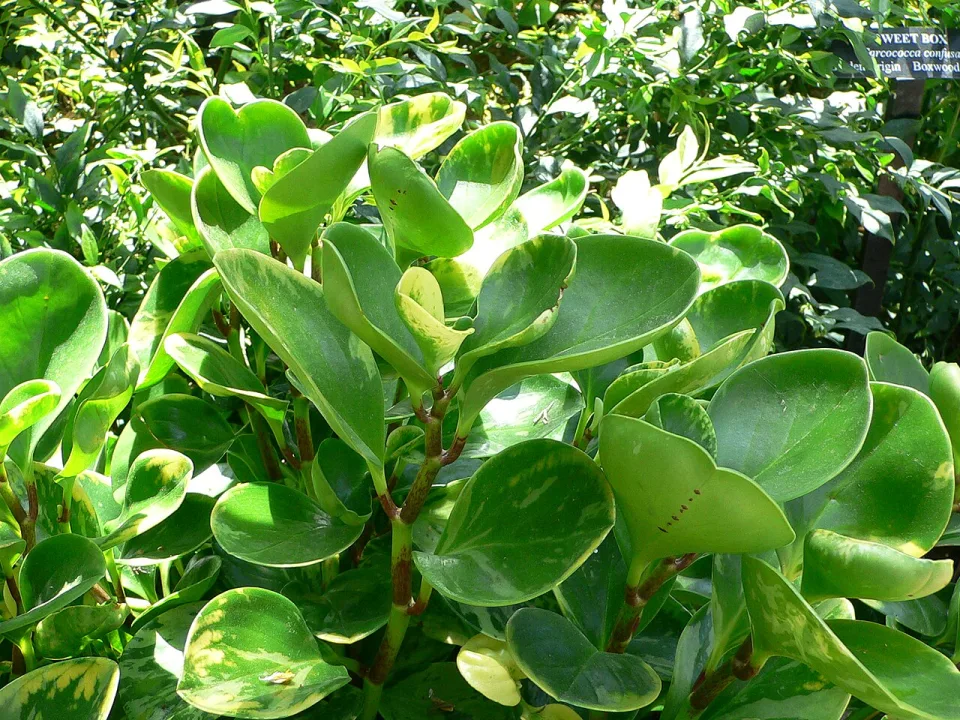
Photo : Mark Pellegrini — CC BY-SA 2.5 — source

🌱 Growing conditions
☀️ Light
Bright indirect light
💧 Watering
Allow to dry partially between waterings
🌡️ Temperature
18 to 30 °C
💦 Humidity
Medium
🪴 Potting mix
Airy and well-draining
⭐ Difficulty
Easy
🌱 Growth
Moderate
📏 Mature size
About 20–35 cm
🌿 Habit
clumping
📝 About Peperomia obtusifolia Variegata
Description
Peperomia obtusifolia 'Variegata' has thick, glossy, oval leaves patterned in green and cream, sometimes with a soft pink tint on new growth. Its naturally compact habit makes it particularly useful in small indoor spaces.
The fleshy leaves and stems store some water. It therefore tolerates a short dry period better than continuously damp compost, which can quickly cause the stem base and roots to rot.
Bright indirect light is important for maintaining the variegation. In a position that is too dark, new leaves often become greener and the stems stretch.
Care
Allow the potting mix to dry noticeably between waterings. Avoid constantly wetting the dense center of the plant. Place it near a bright window without scorching sun. Pinch the tips if you want a more branched shape.
Repotting
Repot infrequently into a pot only slightly larger. The fine roots do not need a large volume of potting mix; an oversized container increases the risk of overwatering.
Propagation
Stem cuttings are easy. Leaf cuttings are also possible for the species, but stem cuttings are preferable for preserving the variegation more reliably.
🐱 Toxicity
Generally considered non-toxic to dogs and cats.
🩺 Common problems
Yellow leaves
Very often linked to potting mix that is too wet. Check the bases of the stems if several leaves yellow at the same time.
Brown leaves
Strong direct sun, prolonged dehydration or salt accumulation. Dry bleached patches on the window side mainly suggest sunburn; more general dry tips point to dehydration or salts. Soft brown areas are more suggestive of excess water.
Diseases
Root and stem-base rot in heavy or constantly wet potting mix.
Pests
Mealybugs, scale insects and spider mites.