Plant profile
Moth orchid
Phalaenopsis amabilis
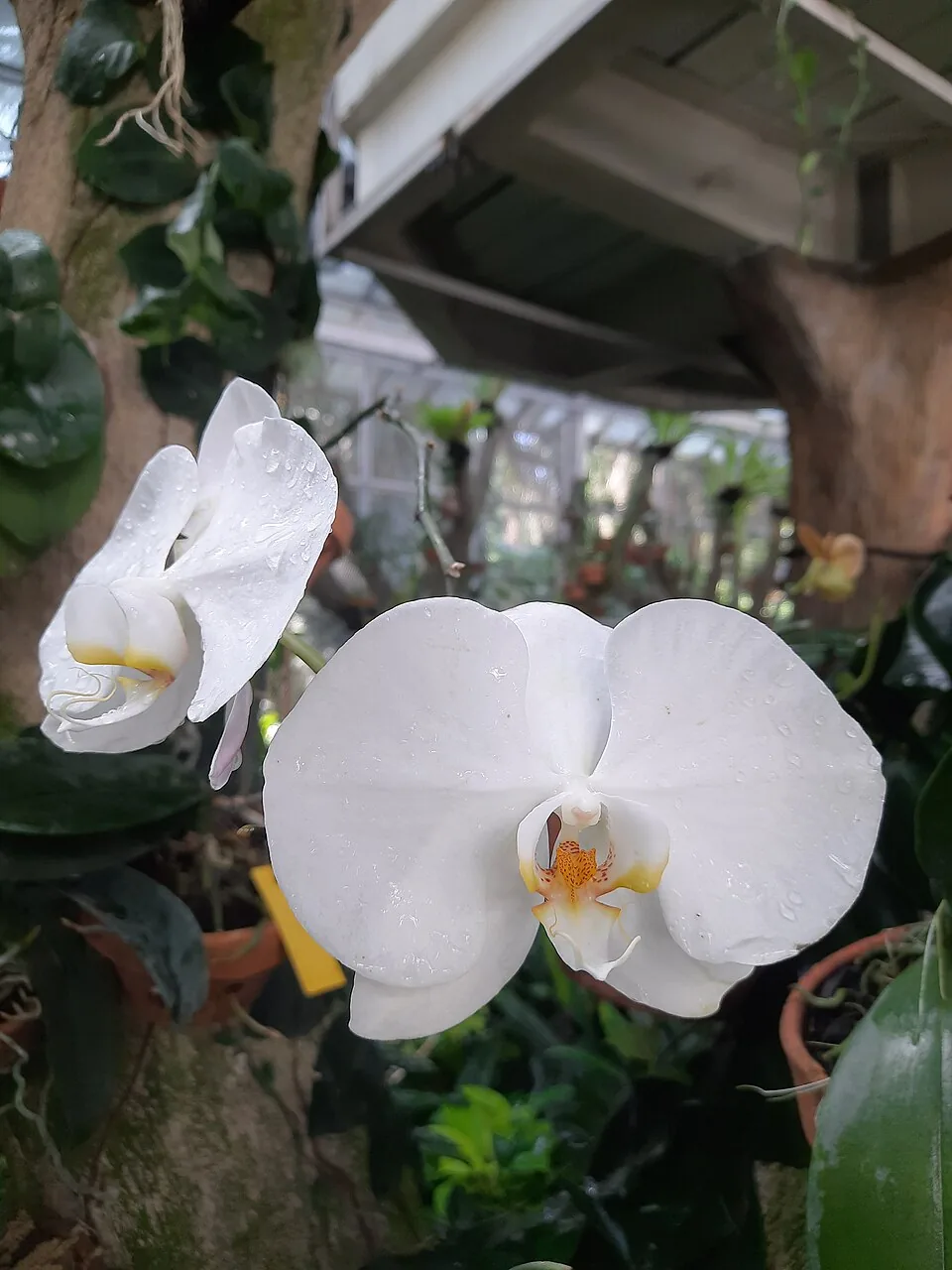
Photo : Raflinoer32 — CC BY 4.0 — source

🌱 Growing conditions
☀️ Light
Bright indirect light
💧 Watering
Water when the roots and bark are nearly dry
🌡️ Temperature
18 to 28 °C
💦 Humidity
Medium to high
🪴 Potting mix
Very airy orchid bark
⭐ Difficulty
Moderate
🌱 Growth
Slow
📏 Mature size
30 to 60 cm including flower spike
🌿 Habit
rosette
📝 About Moth orchid
Description
Epiphytic orchid producing broad fleshy leaves and long flower spikes bearing long-lasting white flowers. Its aerial roots help absorb water and also photosynthesize.
Care
Place in bright filtered light. Water when roots turn silvery and allow all water to drain away; do not leave water in the crown of the leaves.
Repotting
Usually repot after flowering when the bark breaks down or roots strongly overflow the pot. Use a very free-draining pot and orchid-specific bark mix.
Propagation
Separate keikis once they have developed several roots; seed propagation is reserved for specialized conditions.
🐱 Toxicity
Generally considered non-toxic to dogs and cats.
🩺 Common problems
Yellow leaves
An old lower leaf may yellow naturally; otherwise check roots, excess water and light.
Brown leaves
Dehydration, sunburn or salts can brown leaves and tips.
Diseases
Root and crown rot if water stagnates; avoid water in the crown.
Pests
Mealybugs, scale insects and spider mites. Inspect leaf undersides, nodes and young growth regularly. Silvery scarring, fine stippling, sticky honeydew or cottony clusters often reveal an infestation before it spreads.