Plant profile
Philodendron billietiae
Philodendron billietiae
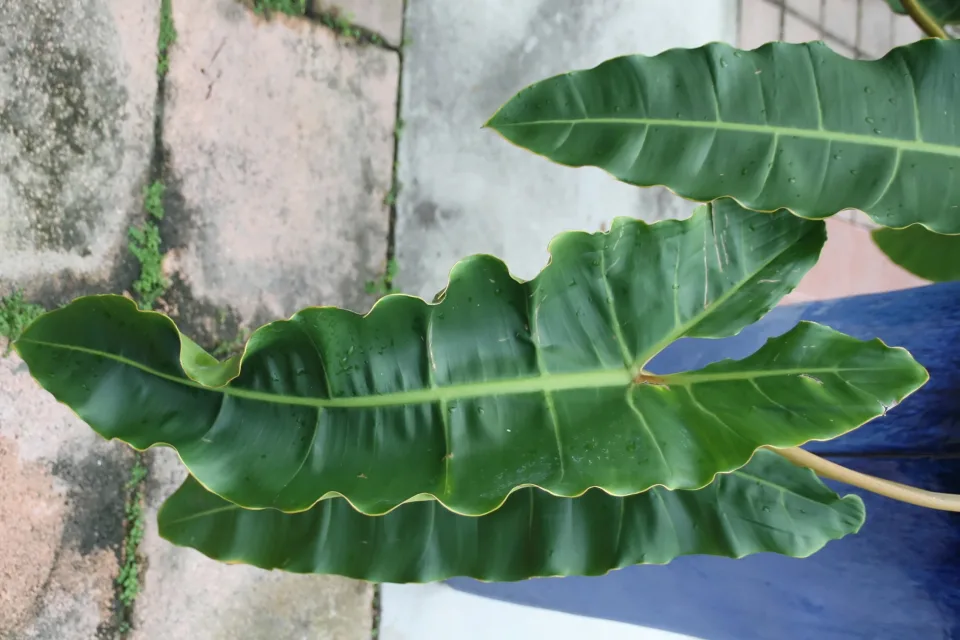
Photo : Photo by David J. Stang — CC BY-SA 4.0 — source

🌱 Growing conditions
☀️ Light
Bright indirect light.
💧 Watering
Water when the top 3–5 cm are dry.
🌡️ Temperature
18 to 29 °C
💦 Humidity
Medium to high
🪴 Potting mix
Very airy and free-draining.
⭐ Difficulty
Moderate
🌱 Growth
Moderate to fast
📏 Mature size
1.5 to 2.5 m on a support
🌿 Habit
climbing
📝 About Philodendron billietiae
Description
Philodendron billietiae is distinguished by its large, elongated, wavy-edged leaves held on vivid orange to reddish-orange petioles. This contrast between green foliage and coloured petioles is its most recognisable feature.
The plant climbs naturally and becomes much more impressive on a support. The leaves increase in both length and width as it matures.
It appreciates a very airy mix and bright light without intense direct sun.
Care
Keep it in bright filtered light. Insufficient light lengthens the internodes and produces smaller leaves.
Water when the top few centimetres are dry, then let all excess water drain. Avoid heavy mixes.
Tie the main stem gently to a support without compressing the petioles. Feed lightly in spring and summer.
Repotting
Repot when the roots occupy the pot well. A container only slightly larger is preferable. A coarse aroid mix with bark, perlite or pumice and light organic matter works very well.
Propagation
Take stem cuttings with at least one node. Sections can root in water, sphagnum or a very airy mix. A leaf alone is not enough.
🐱 Toxicity
Toxic if ingested because of calcium oxalates.
🩺 Common problems
Yellow leaves
Several yellow leaves often indicate too much water or a compact mix. An older leaf may yellow naturally.
Brown leaves
Brown margins occur with dry air, prolonged lack of water or salt build-up. Strong direct sun can cause scorch.
Diseases
Root rot in saturated mix; leaf spotting if foliage stays wet.
Pests
Thrips, spider mites and scale insects. Inspect newly unfurling leaves, petioles and leaf undersides especially: silvery scars and distortion suggest thrips, fine stippling suggests mites, and fixed clusters or scales indicate scale insects.
On Philodendron billietiae, inspect newly rolled leaves, petioles and sheaths first; thrips can hide there before silvery scarring or distortion becomes obvious.