Plant profile
Philodendron Birkin
Philodendron 'Birkin'
🌱 Growing conditions
☀️ Light
Bright indirect light to preserve the fine cream stripes; avoid intense direct sun.
💧 Watering
Water when the top 3–5 cm are dry; let excess water drain completely.
🌡️ Temperature
18 to 27 °C; avoid below 15 °C
💦 Humidity
Medium to high, ideally 50% or more.
🪴 Potting mix
Airy aroid mix: potting mix/coco, bark and perlite or pumice
⭐ Difficulty
Easy to moderate
🌱 Growth
Moderate
📏 Mature size
50 to 90 cm
🌿 Habit
compact and upright
📝 About Philodendron Birkin
Description
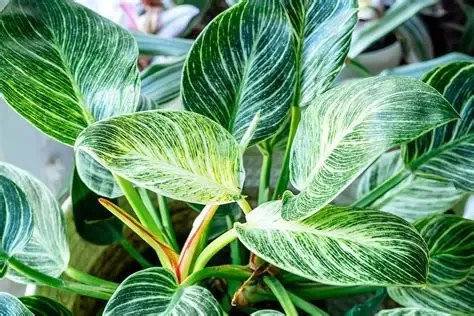
Philodendron Birkin (Philodendron 'Birkin') is a tropical aroid grown for its distinctive foliage. New leaves may develop fine cream pinstripes on green; the variegation is unstable and can partly revert.
Care
Keep in bright filtered light, avoid harsh direct sun and water according to the drying rate described above. Good aeration around the roots and stable warmth are important. Feed regularly during active growth. Do not automatically cut every atypical leaf; watch the next growth first, and prune a stem only if it persistently reverts and you want to preserve the Birkin look.
Repotting
Repot when roots fill the pot, usually every 1–2 years; keep a coarse mix and a pot with drainage holes.
Propagation
Propagate from stem cuttings that include at least one node, or by offsets/corms where the species produces them. A leaf without a node does not produce a complete new plant.
🐱 Toxicity
Toxic if ingested because of calcium oxalate crystals; irritating to people and animals.
🩺 Common problems
Yellow leaves
Excess water, insufficient light or an old leaf; check the root ball before adding water or fertilizer.
Brown leaves
Dry air, fertilizer salts, irregular watering or direct sun; white areas are naturally more prone to scorch.
Diseases
Root rot and leaf spots in conditions that are too wet.
Pests
Thrips, mealybugs and spider mites. Inspect leaf undersides, nodes and young growth regularly. Silvery scarring, fine stippling, sticky honeydew or cottony clusters often reveal an infestation before it spreads.