Plant profile
Philodendron Black Cardinal
Philodendron 'Black Cardinal'
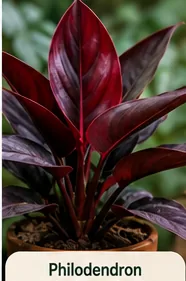
Photo : PlantMinute — Image générée
🌱 Growing conditions
☀️ Light
Bright to medium indirect light.
💧 Watering
Water when the top 3–5 cm of mix are dry, then soak thoroughly and let excess water drain. Avoid keeping the root ball constantly wet.
🌡️ Temperature
18 to 28 °C
💦 Humidity
Medium to high
🪴 Potting mix
Airy and well drained.
⭐ Difficulty
Easy to moderate
🌱 Growth
Moderate
📏 Mature size
60 to 90 cm
🌿 Habit
compact and self-heading
📝 About Philodendron Black Cardinal
Description
Philodendron ‘Black Cardinal’ is a self-heading cultivar that forms a compact clump rather than a long vine. New leaves emerge bronze to dark red before maturing to very dark green, almost black in some light.
Its compact habit makes it a useful alternative to large climbing philodendrons. It is relatively easy as long as the mix does not remain constantly wet.
Bright light helps keep the leaves firm and richly coloured without requiring direct sun.
Care
Place it in bright indirect light. It tolerates medium light, but growth will be slower.
Water when the top few centimetres are dry, then let the excess drain. Avoid regularly pouring water into the centre of the rosette.
Remove old leaves once they are fully yellow. Feed lightly during active growth.
Repotting
Repot when the roots fill the pot. A pot only slightly larger is enough. Use an airy, free-draining aroid mix.
Propagation
Propagation is mainly by separating offsets or stem sections with an active growth point from a mature plant. A leaf alone is not enough.
🐱 Toxicity
Toxic if ingested because of calcium oxalates.
🩺 Common problems
Yellow leaves
Several yellow leaves often indicate overwatering. A lower old leaf may yellow naturally.
Brown leaves
Dry margins can occur with low humidity or irregular watering. Strong direct sun may scorch the dark young leaves.
Diseases
Overwatering can cause root or crown rot. If the base becomes soft, dark or foul-smelling, inspect the roots immediately, remove rotten tissue and improve drainage.
Pests
Watch especially for thrips, then spider mites and scale insects. Inspect new leaves and their undersides; isolate the plant if fresh growth becomes distorted, stippled or sticky.