Plant profile
Brasil philodendron
Philodendron hederaceum 'Brasil'
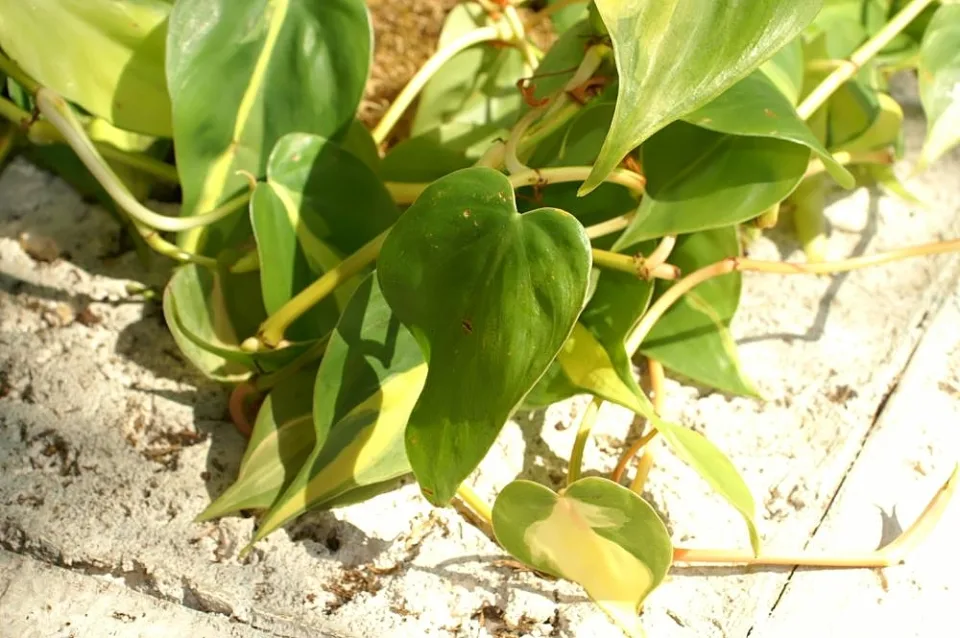
Photo : Photo by David J. Stang — CC BY-SA 4.0 — source

🌱 Growing conditions
☀️ Light
Bright indirect light to preserve variegation; tolerates medium light
💧 Watering
Allow the top 2 to 4 cm of mix to dry before watering
🌡️ Temperature
18 to 28 °C
💦 Humidity
Medium to high
🪴 Potting mix
Very airy and well-draining, rich in light organic matter
⭐ Difficulty
Easy
🌱 Growth
Fast
📏 Mature size
1 to 3 m indoors long
🌿 Habit
climbing or trailing
📝 About Brasil philodendron
Description
Philodendron hederaceum ‘Brasil’ is a very popular variegated selection of the heartleaf philodendron. Each leaf carries a yellow to lime-green central stripe surrounded by darker green, with a pattern that varies from leaf to leaf.
Its flexible stems can trail from a shelf or climb a support. When it climbs a slightly moist support, leaves tend to become larger and growth more vigorous.
It is more forgiving than many rare philodendrons, but the variegation needs more light than the all-green form. Too little light gradually reduces the yellow sections and stretches the internodes.
Care
Place ‘Brasil’ in bright filtered light. A little gentle morning sun is generally tolerated, but strong direct sun can burn the more delicate yellow areas.
Water when the top of the mix is dry. Wet the whole root ball and then allow it to drain. Roots need air: a chunky mix and a pot with drainage holes matter more than frequent watering.
Pinch or prune overly long stems to make the plant denser. If a stem produces several fully green leaves, cut it back to a clearly variegated section to help preserve the pattern.
Feed lightly during active growth.
Repotting
Repot when roots fill the container or the mix has broken down. Use a slightly larger pot and a chunky aroid mix containing materials such as potting soil, bark, coir and perlite or pumice.
A support can be added at repotting if you want larger leaves.
Propagation
Take stem cuttings containing at least one node. Cut below a node and root in water, sphagnum moss or a light potting mix.
A cutting must contain a node: a leaf alone cannot produce a new stem. To preserve variegation, choose a piece of stem that clearly carries variegated tissue.
🐱 Toxicity
Toxic if swallowed because of calcium oxalate crystals; irritating to the mouth and mucous membranes.
🩺 Common problems
Yellow leaves
Soft yellow leaves often indicate overly wet soil or roots that lack air. A single lower leaf may simply be aging.
If yellowing comes with very long stems and small leaves, increase the light.
Brown leaves
Yellow variegated areas can brown more readily under strong sun or after prolonged drought. Dry tips may also result from very dry air or salt buildup.
Soft brown spots on a plant kept very wet require a root check.
Diseases
Root rot in compact or saturated mix; leaf spots can develop when foliage remains wet with poor ventilation.
Pests
Thrips, mealybugs and spider mites, especially on young leaves that are still unfurling.